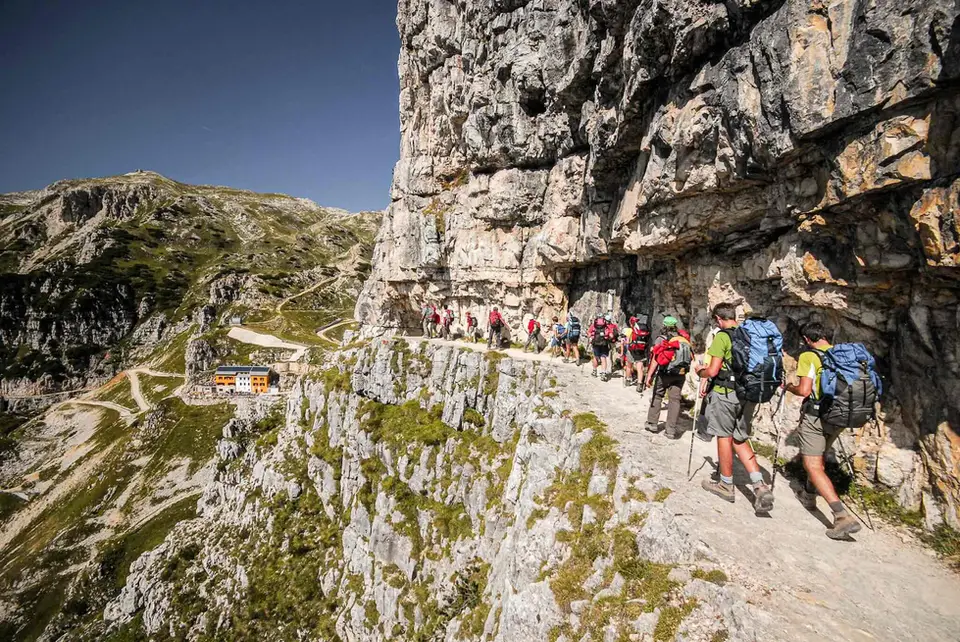
The Pasubio is a genuine open-air museum of the Great War: its underground galleries, its trenches and its memorials tell of clashes and battles along an important frontier between Italy and Austria, in an atmosphere of grim sanctity.
From a hiker's point of view, the main points of interest are the three roads (two of them passable by off-road vehicle) that climb to the battle lines, set between 1900 and 2200 metres: the Strada degli Eroi (which climbs from Pian delle Fugazze and passes through the famous Galleria Generale d'Havet), the Strada degli Scarrubbi and the celebrated Strada delle 52 Gallerie (both starting from Bocchetta Campiglia). The itinerary described here follows the last two.
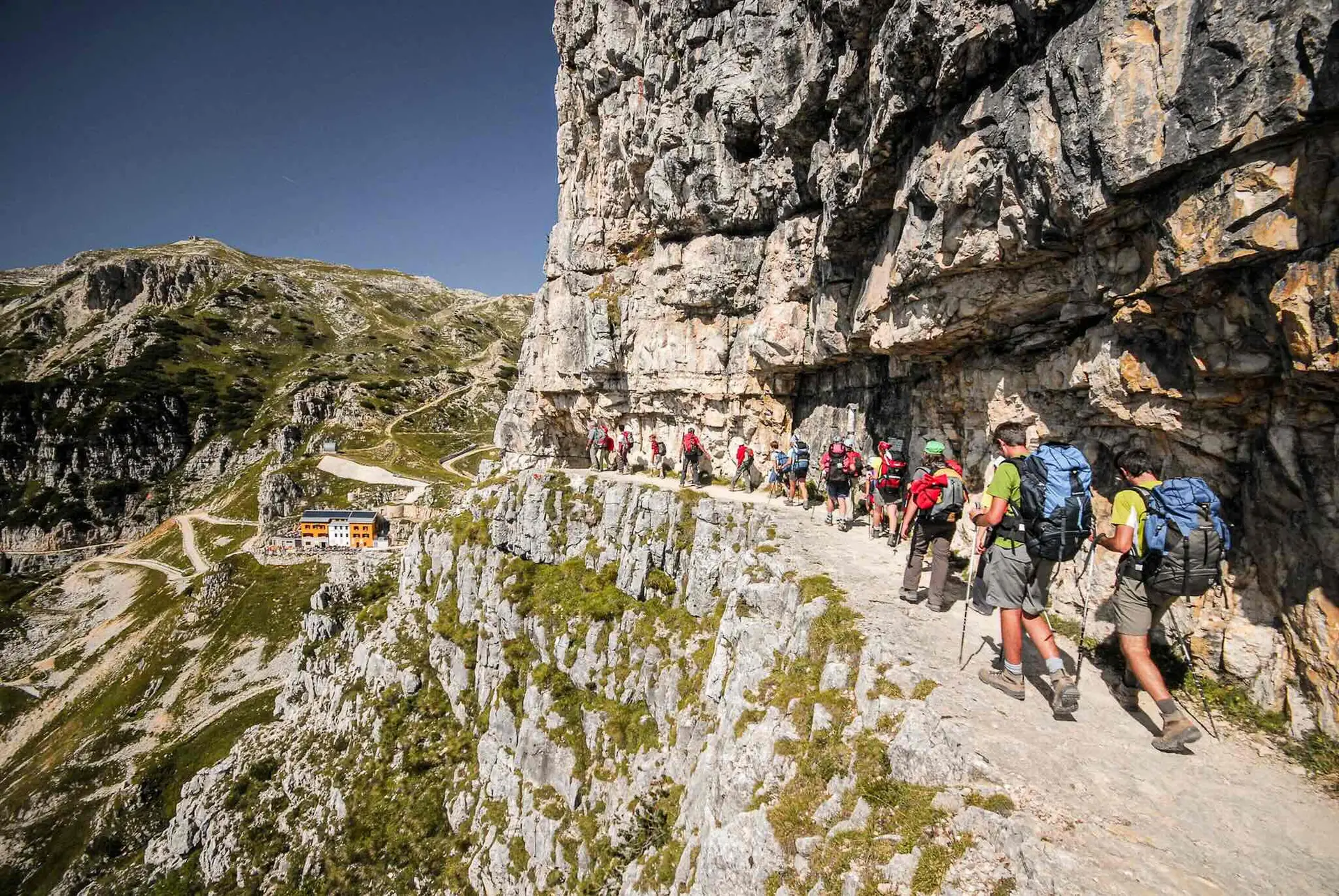
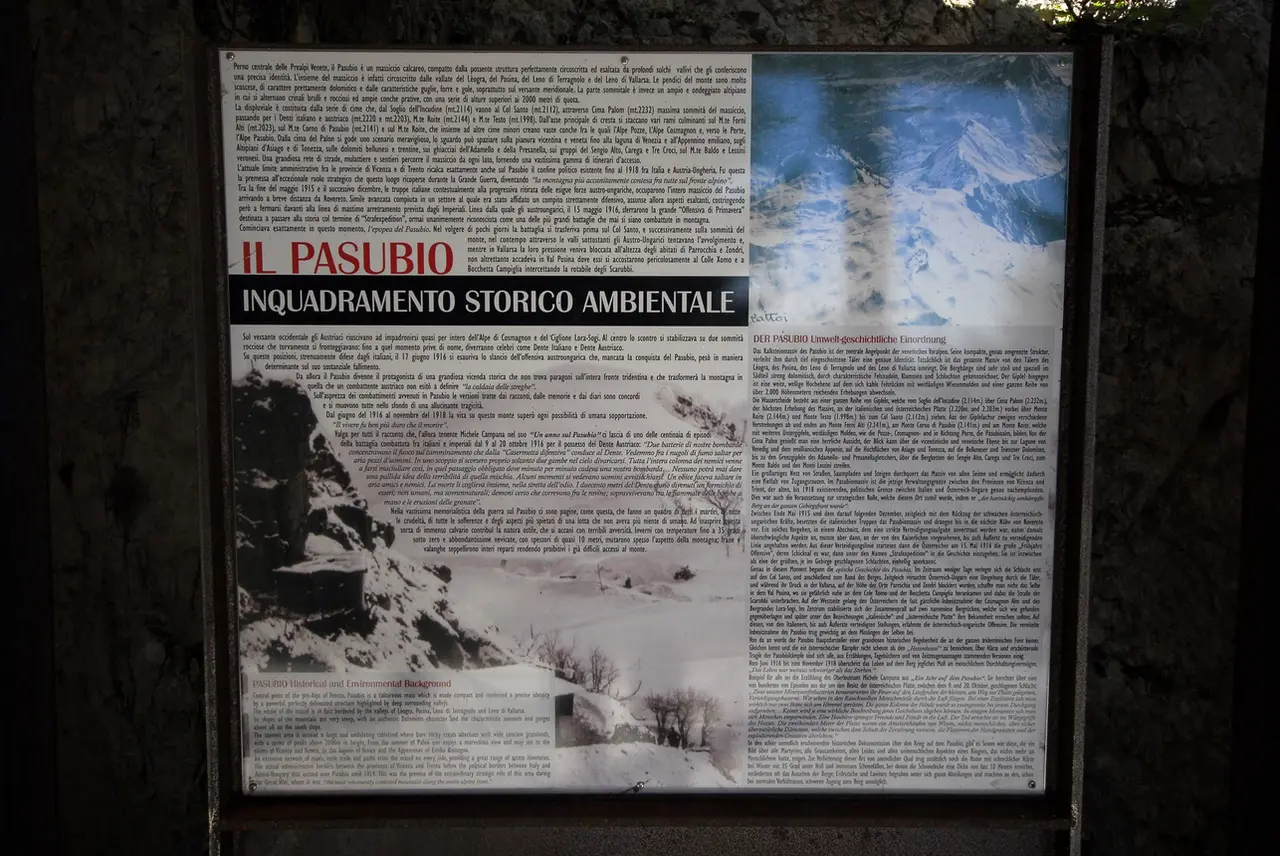
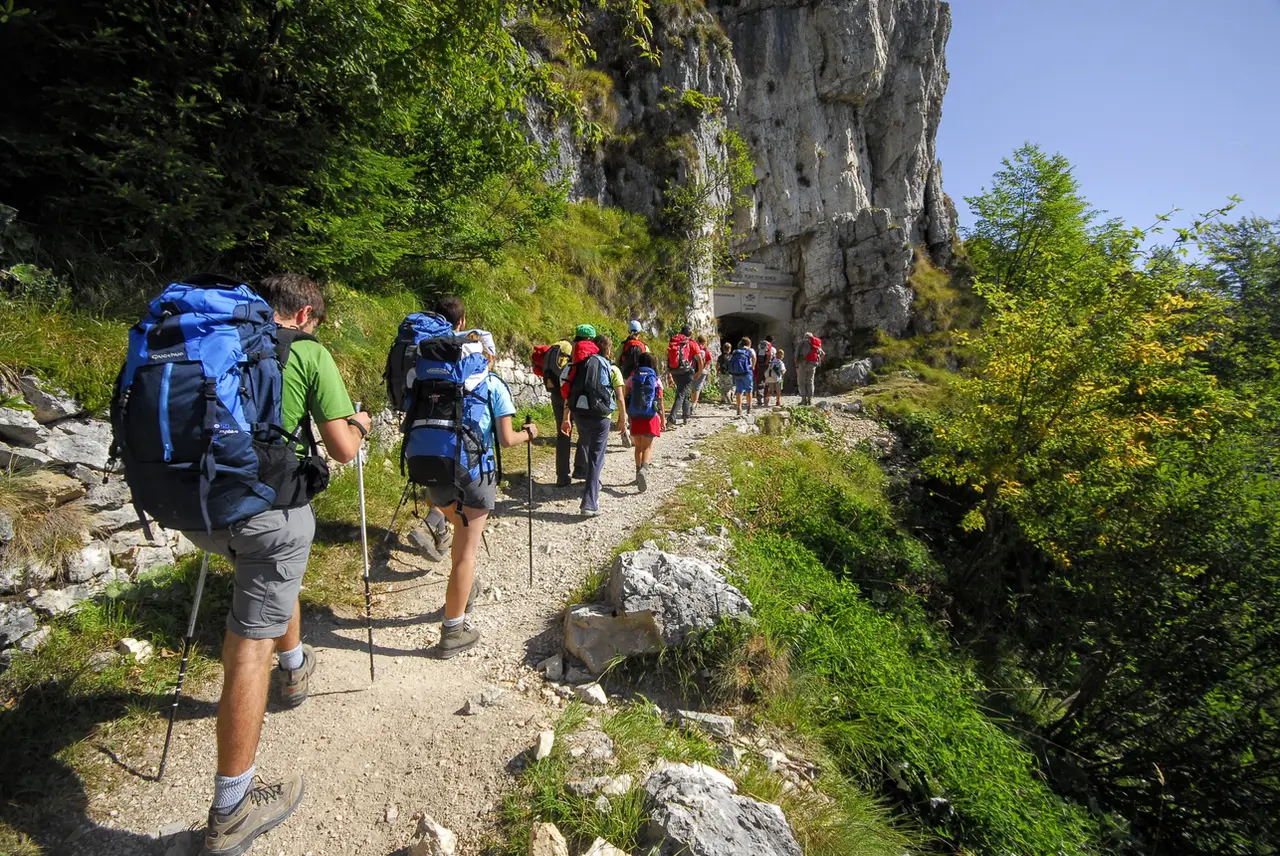
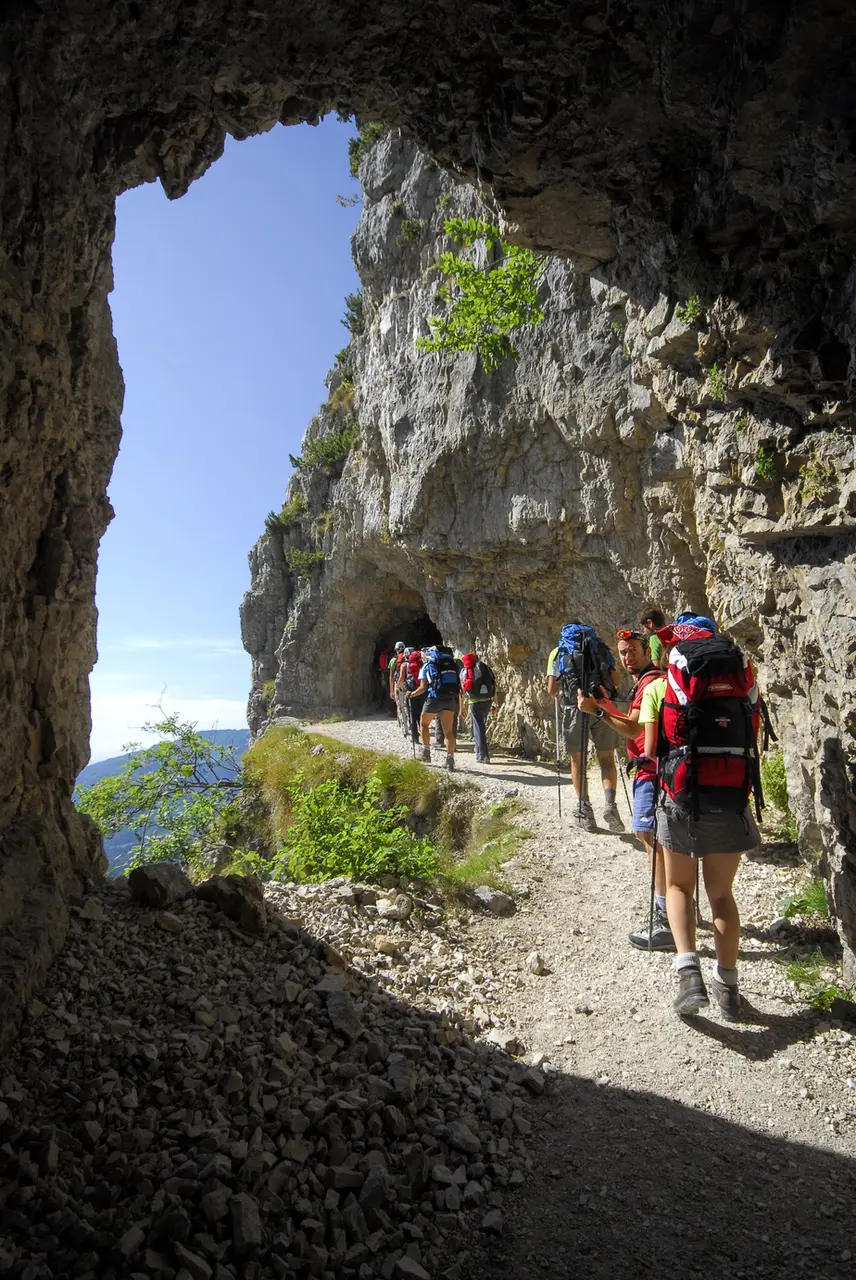
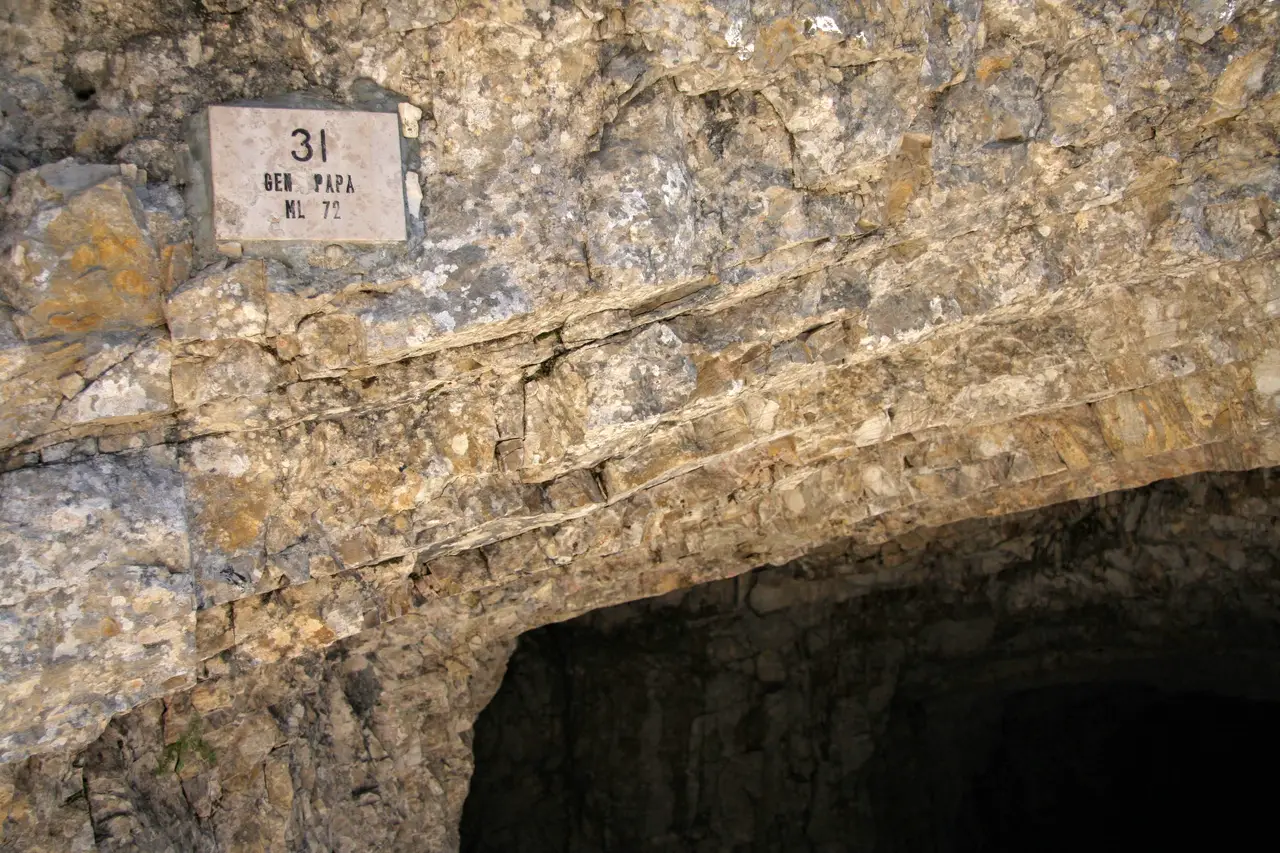
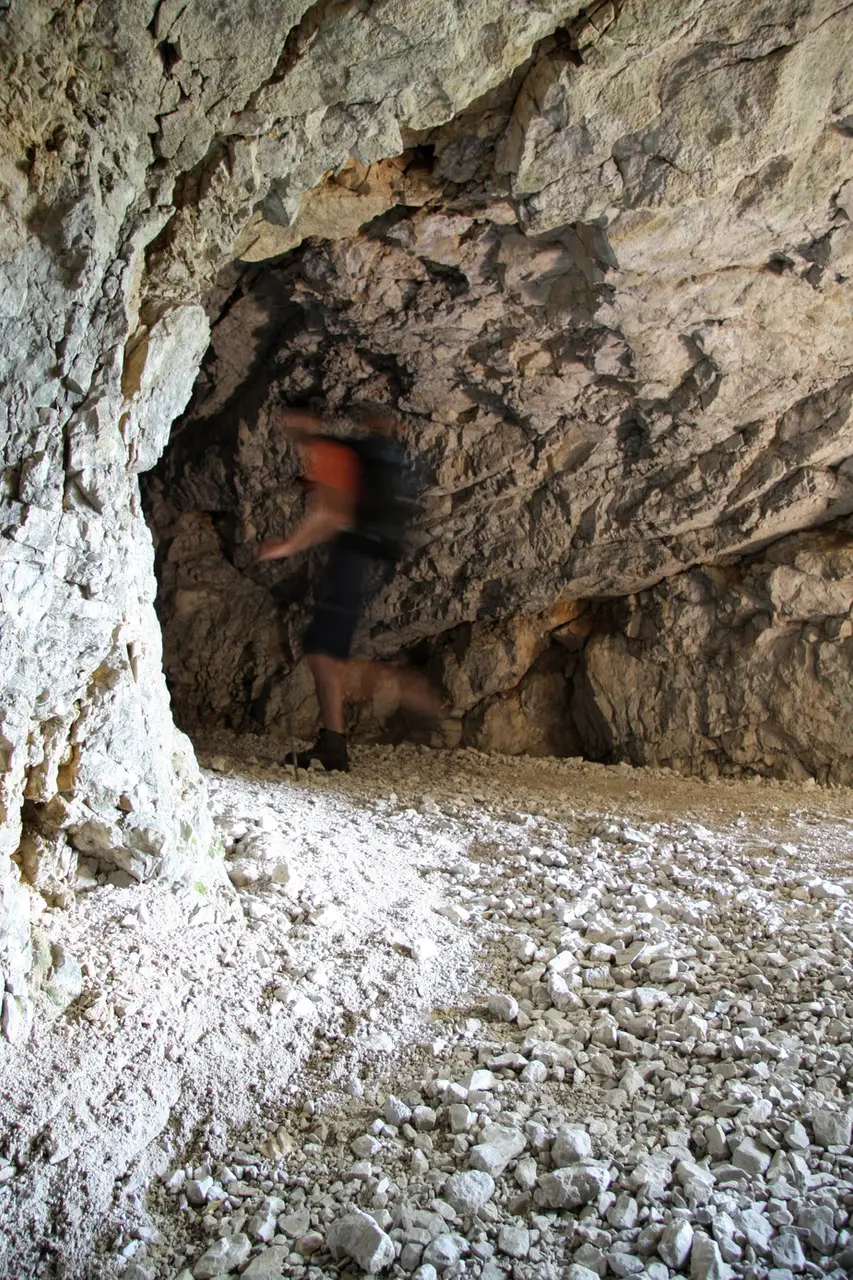
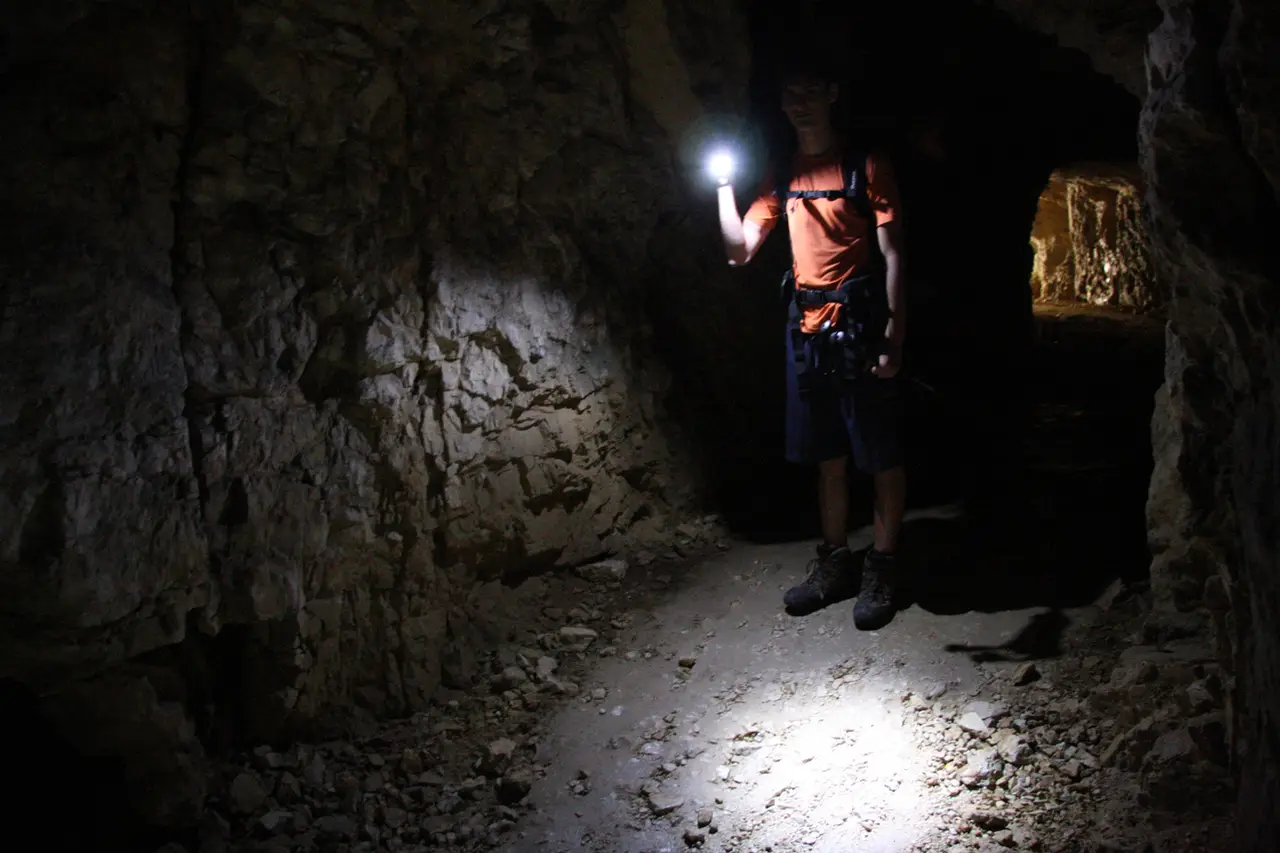
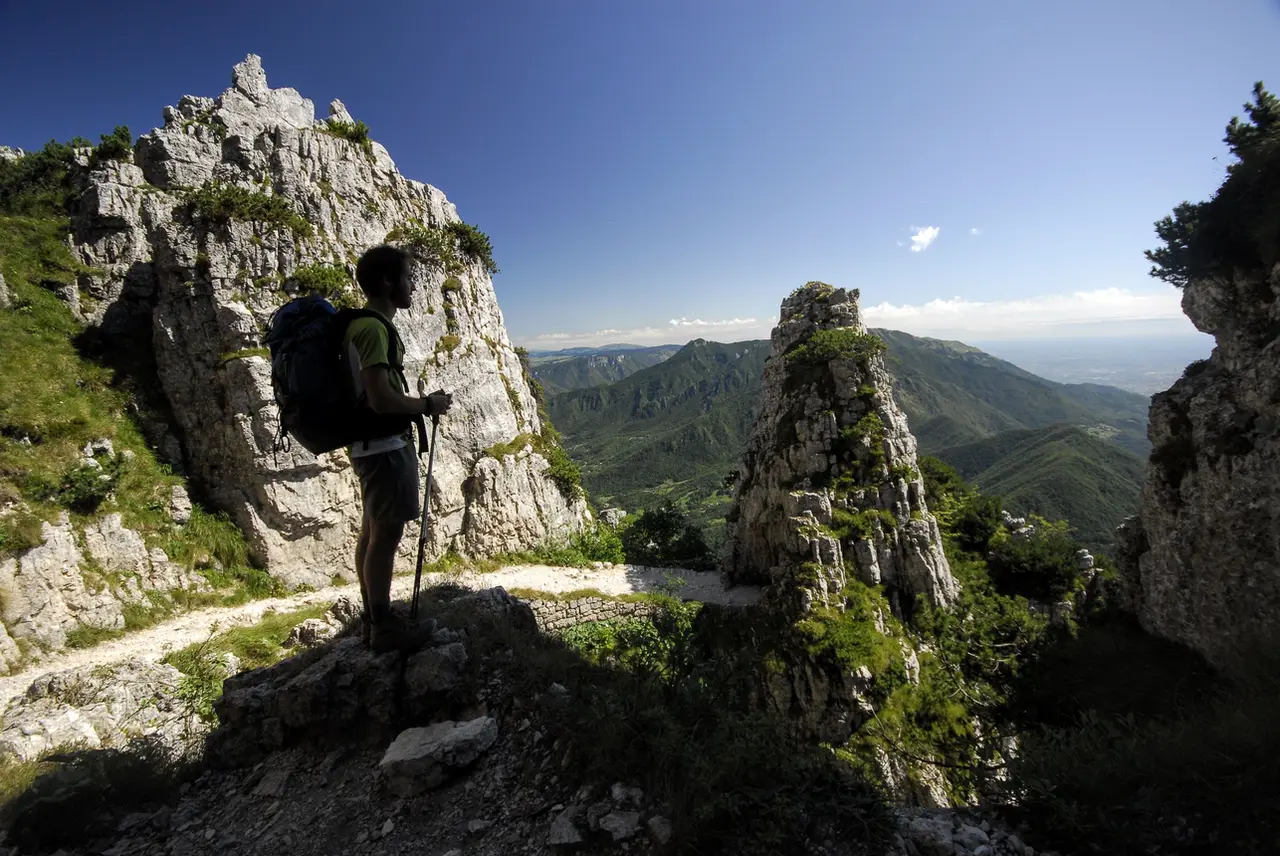
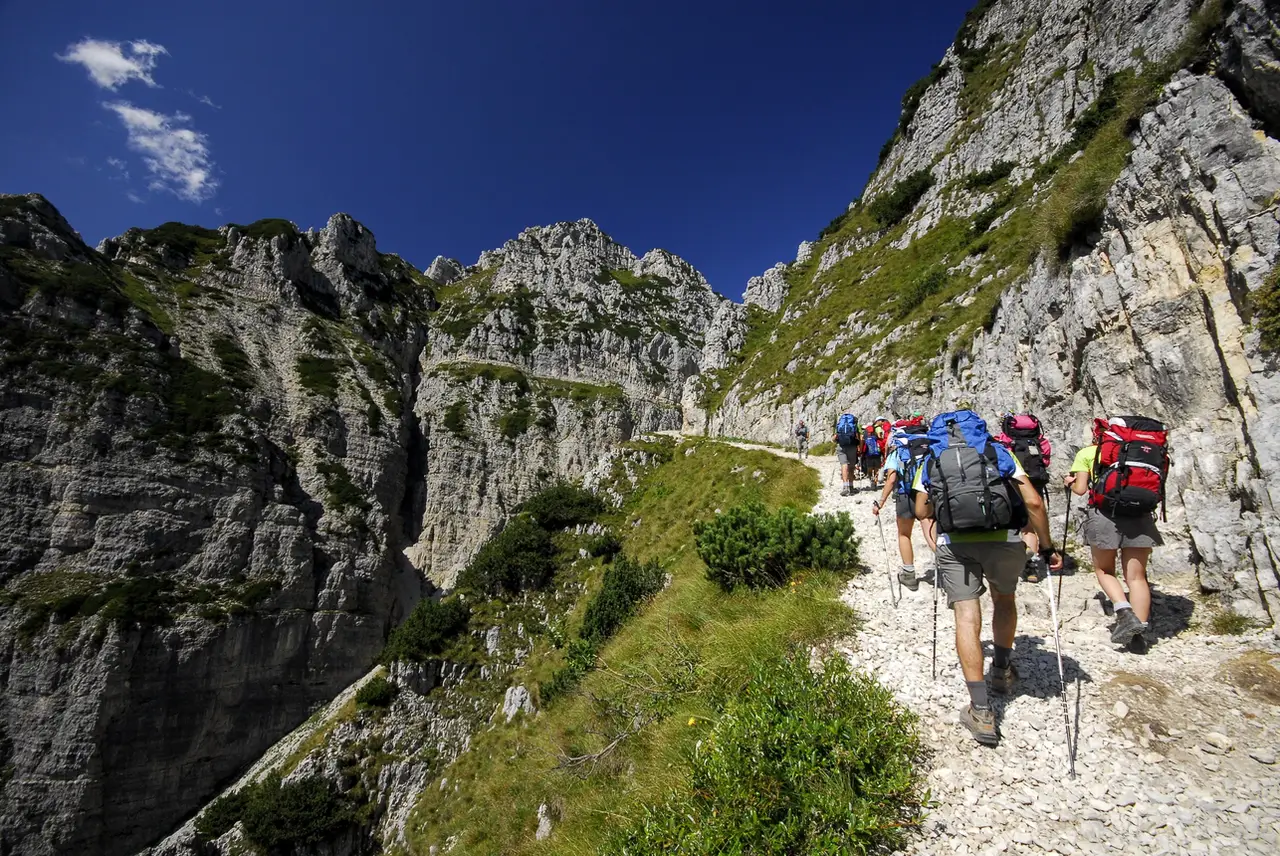
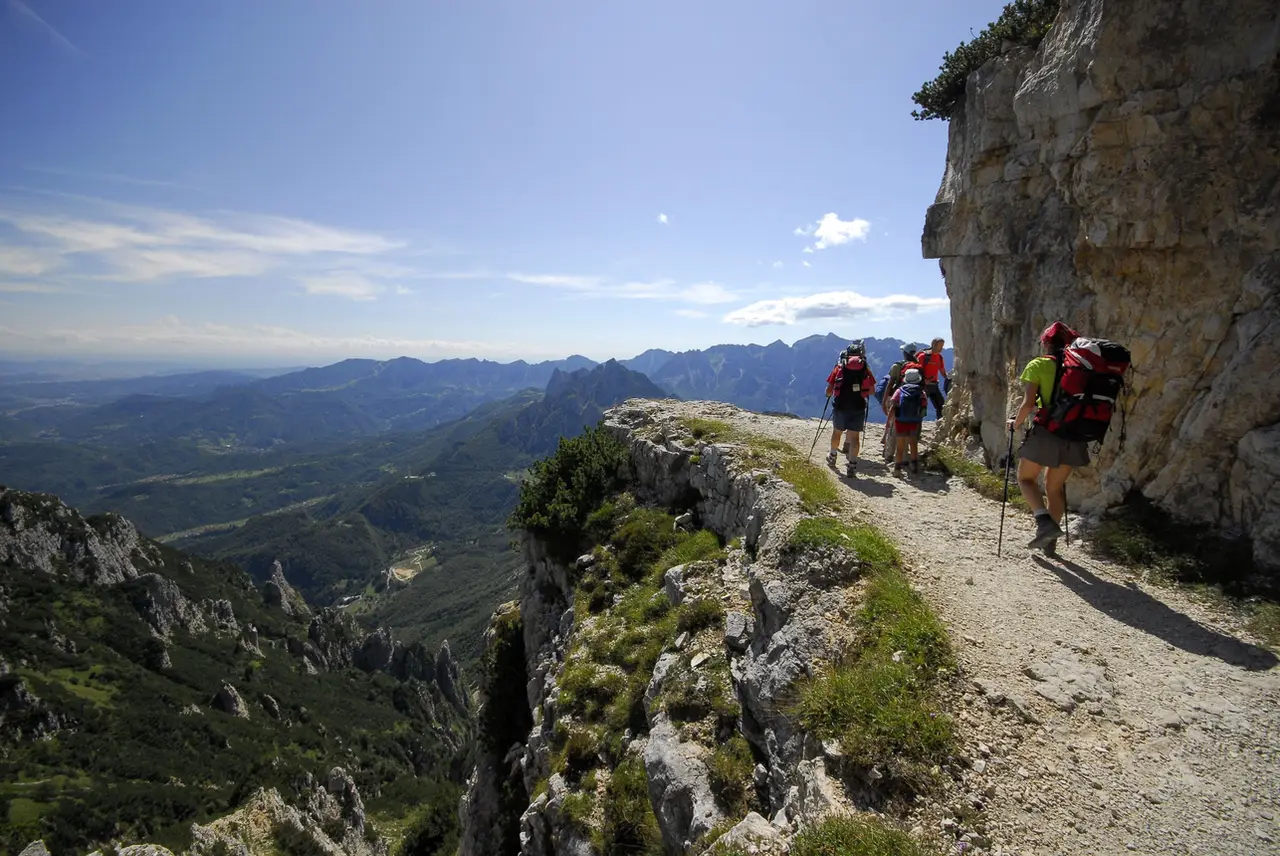
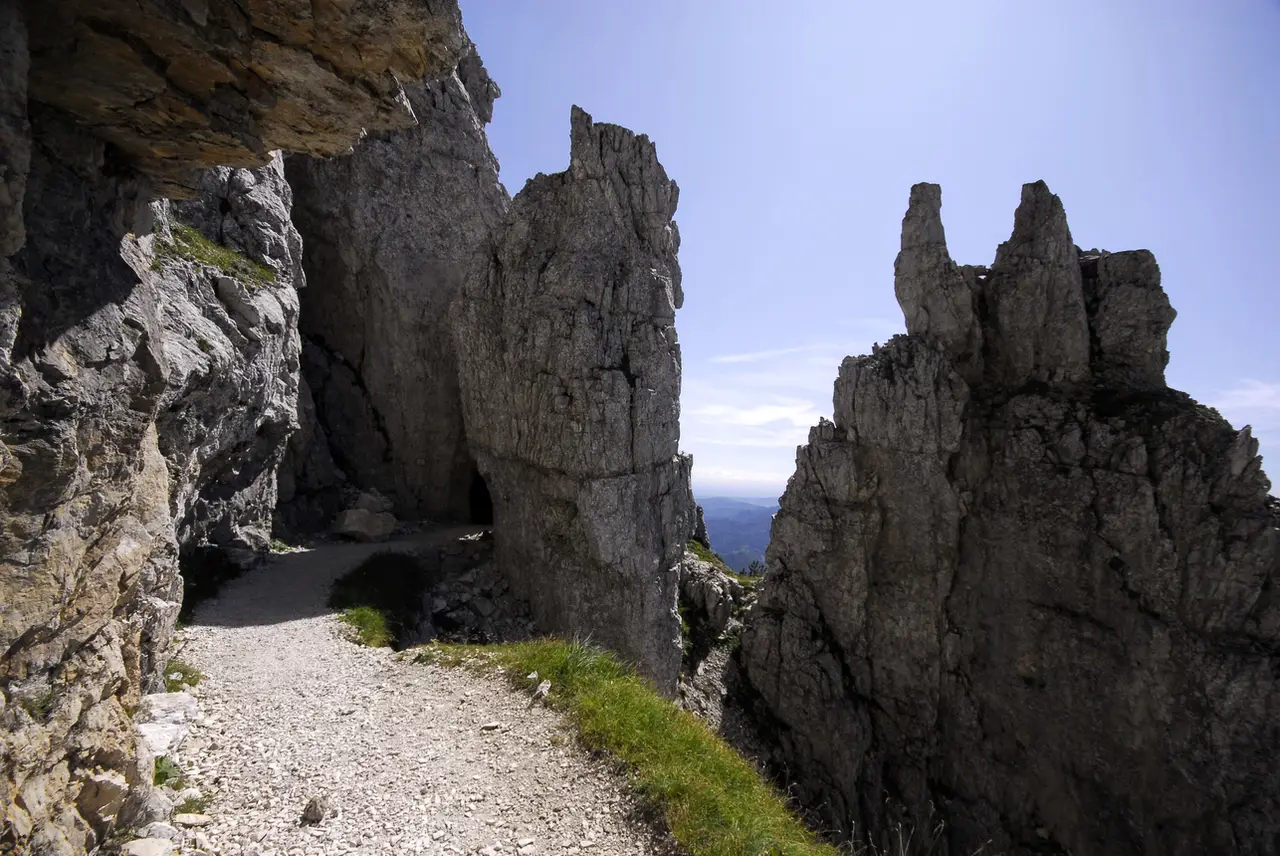
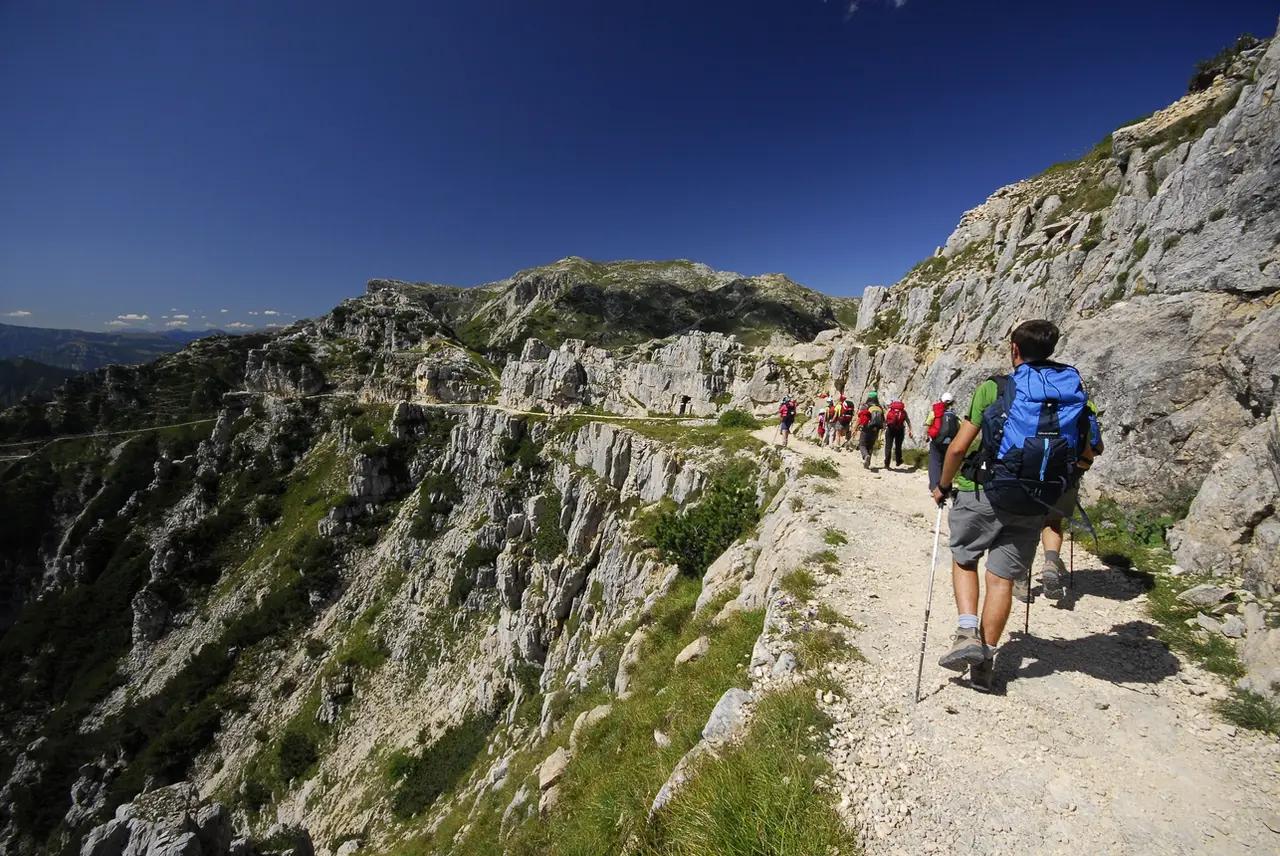
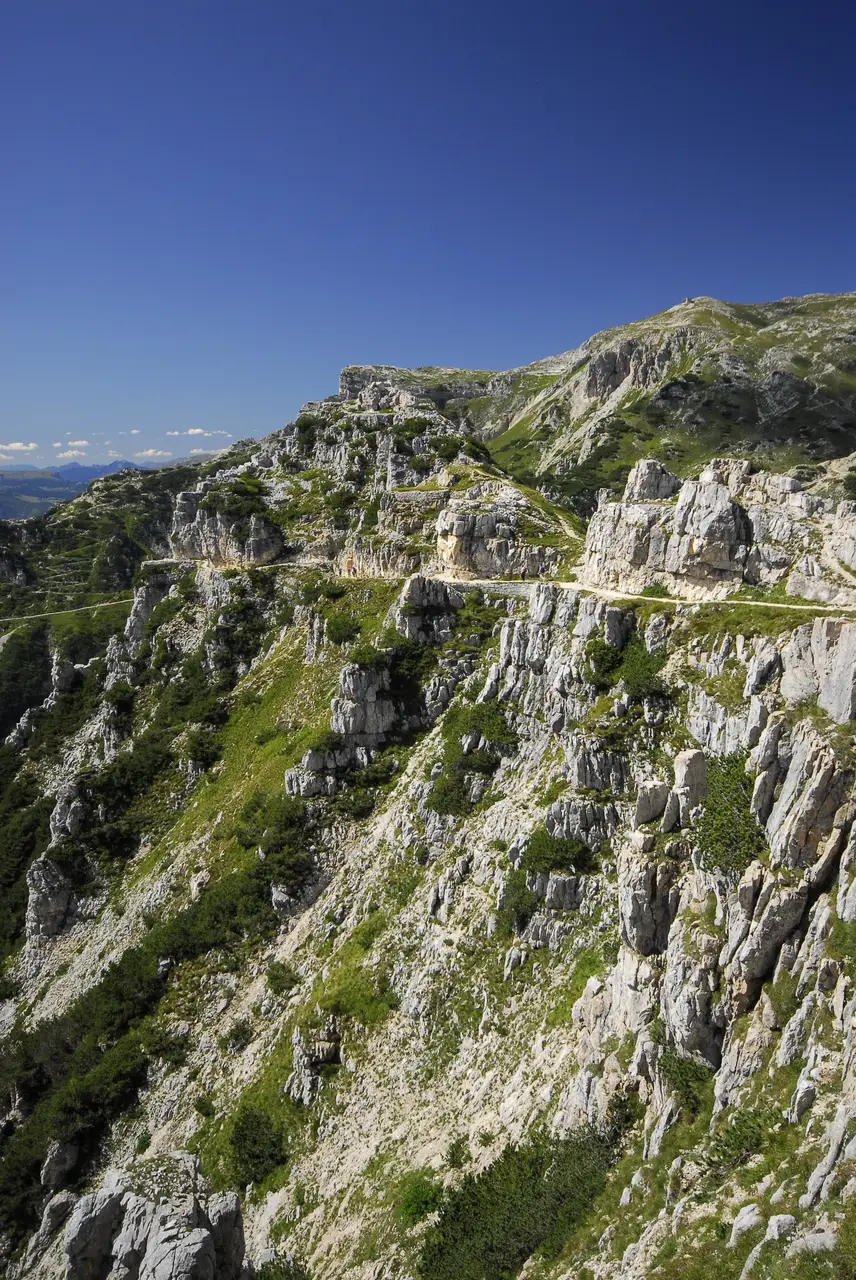
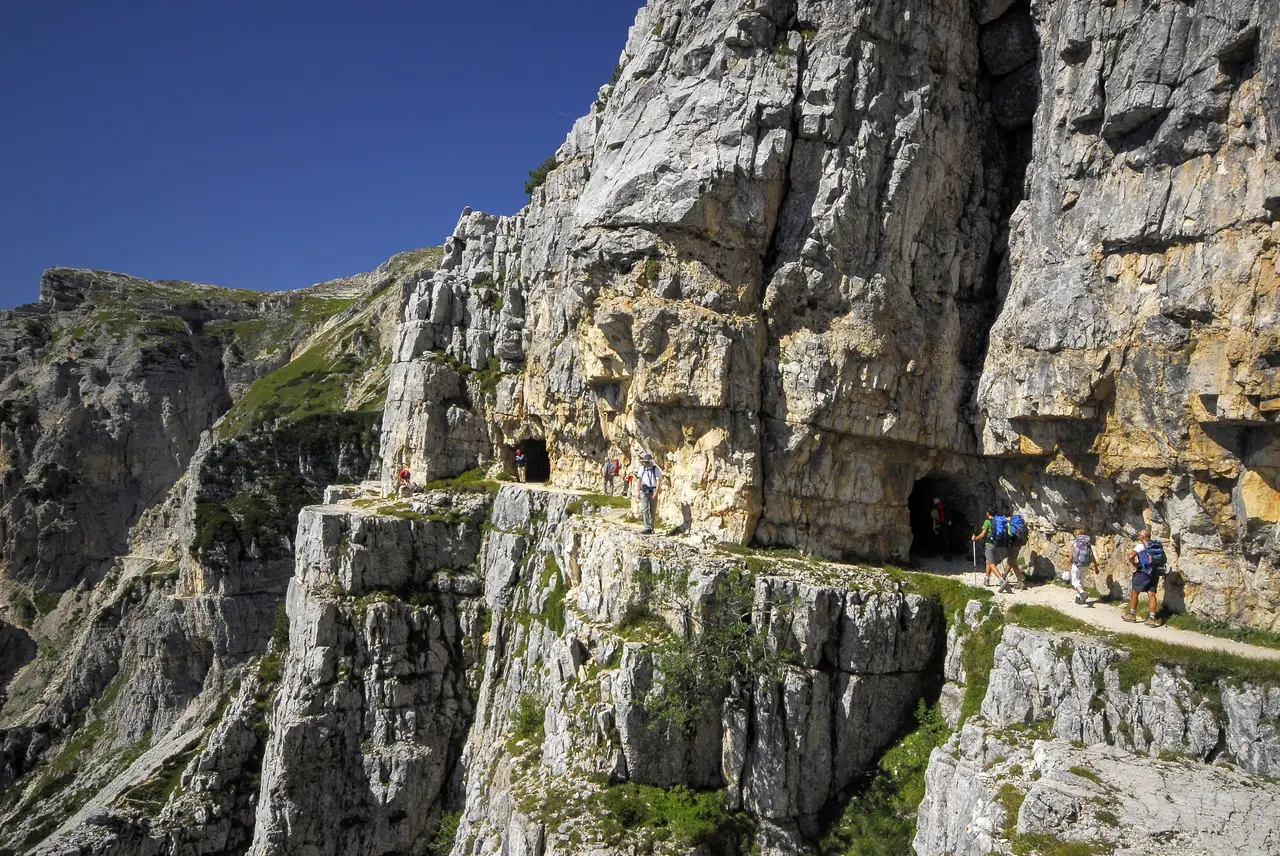
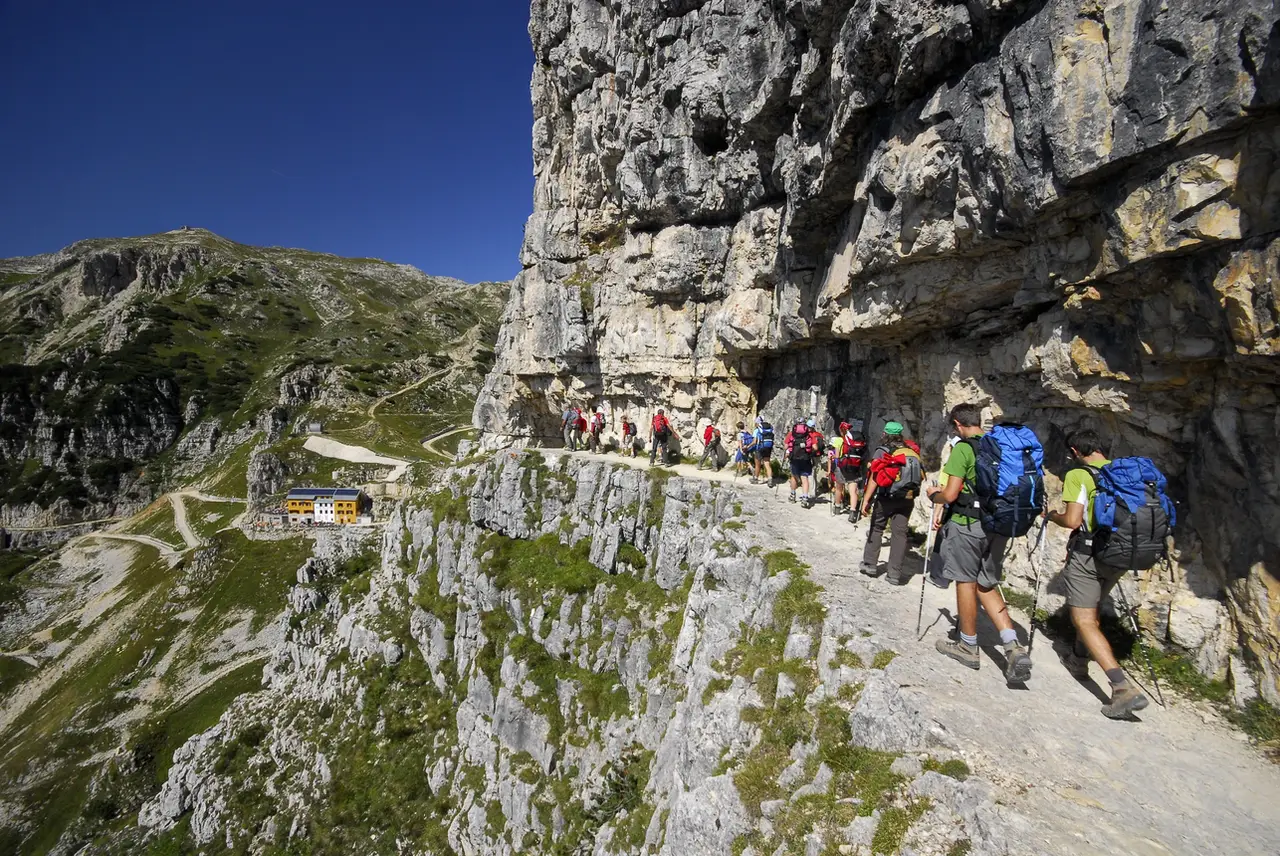
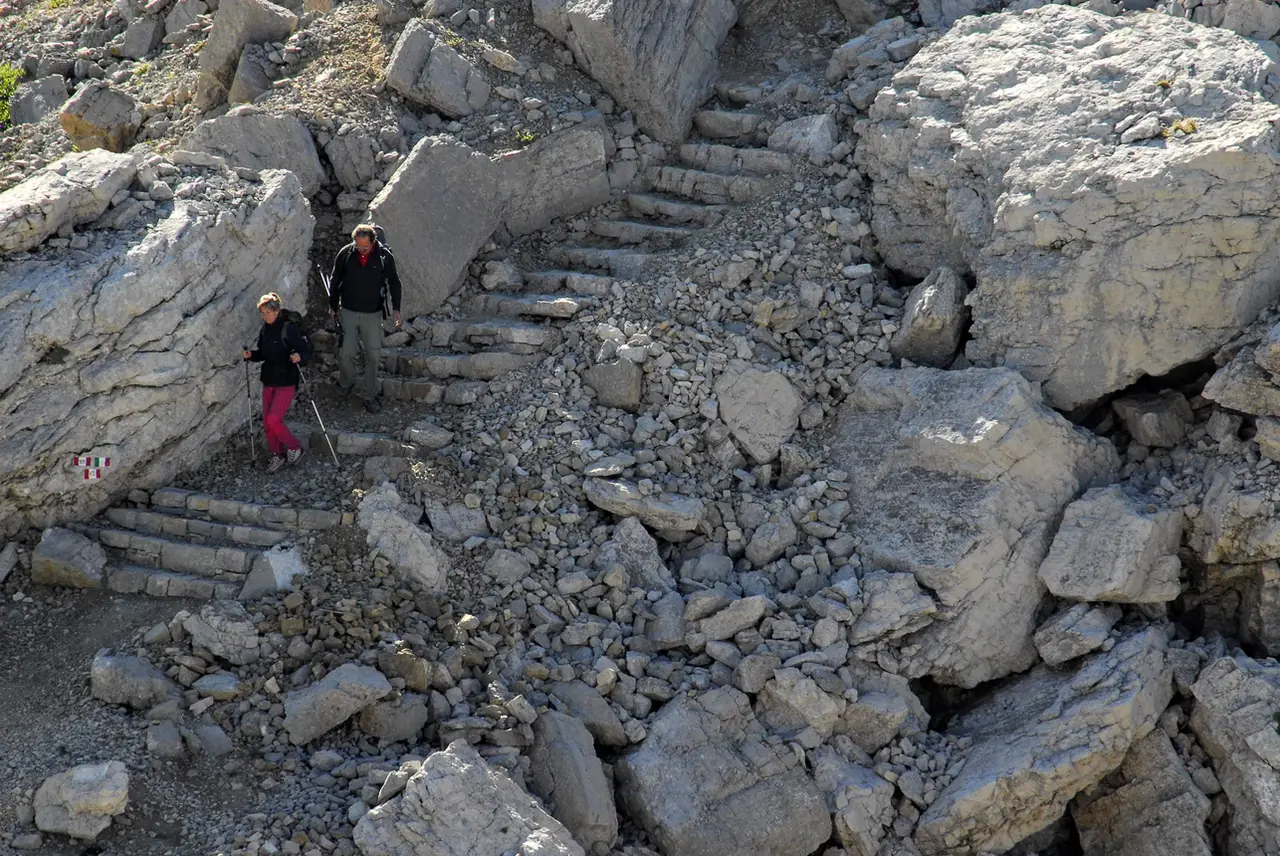
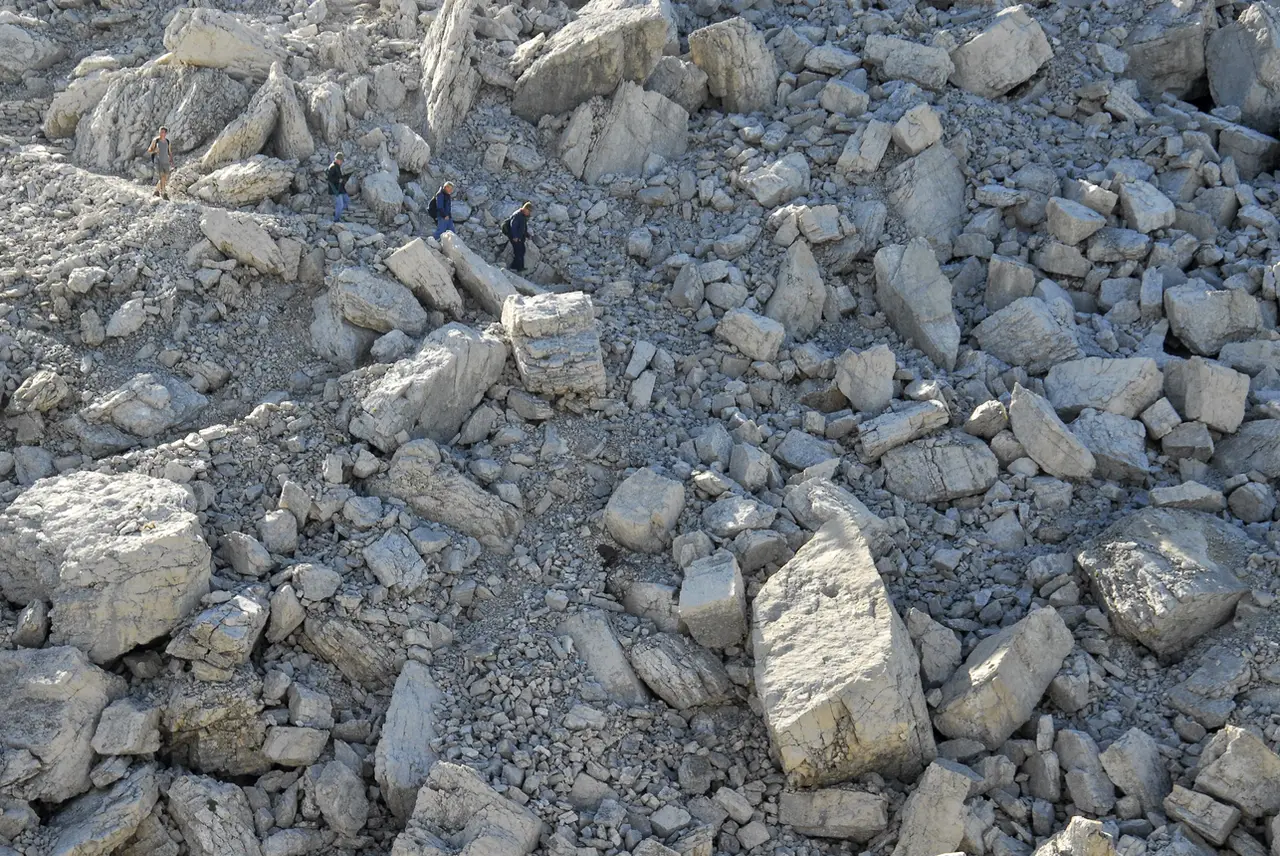
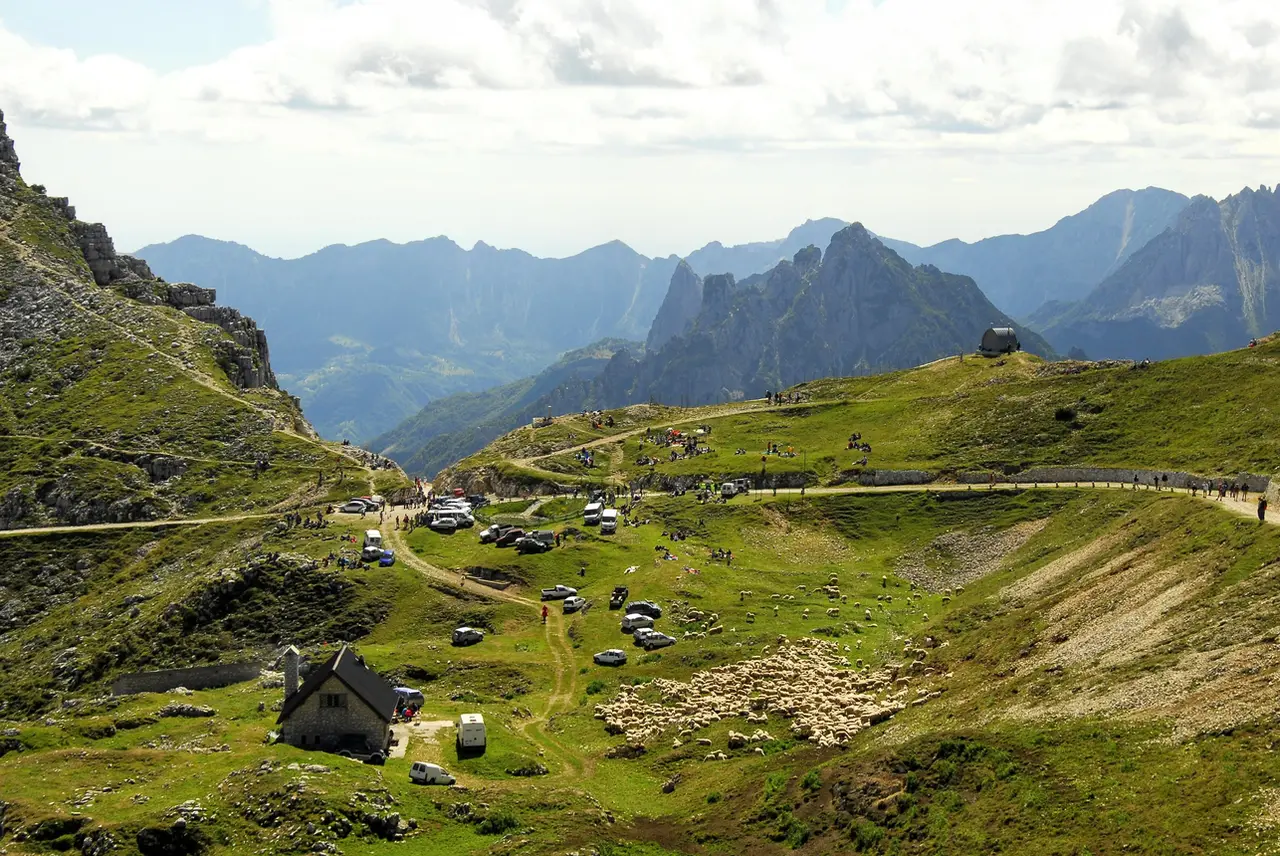
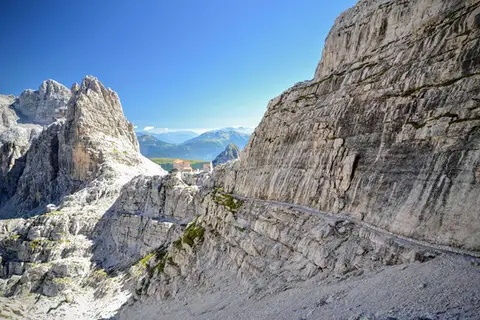
We park the car at Bocchetta Campiglia (m1216) and set off along the Strada delle 52 Gallerie. A few minutes in and we are already at the first tunnel, then the second, then the third, the fourth and the fifth. The further we go, the airier and more panoramic the route becomes, offering us striking views. The track presents no difficulty or danger, since even at its most rugged points it is never less than a metre wide; a torch is useful, especially on cloudy days. Walking times vary (from 2 to 3 hours) depending on how much attention you pay to the many information panels along the way. Finally, after the most striking stretch of the route, embellished by spectacular karst balconies and towering rock formations, we arrive at Rifugio Generale Achille Papa of the CAI Schio (m1928, 2.30 hours), happily placed by the Porte del Pasubio, where the 3 roads meet.
The area richest in traces and images of the First World War is the “Zona Sacra del Pasubio”, bounded by the Palon, the Dente Italiano and the Dente Austriaco, behind Rifugio Achille Papa.
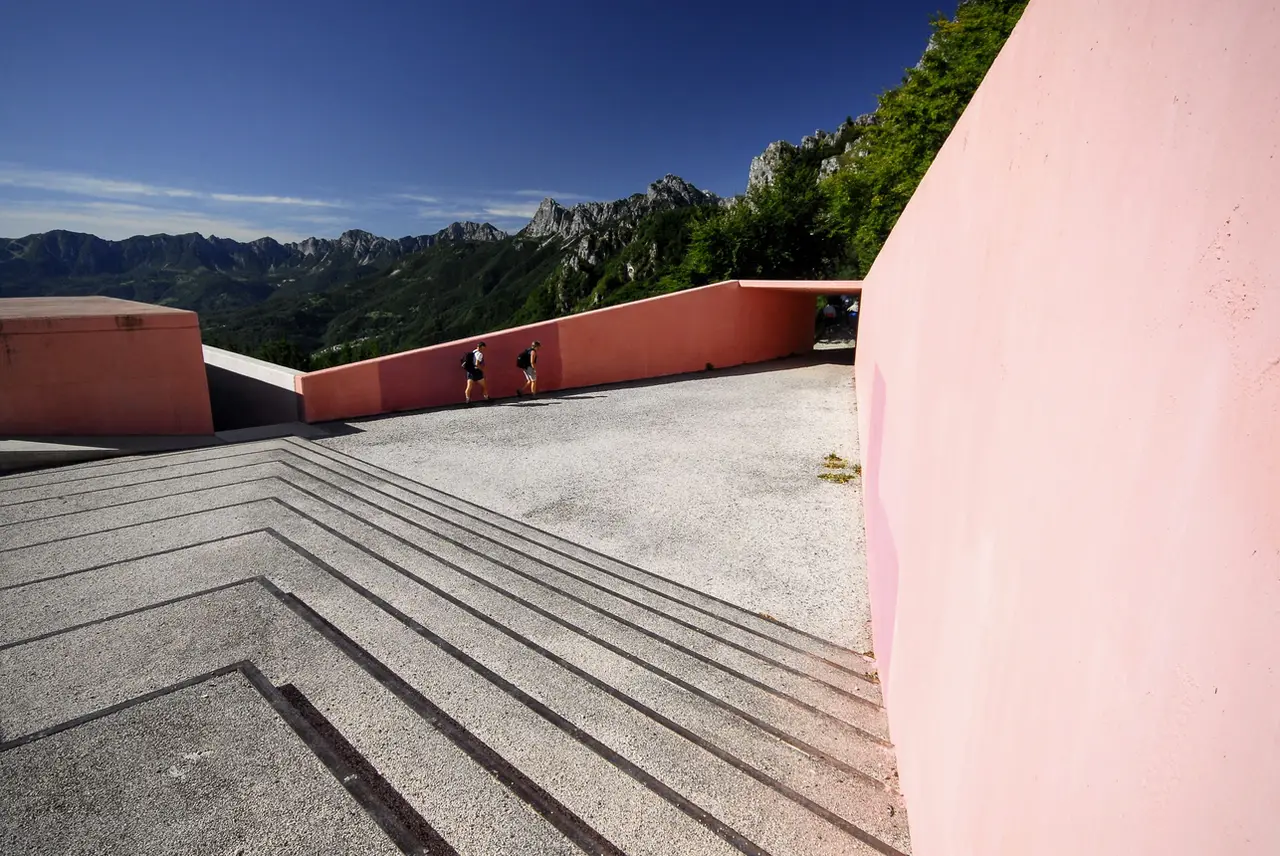
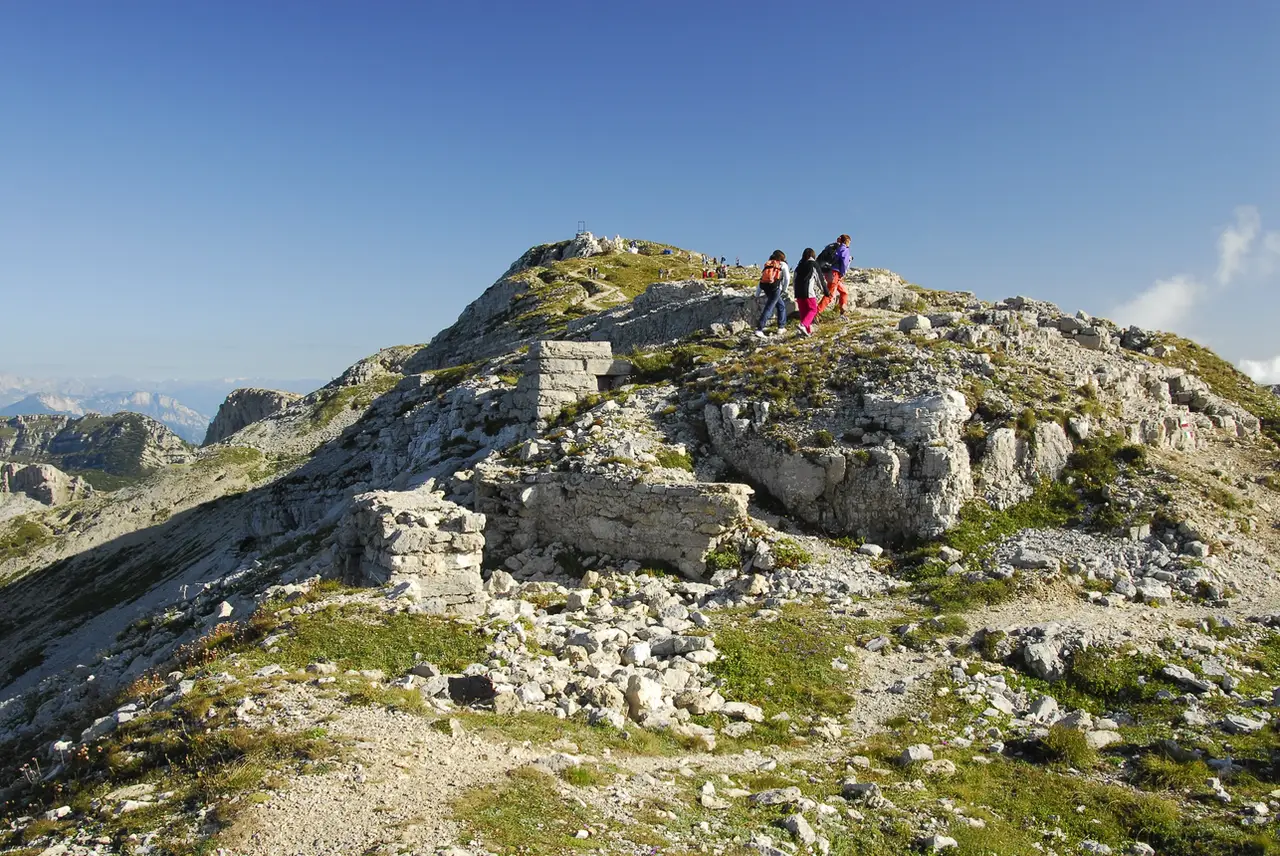
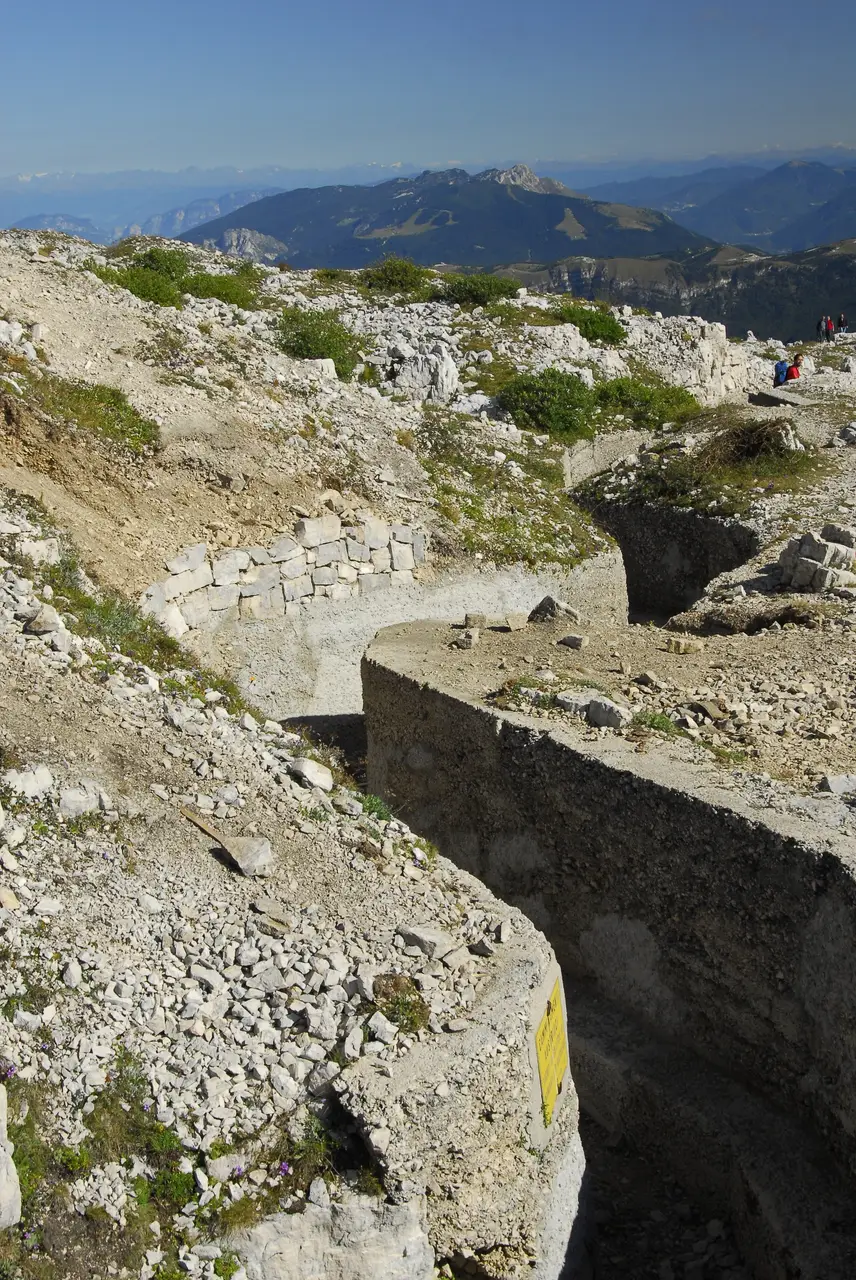
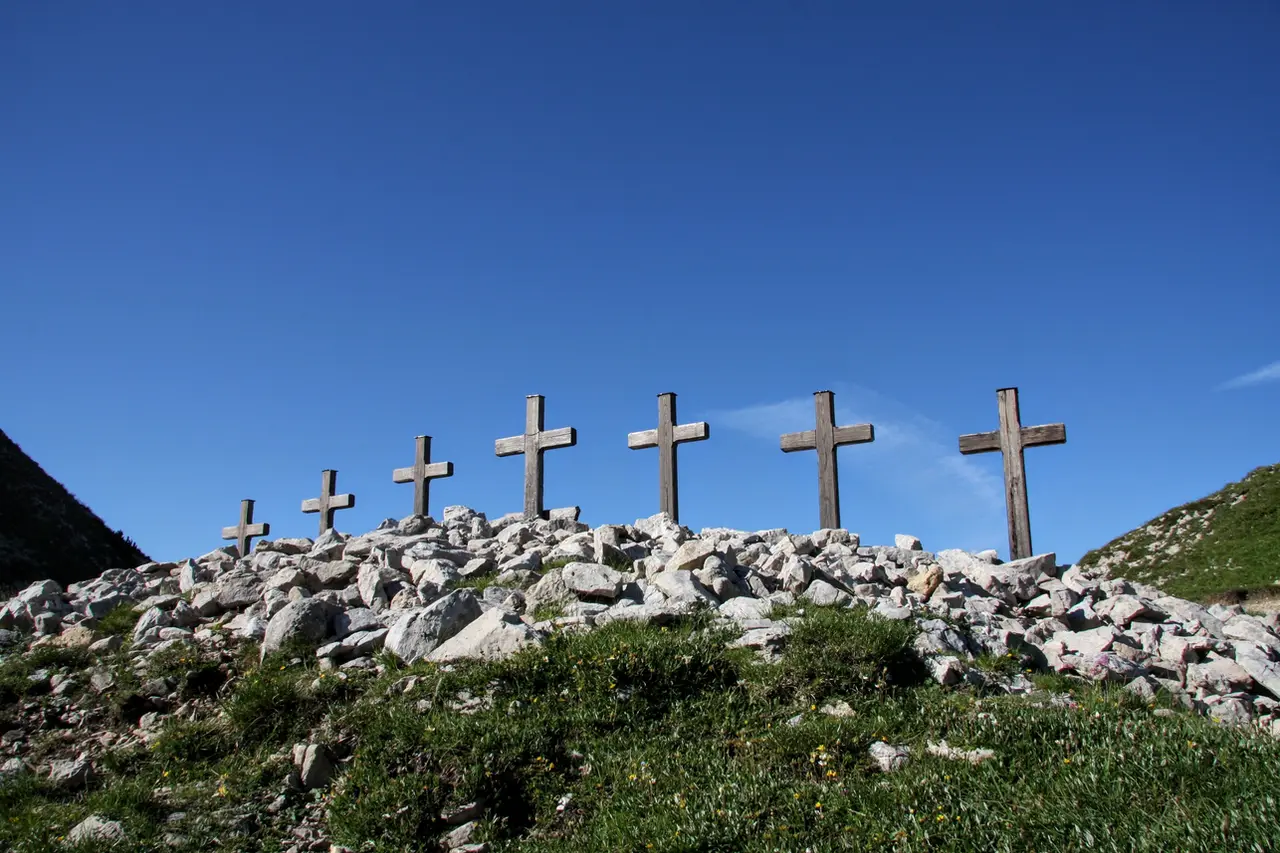
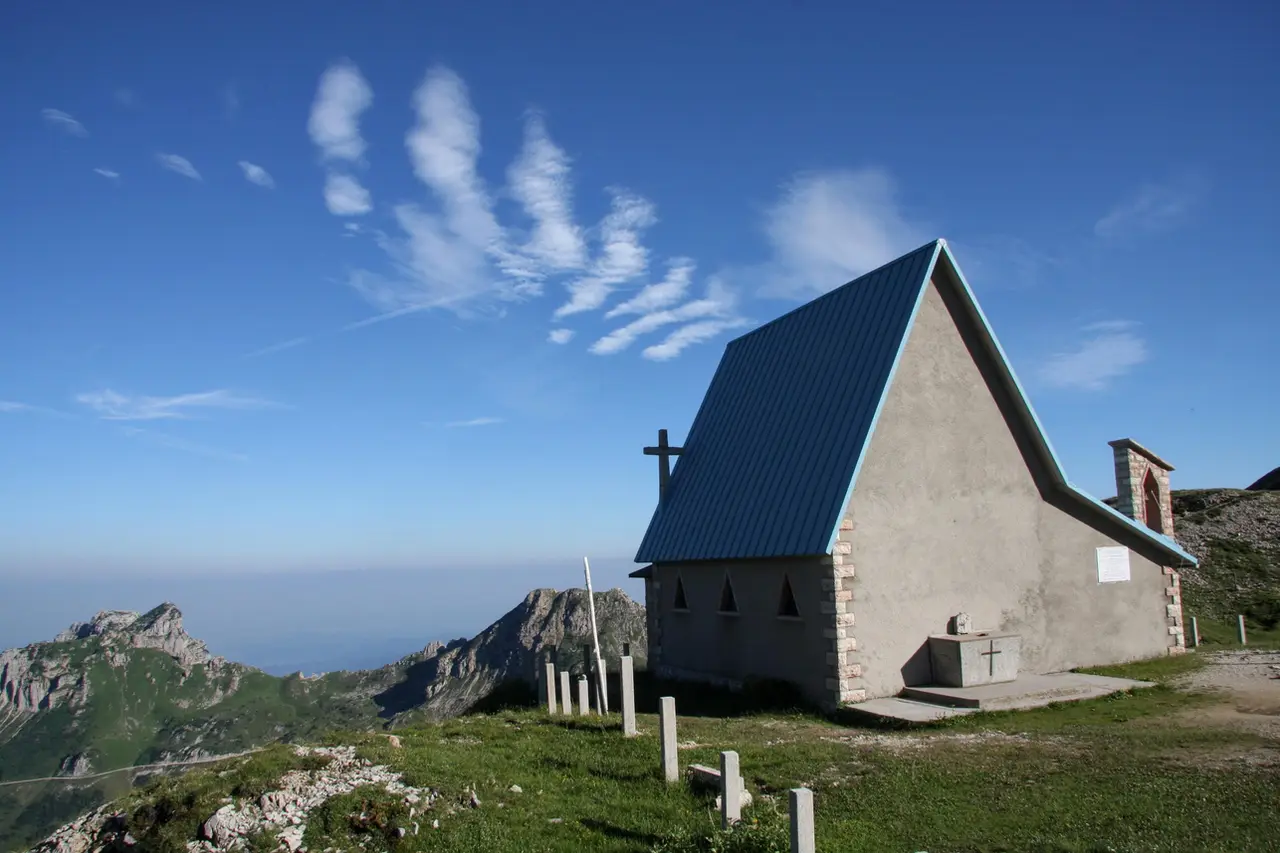
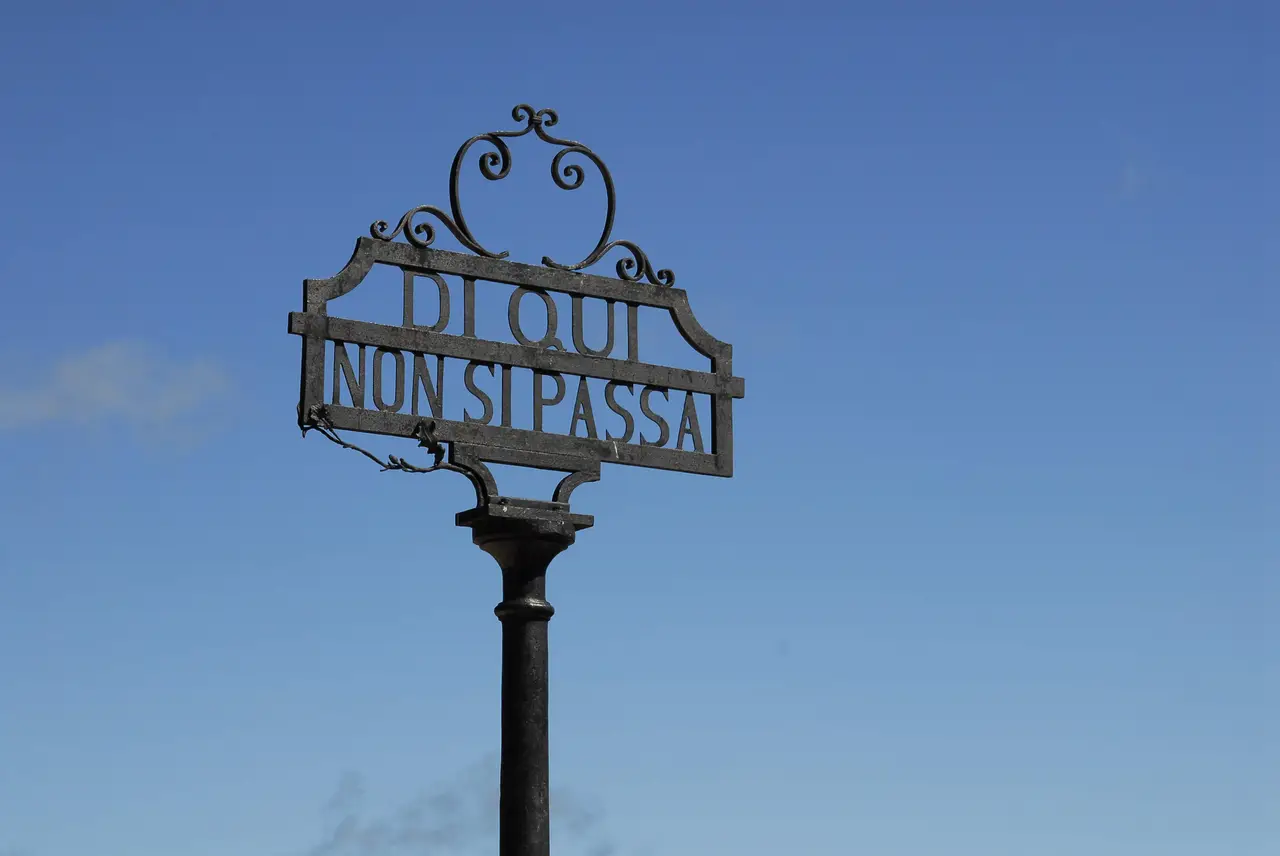
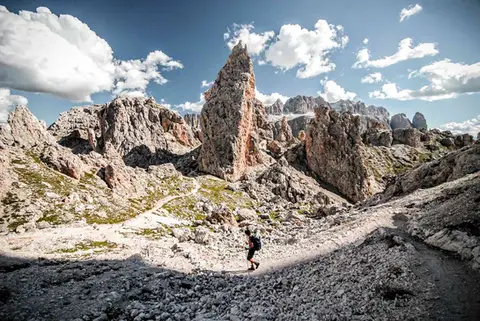
We leave the mountain hut on a path climbing towards the ruined barracks on the fore-summit of the Palon, then reach the ugly cross on the summit of the Palon (m2232, 45 minutes), taking care where the ceilings of the rooms below have given way (really). The panorama from here is exceptional: we can see the white mantle of the Adamello, the unmistakable shapes of the Dolomites and a large slice of the Venetian plain. We now continue along the broad karst ridge, crossing trenches and tunnels blasted into the rock with dynamite. We reach the Dente Italiano and then, beyond a dip, the Dente Austriaco (m2127, 30 minutes). The tracks gradually fade: from here we bear slightly to the right, descending slowly between grassy hummocks until we spot the Sette Croci. From there, on the level, we head back towards the mountain hut, passing a picturesque little church at the Selletta del Comando, then the Arco Romano (built between the two wars) and the inscription “Di qui non si passa” (none shall pass here) (m1928, 40 minutes).
For the descent we can opt for the Strada degli Scarrubbi (or retrace the 52 Gallerie path); the route, too flat at first and too steep later, is not as spectacular as the road of the tunnels; we follow it all the way back to Bocchetta Campiglia (m1216, 2 hours).