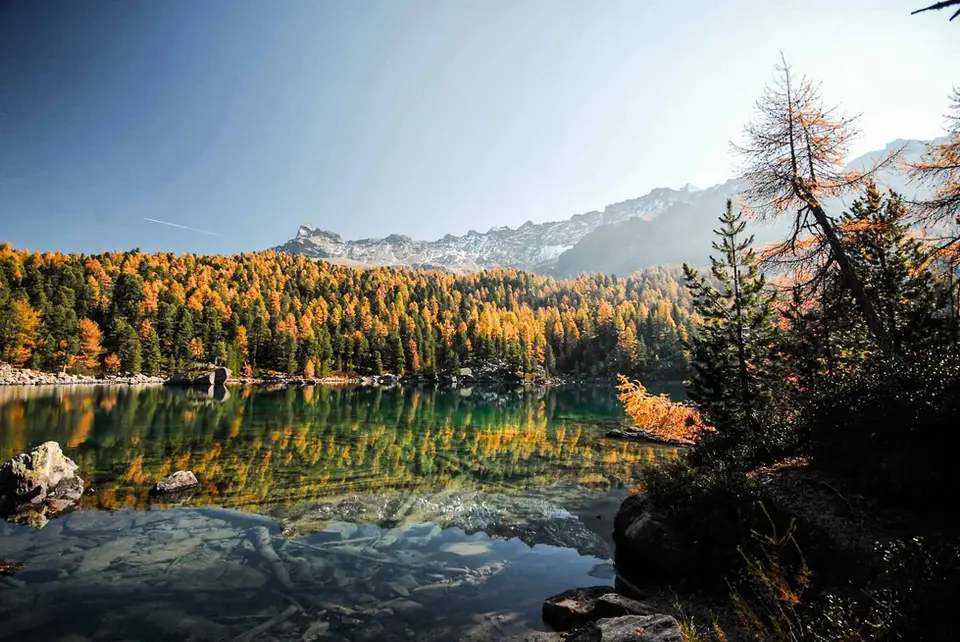
Lago di Saoseo and Lago Viola in the Val di Campo
For two or three weeks between mid-October and early November the larch woods of the Alps change colour, and any hike becomes the most beautiful of the year. The hikes on this page are the ones where the larches are the main subject, and we say so on their pages: Lago di Saoseo in Val di Campo, the balcony path between Silvaplana and Maloja, the Rifugio Cristina in Valmalenco and the lakes of the Monte Avic park.
The right moment changes every year with altitude and weather, so it is worth checking the local webcams before setting off.
The larch, up close
The European larch, Larix decidua, is the only European conifer that sheds its needles in autumn: before they fall they turn a vivid yellow, and the branches stay bare all winter. It is a mountain tree through and through, native to the Alps and the Carpathians, most abundant between 1,000 and 2,000 metres but able to reach the tree line at around 2,400. Its wood, resinous, hard and durable, was for centuries a staple material of the Alps, used for beams, floors, fences and roof shingles, and you can still recognise it in the huts and haylofts along the paths.
The larch does not rule every forest, however. In the Mont Avic Natural Park much of the soil derives from serpentinite, a rock that produces poor ground unsuited to larch and Norway spruce, and here the mountain pine thrives instead, in a forest of roughly a thousand hectares that stays green while the larches around it turn. The contrast is easy to see on the climb to the Rifugio Barbustel and on the ten-lakes loop, and it makes the park look unlike its neighbouring valleys even in the same week. The colour never lasts long, in any case, so if the webcams show full yellow it is better not to wait for the following weekend.
The hikes
By our rating, highest first. Browse them as photographs, as a list with all the numbers or on the map.
 SwitzerlandLago di Saoseo and Lago Viola in the Val di CampoTwo gems of lakes in a valley dotted with alpine pastures. At its best between October and November.
- Grade
- T
- Time
- 4:30h
- Distance
- 13km
- Ascent
- 550m
- Rating
- 9/10
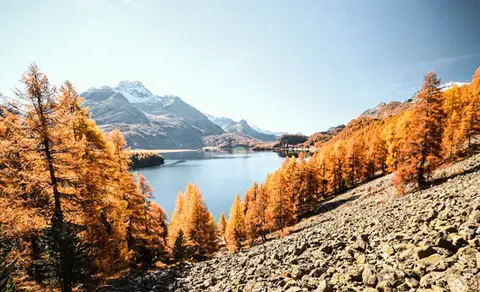 SwitzerlandThe balcony path from Silvaplana to the Maloja PassAn easy balcony path dominated by breathtaking views of Lake Sils and Lake Silvaplana, with the Bernina and the peaks of the Bregaglia in the background.
- Grade
- T
- Time
- 4:00h
- Distance
- 13km
- Ascent
- 470m
- Rating
- 8/10
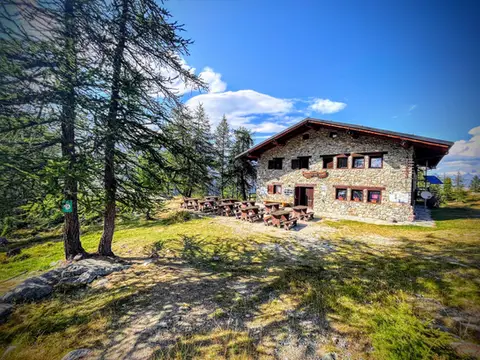 Aosta ValleyTo Rifugio Barbustel, in the heart of the Monte Avic Natural ParkCrystal-clear lakes and larch woods with a North American feel, in under 3 hours of walking.
- Grade
- T
- Time
- 4:30h
- Distance
- 9.6km
- Ascent
- 700m
- Rating
- 8/10
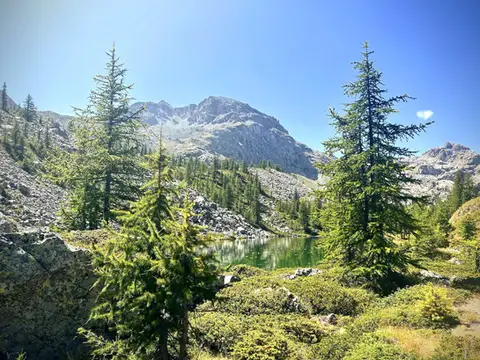 Aosta ValleyThe Monte Avic 10-lake loop (2 days)10 lakes, 3 mountain huts and a 3000-metre peak. A long 27km loop in the Monte Avic Natural Park, almost entirely in stern alpine terrain between 2000 and 3000 metres.
- Grade
- E+
- Time
- 12:00h
- Distance
- 27km
- Ascent
- 1,710m
- Rating
- 8/10
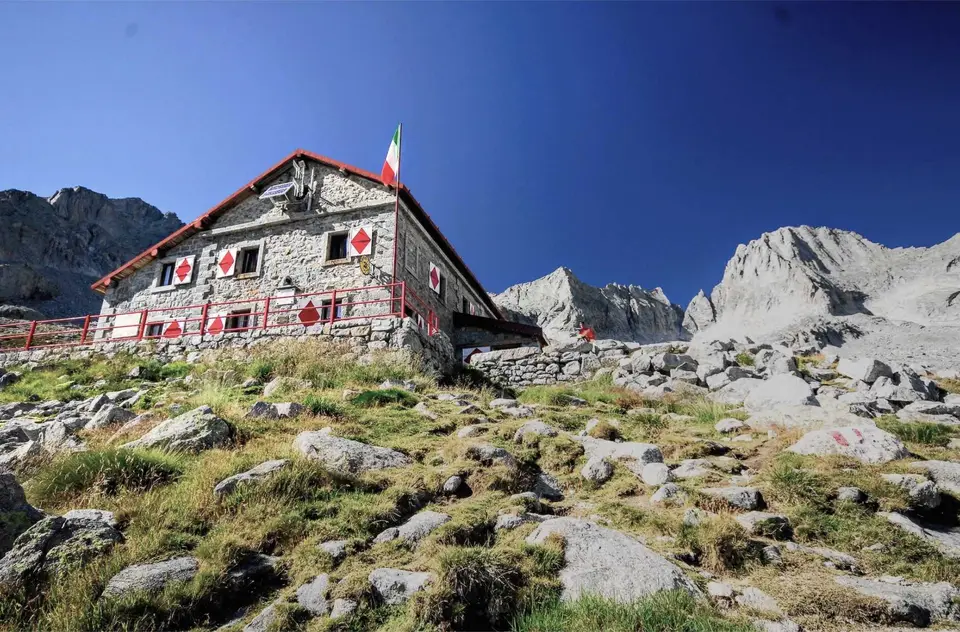
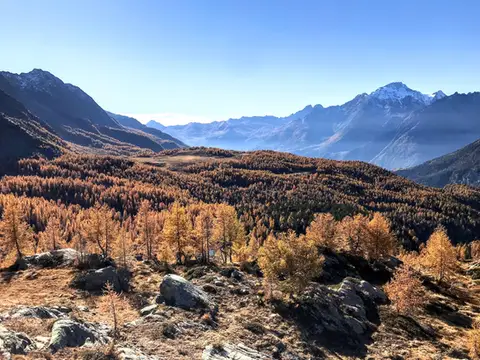 ValtellinaRifugio Cristina, a balcony over the larch woods of the ValmalencoA short walk to Rifugio Cristina at Alpe Prabello, at the foot of Pizzo Scalino.
- Grade
- T
- Time
- 2:00h
- Distance
- 6.5km
- Ascent
- 230m
- Rating
- 8/10
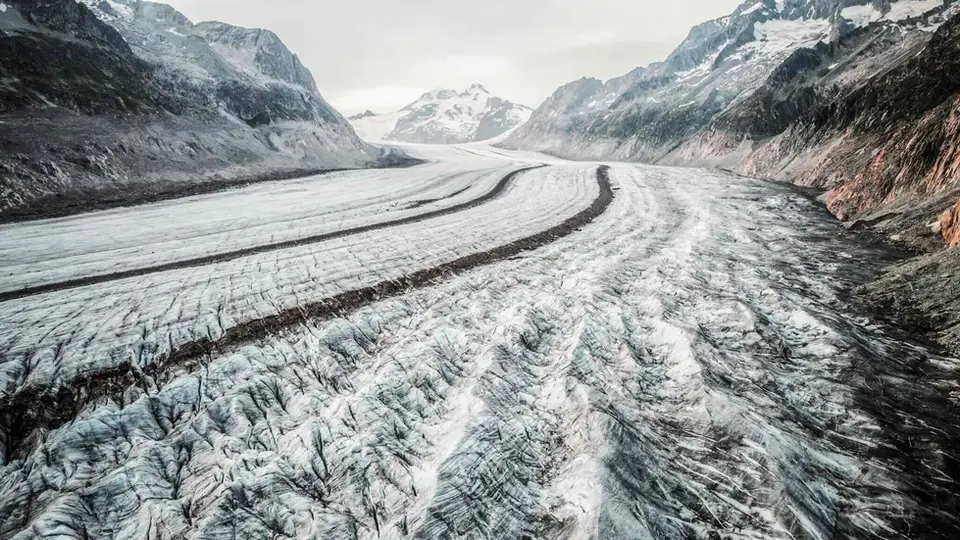
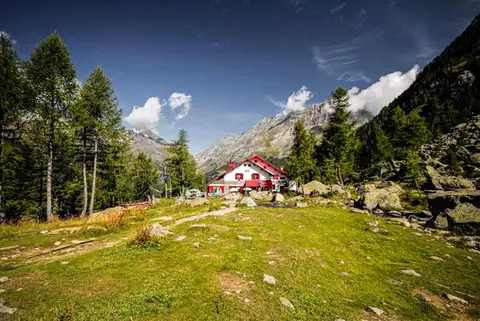 ValtellinaRifugio Gerli Porro and the Ventina Glacier TrailDiscovering Alpe Ventina, on the trail of a retreating glacier.
- Grade
- T
- Time
- 3:30h
- Distance
- 10km
- Ascent
- 700m
- Rating
- 7/10
Questions
The answers come from the hike pages listed here.
Which one is the best, in your view?
Lago di Saoseo and Lago Viola in the Val di Campo, which we rated 9 out of 10.
Which one is the easiest?
Rifugio Cristina, a balcony over the larch woods of the Valmalenco: grade T, 2:00 hours of walking and 230 metres of ascent.
How long do these hikes take?
From 2:00 to 12:00 hours of walking, with ascents between 230 and 1,710 metres.
More guides
Other lists that share some of these hikes.