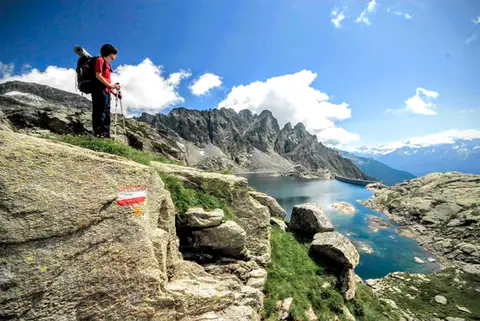
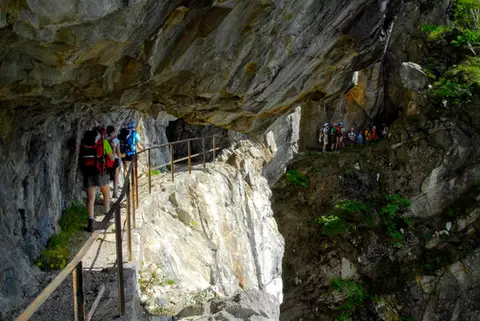
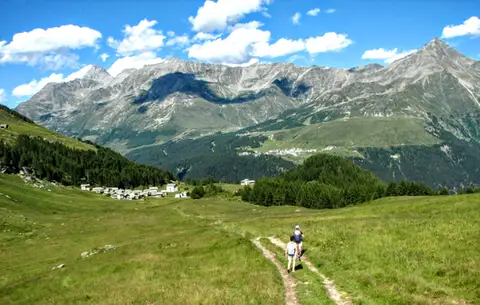
A short half-day walk, ideal for families or for spring and autumn, given the low altitude. Short but packed with stops and natural and cultural sights: first the Acquafraggia Falls, which we see from below, from the middle and from above, on an entertaining path equipped with iron ladders; then Savogno and Dasile, two clusters of houses inhabited all year round (at least for now, and among the few Alpine villages still inhabited all year round); and finally we descend the fine Savogno mule track, stopping at old stone basins and a wine press.
The Acquafraggia Falls
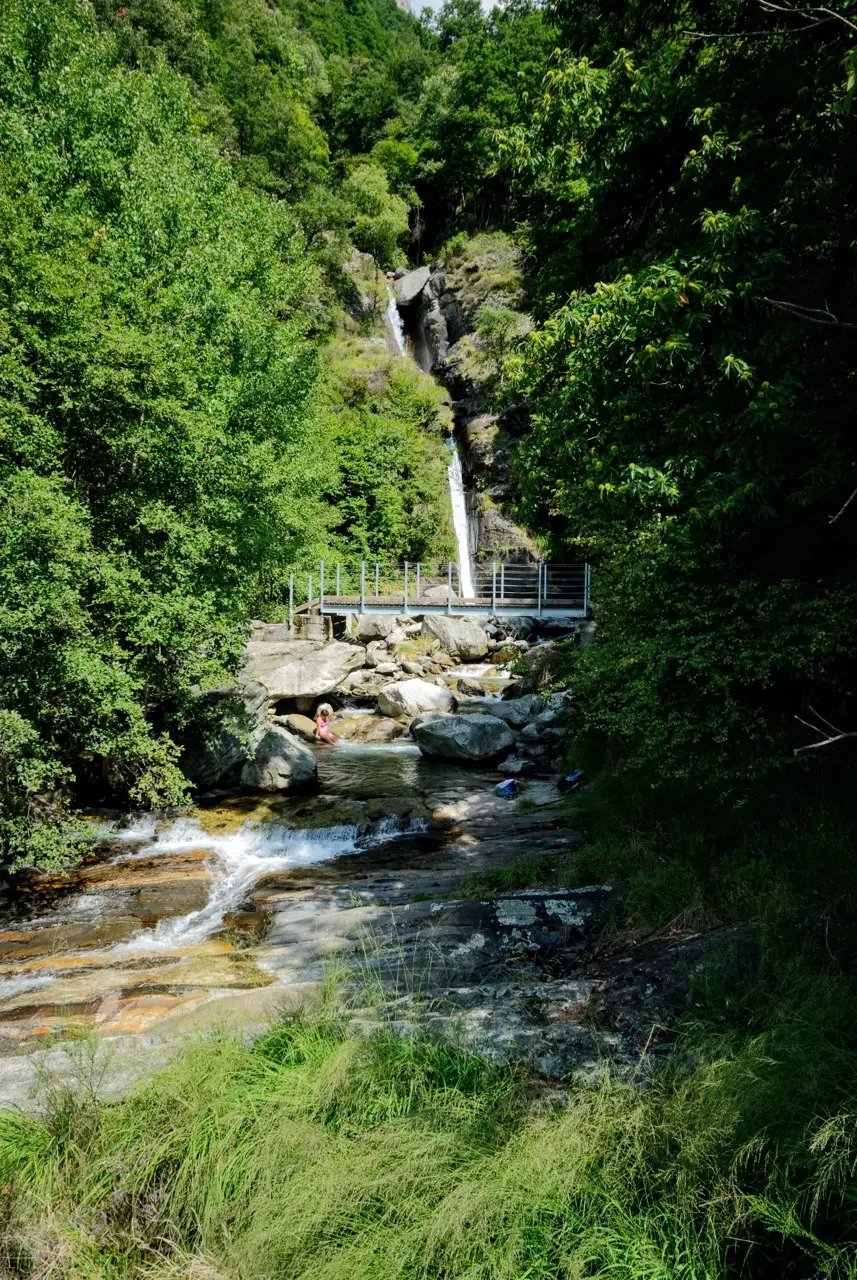
We park near the Acquafraggia Falls (m446) at Borgonovo di Piuro. The falls are thronged with hordes of tourists and locals; after all, even Leonardo da Vinci mentions them in the Codex Atlanticus ("up along this river there are falls of water of 400 braccia, which make a fine sight"), so who are we not to go?
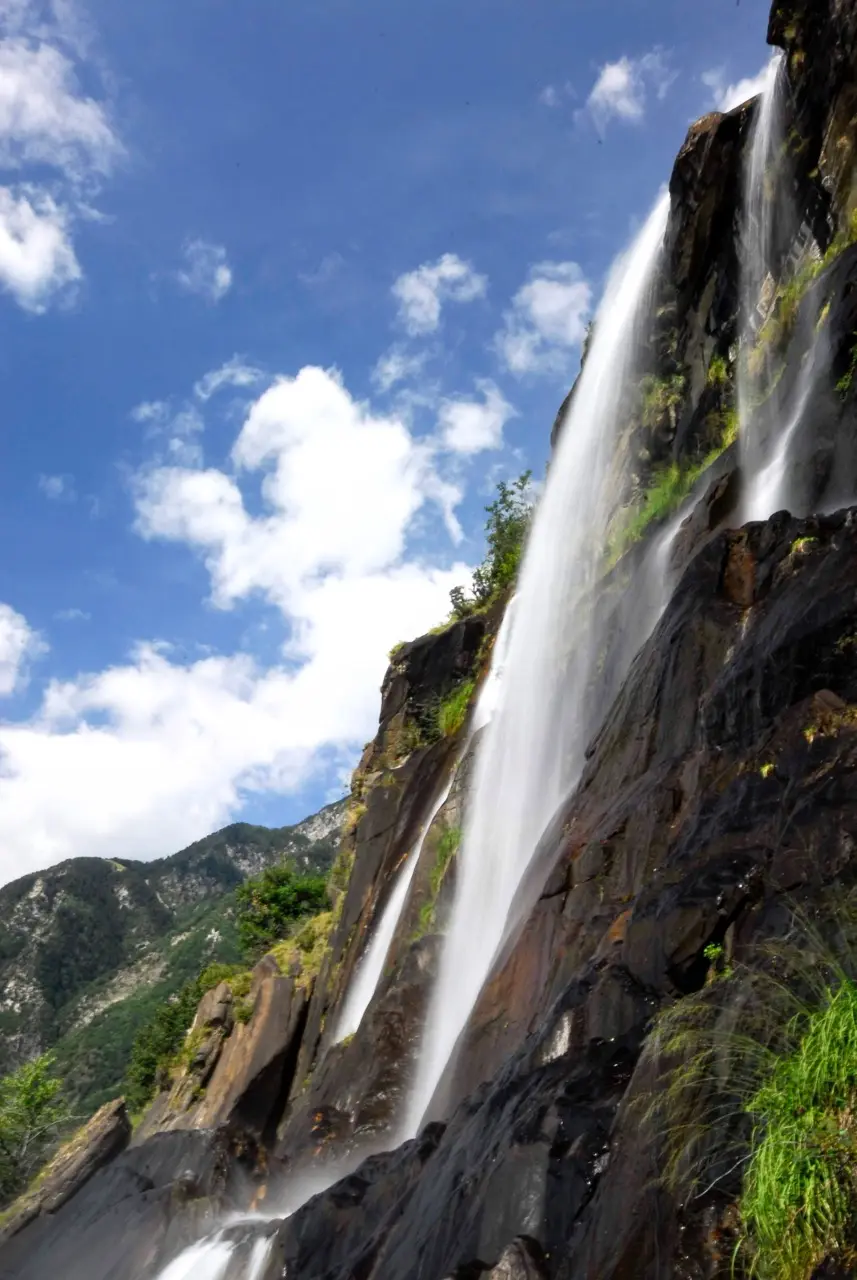
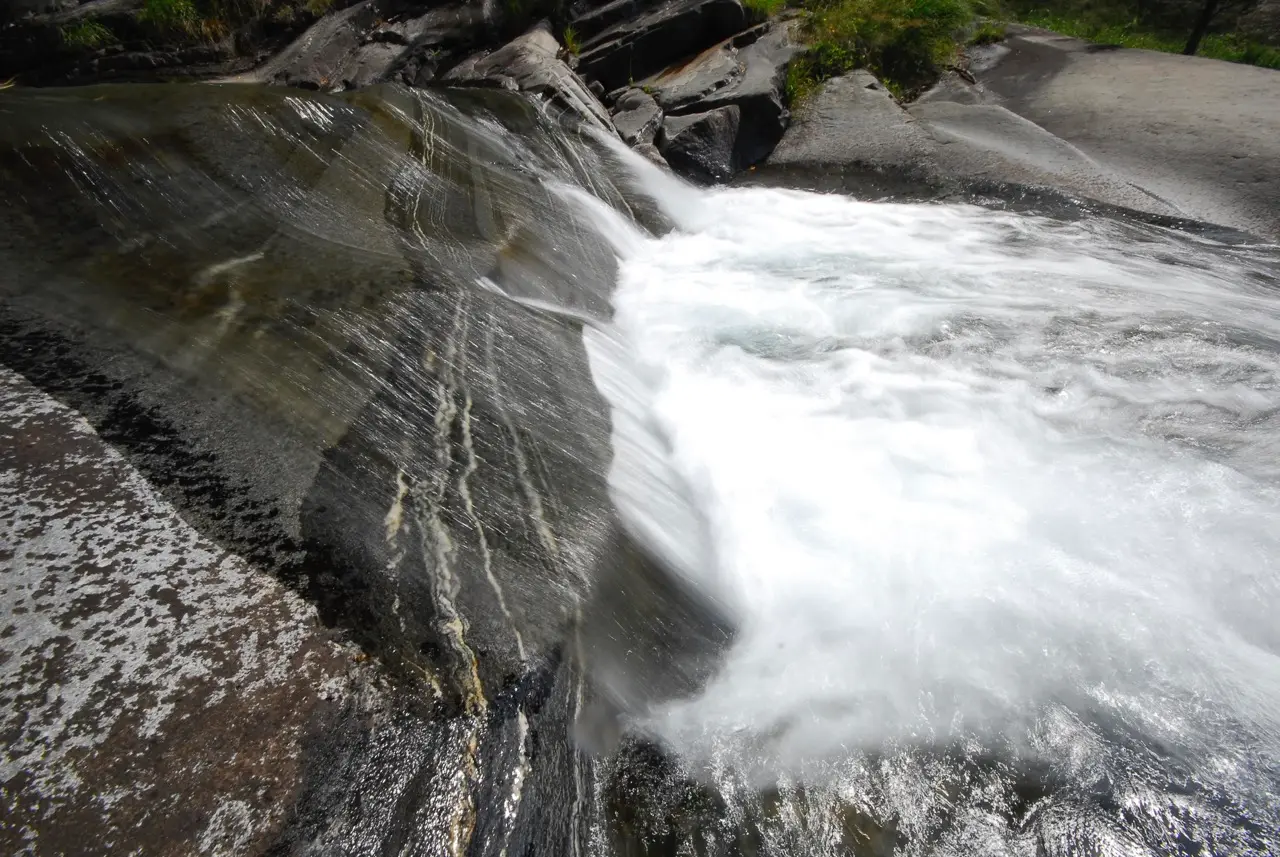
The waterfall is a fine double drop of 200 metres, but it is best to go after a few days of rain, when the flow is at its peak and the name "Acquafraggia" ("Acqua Fracta" in Latin, meaning agitated water, broken up by falls) makes sense; in dry spells, the waterfall is reduced to a veil of water.
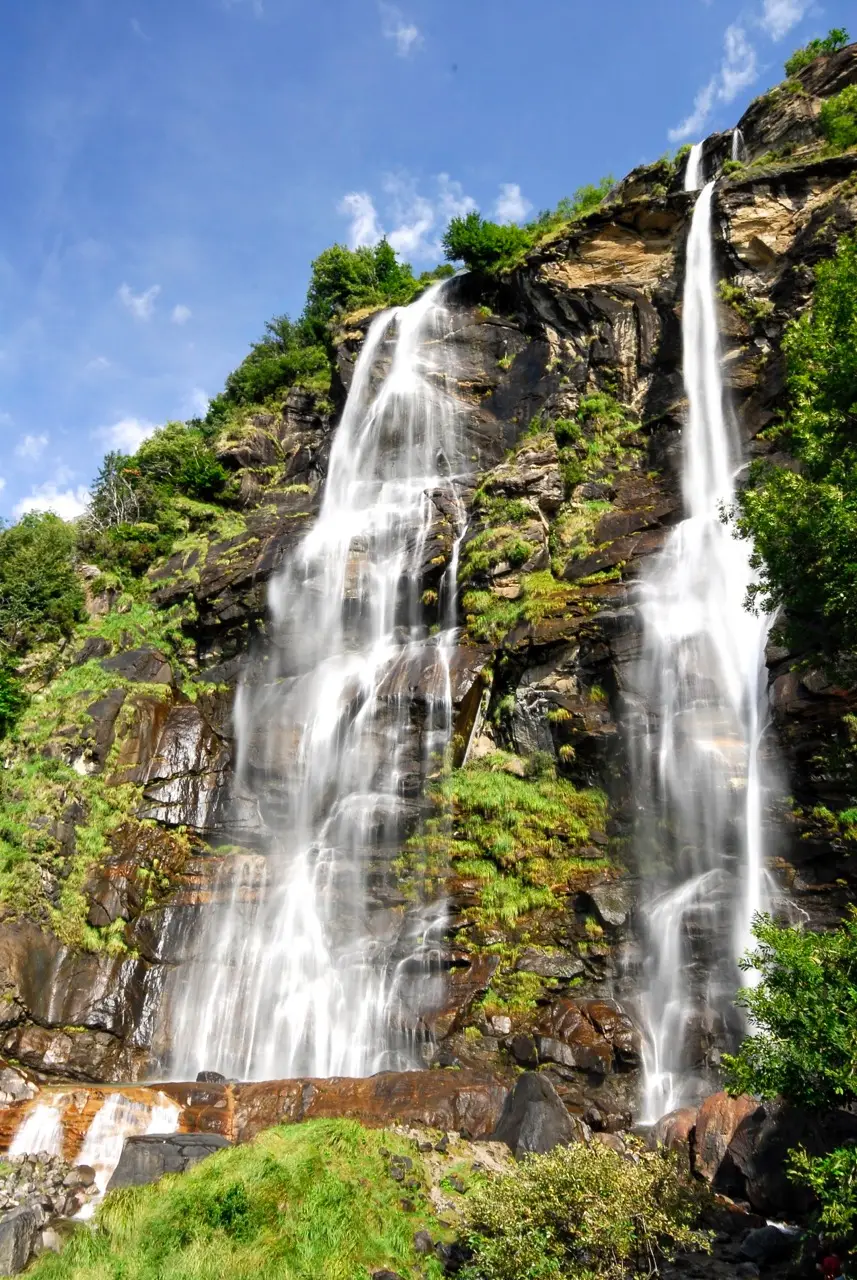
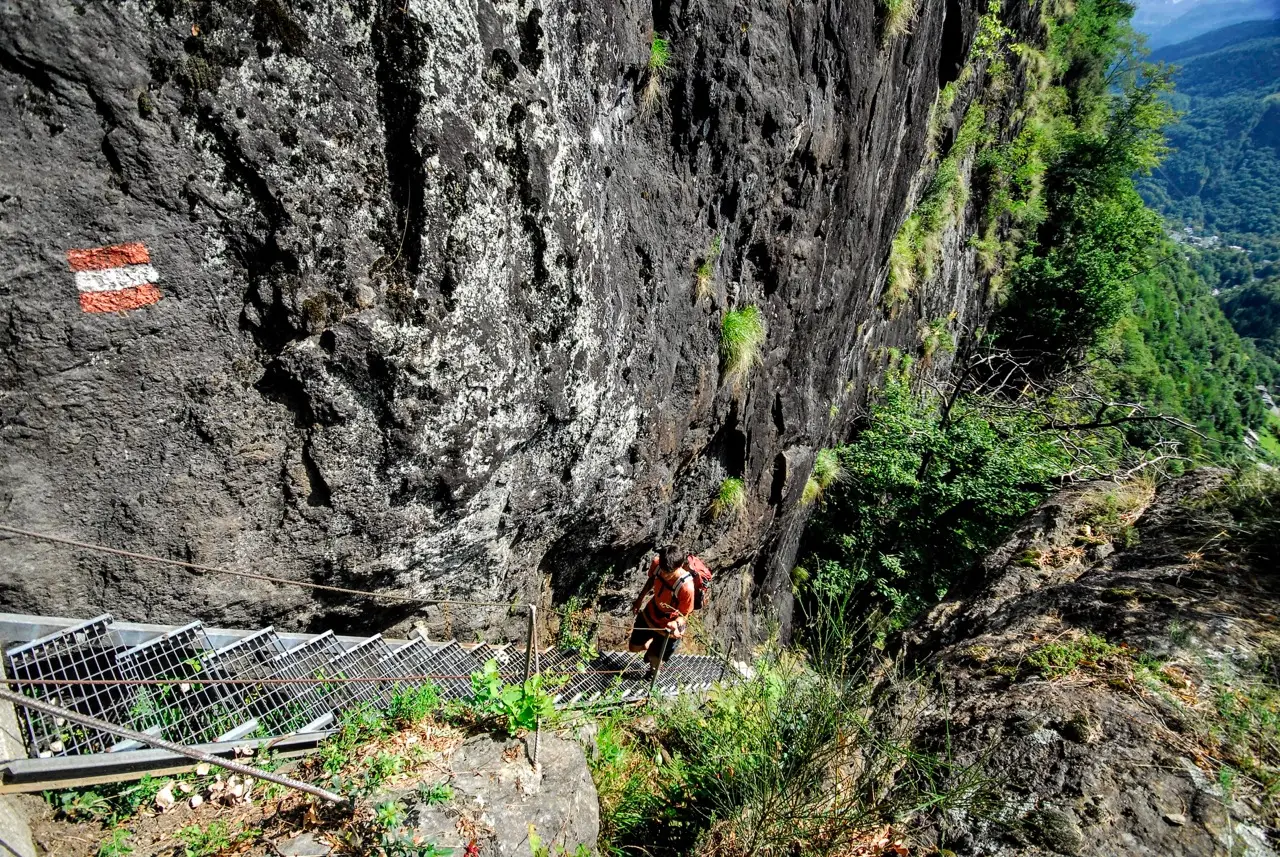
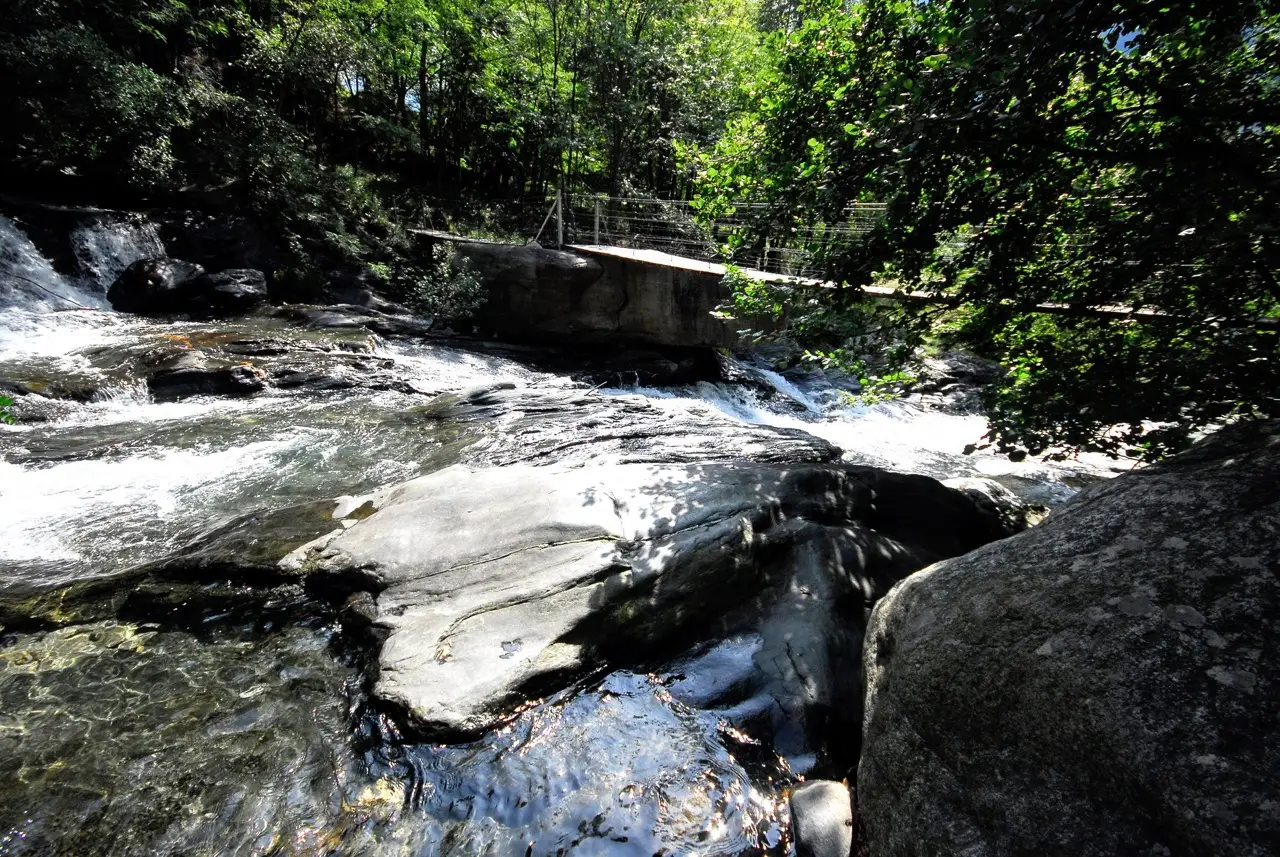
On the way up we take the waterfall path, which climbs the rock step from which the falls plunge by means of easy metal ladders. Short detours into the woods let us look out over the two drops of the waterfall, admiring the force of the water as it crashes onto the rock. The falls throw up so much spray that a microclimate has actually formed around them; for example, this is the northernmost point in Europe where the fern Pteris cretica grows.
Having reached the top of the falls, we cross the Torrente Acquafraggia and follow it on its orographic right. We cross it again higher up near a lovely pool with a "cigarette" waterfall, and then join the mule track to Savogno (m932, 1:15 hours).
Savogno and Dasile
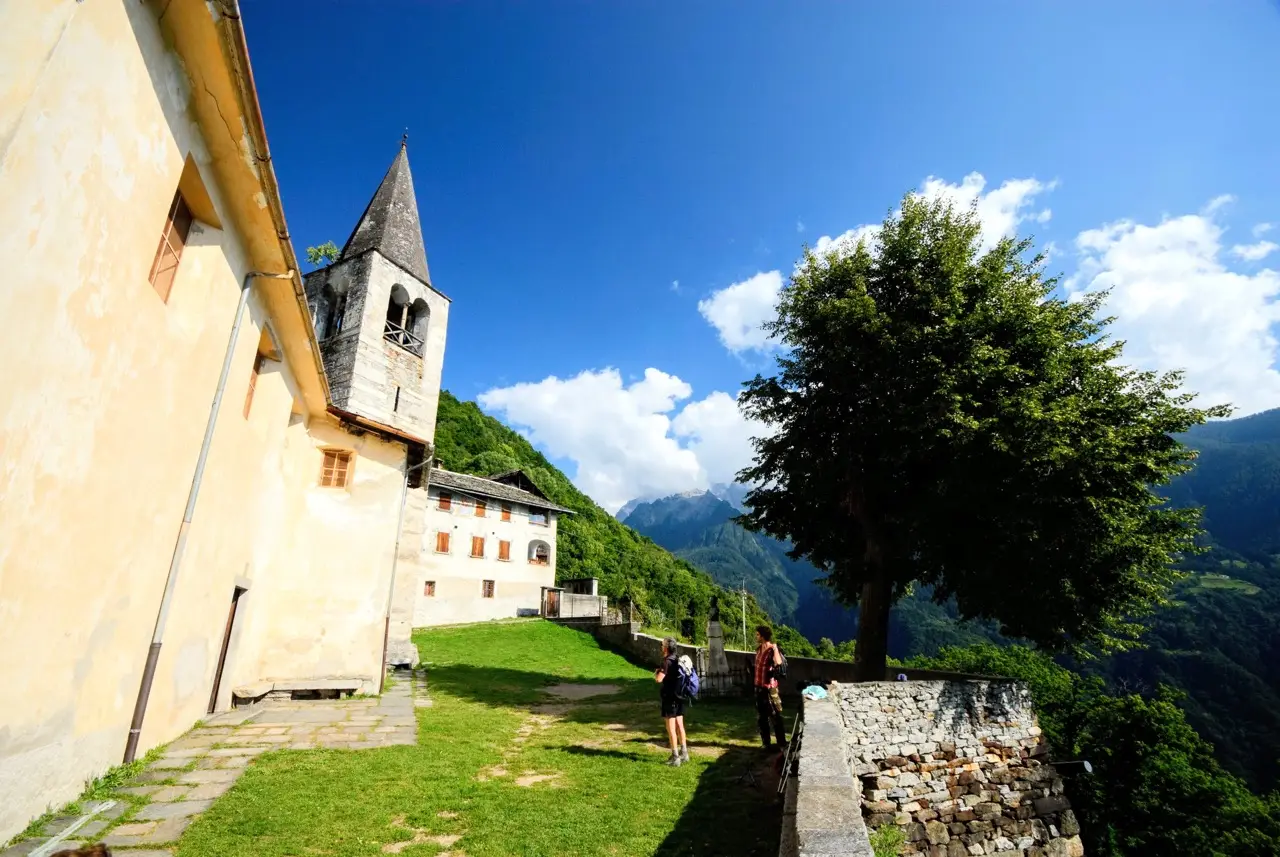
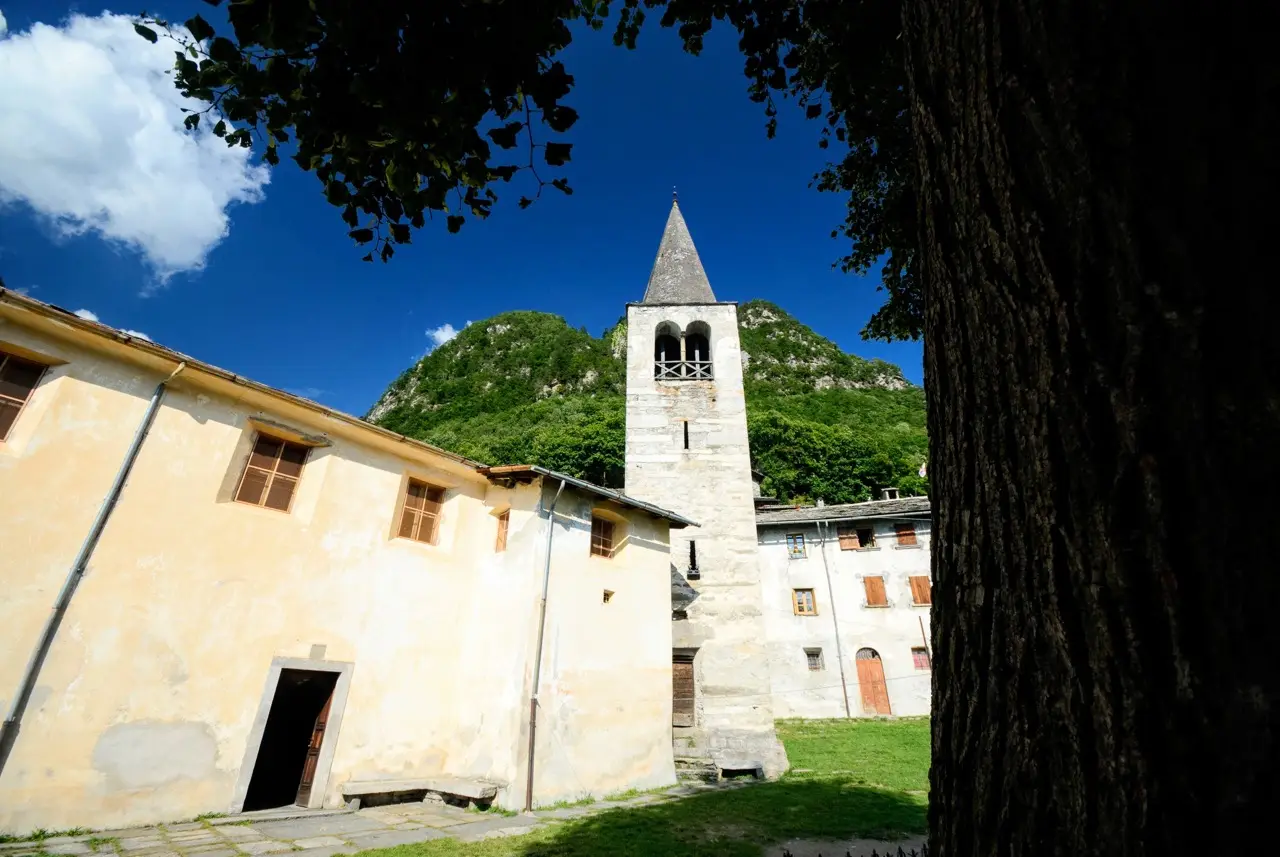
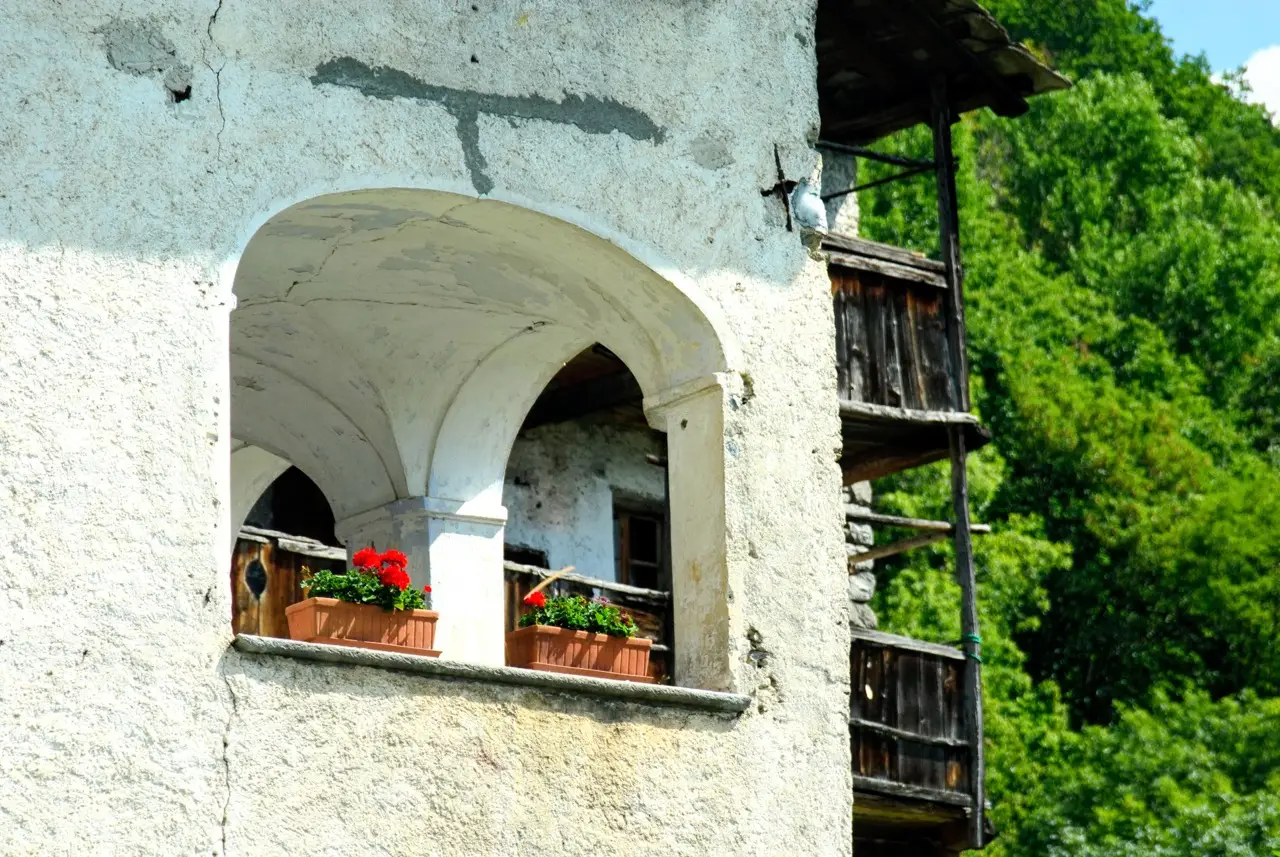
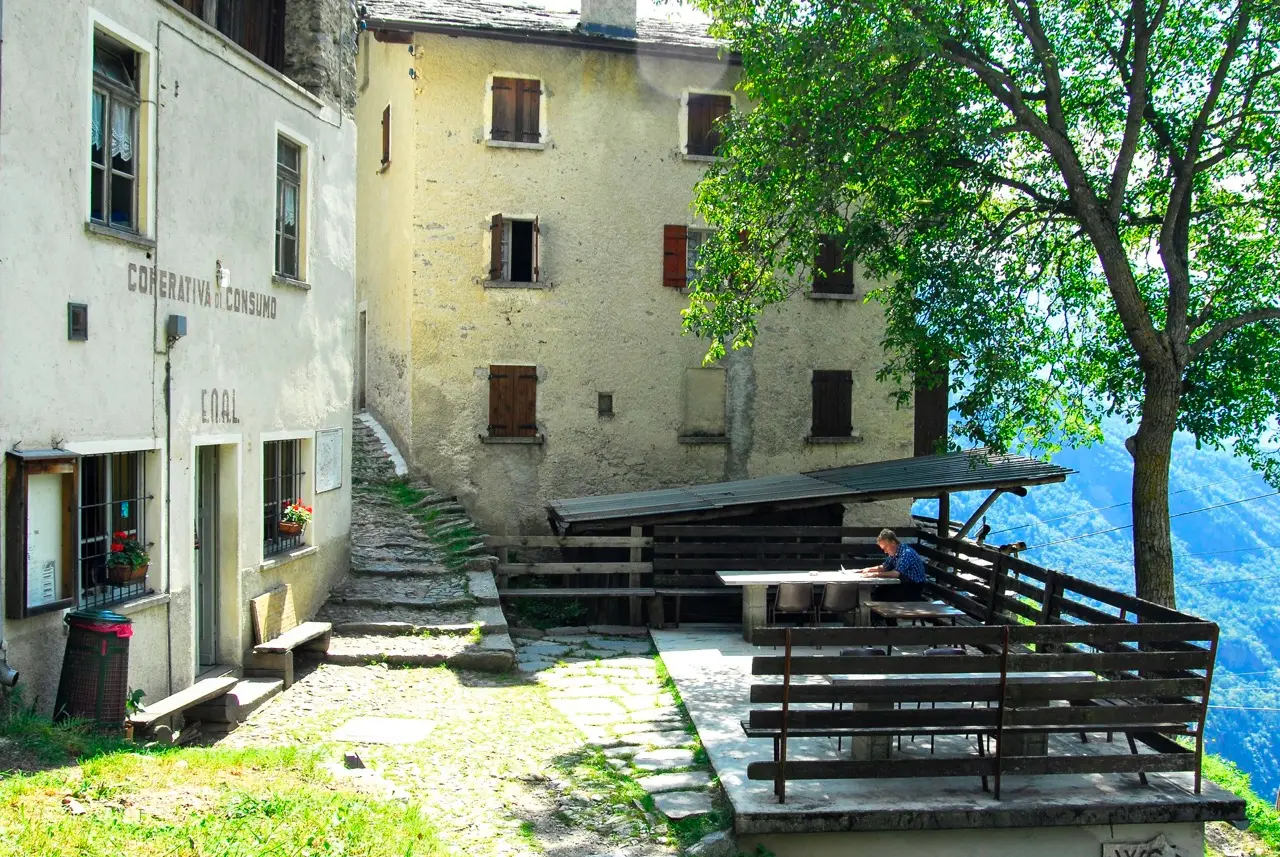
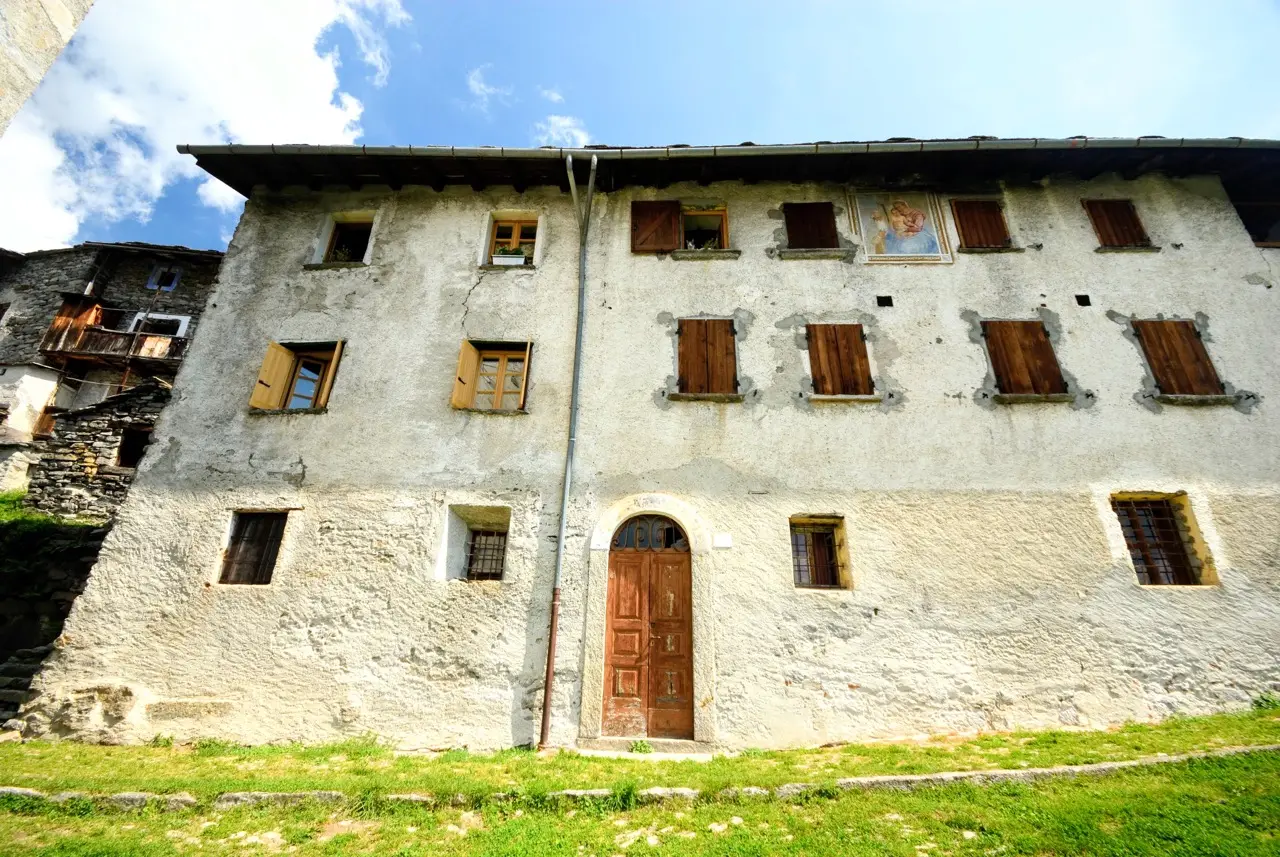
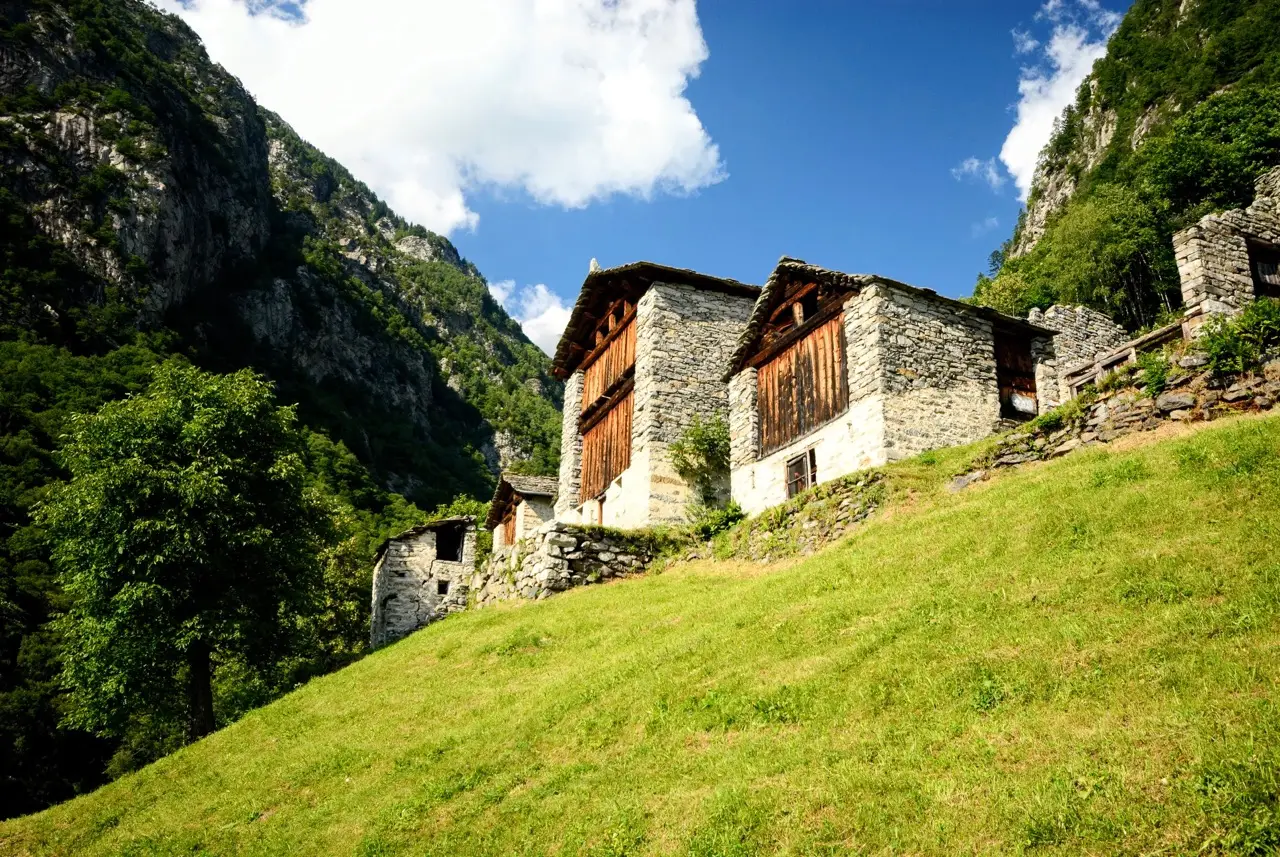
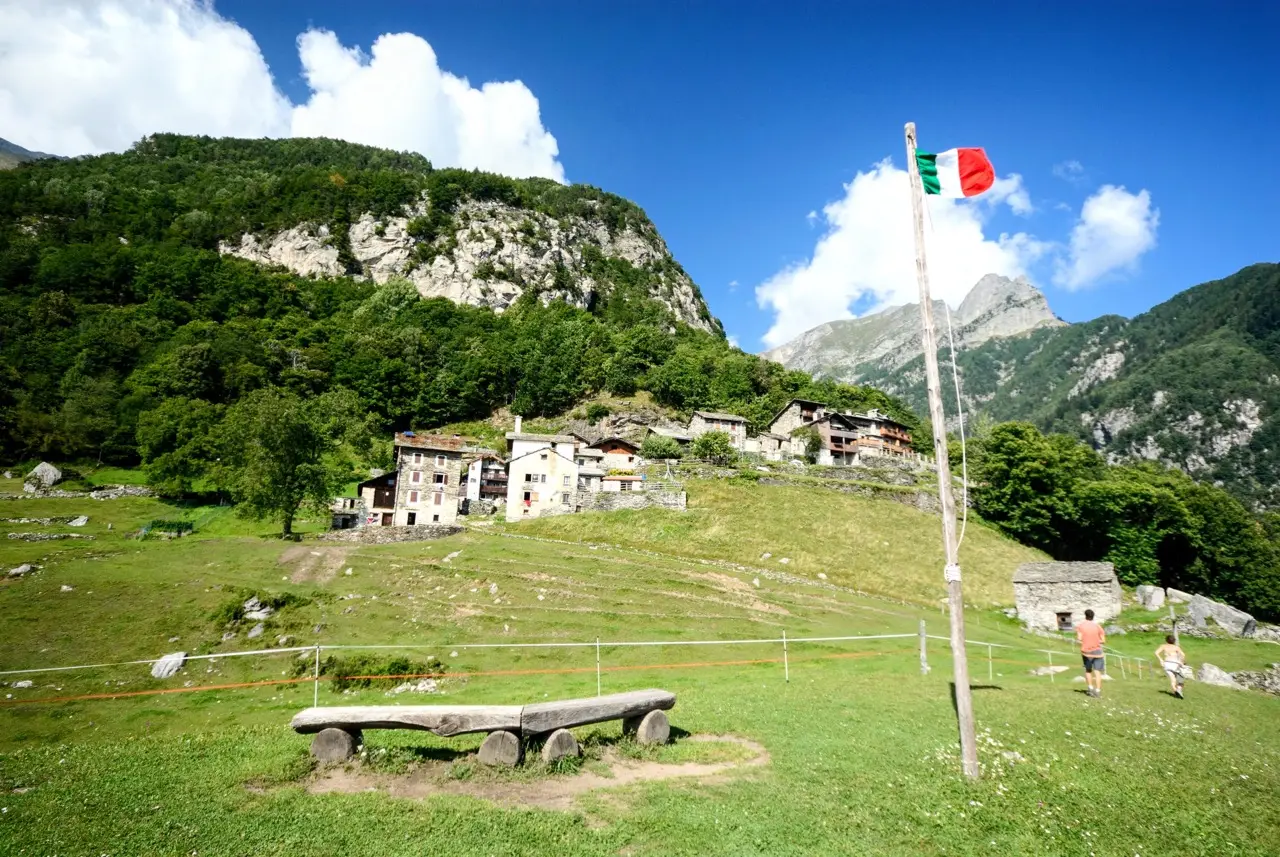
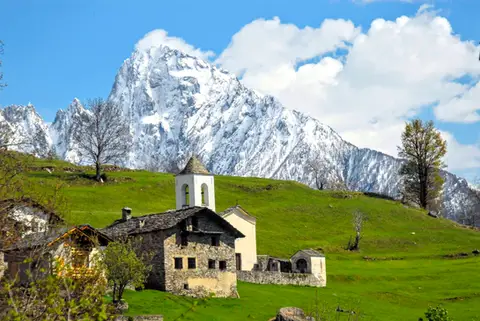
Savogno and Dasile are two Lilliputian Alpine villages that still have a life of their own. Savogno, the prettier of the two, is dominated by a fine church, propped up by a buttress that serves as its balcony. Until the 1950s Savogno was still densely populated, so much so that it had a primary school. In the following years, however, the village gradually emptied (and the school with it), and the school was later restored and turned into a mountain hut (the Rifugio Savogno, open all year round).
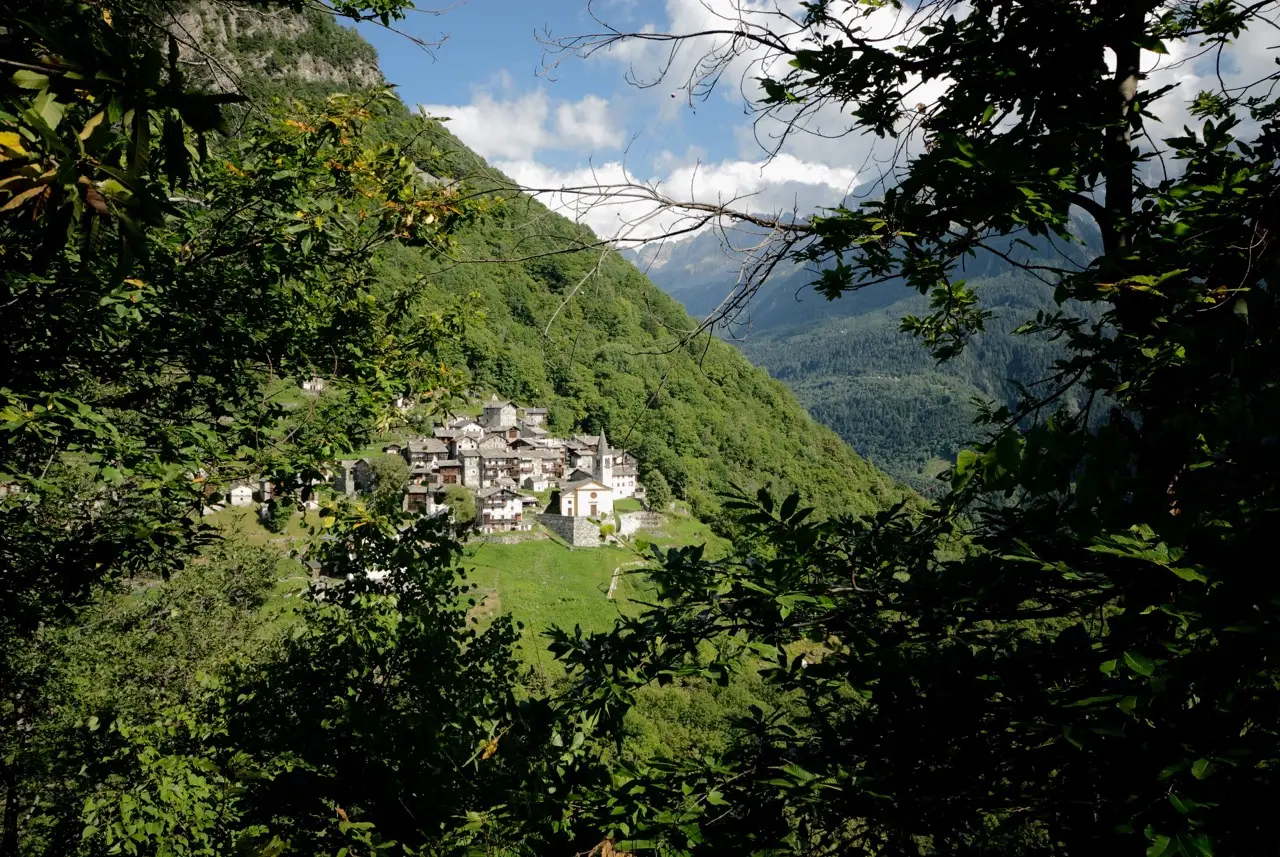
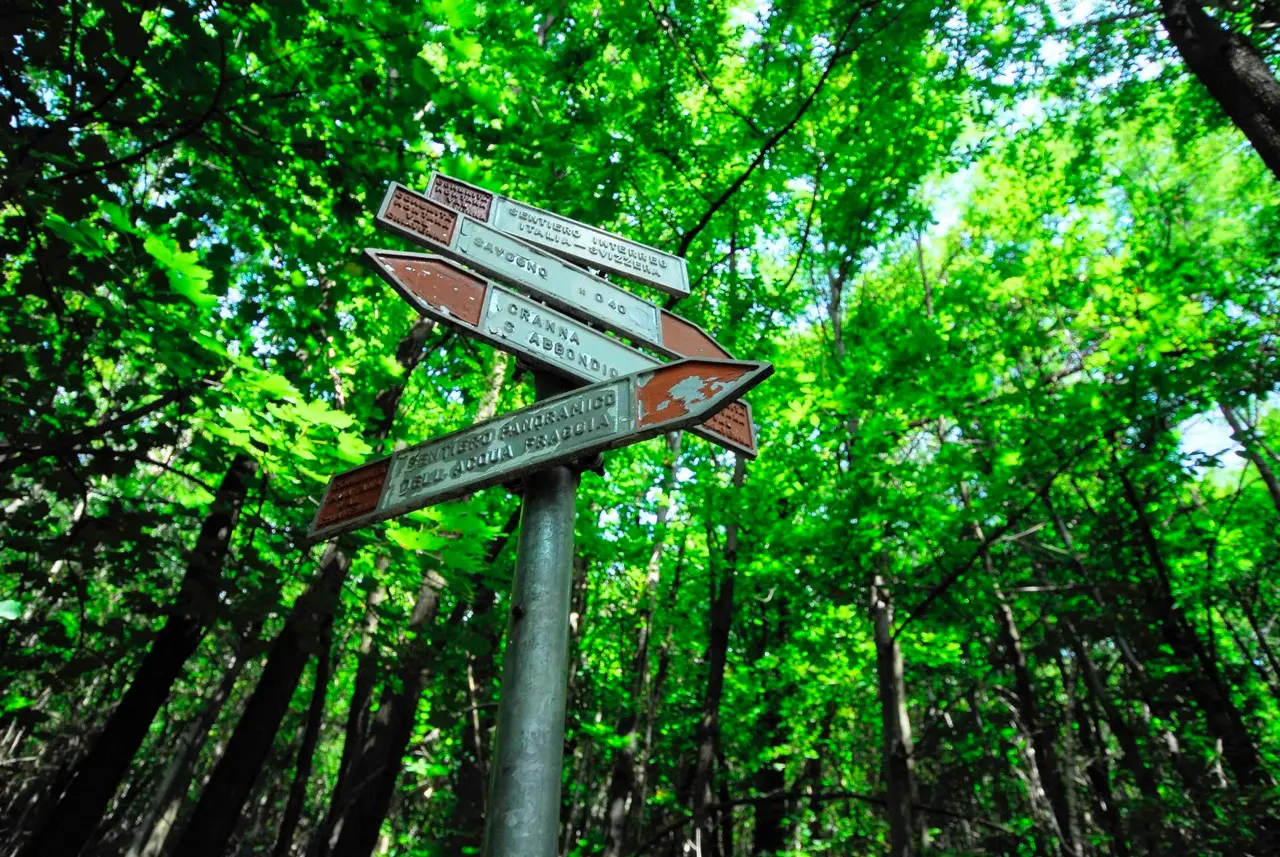
From Savogno we can continue, still on a fine mule track, on the opposite side of the Acquafraggia to Dasile (m1032, 30 minutes), slightly smaller but with a larger meadow on which to sprawl in the sun. We then return to Dasile by the same path (20 minutes).
The historic Savogno mule track and the 18th-century wine press
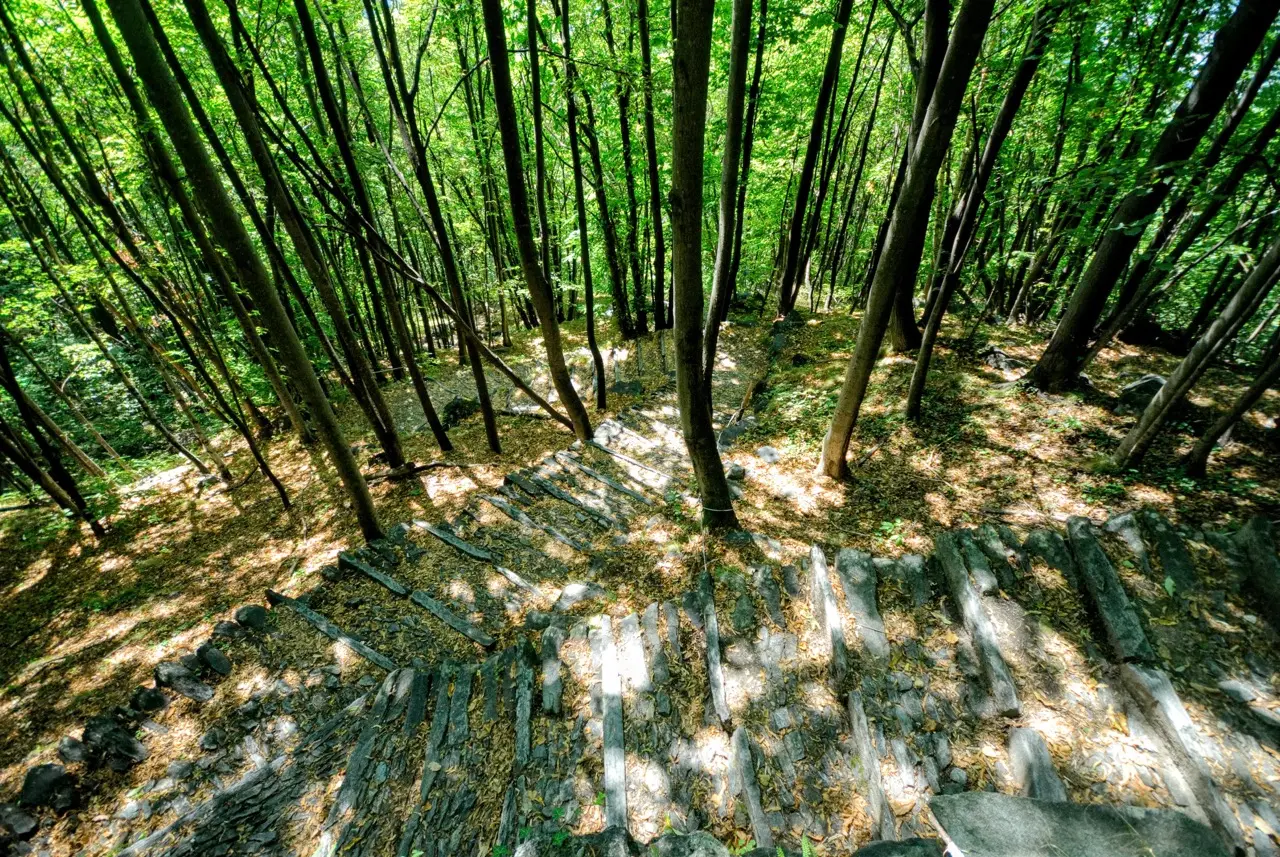
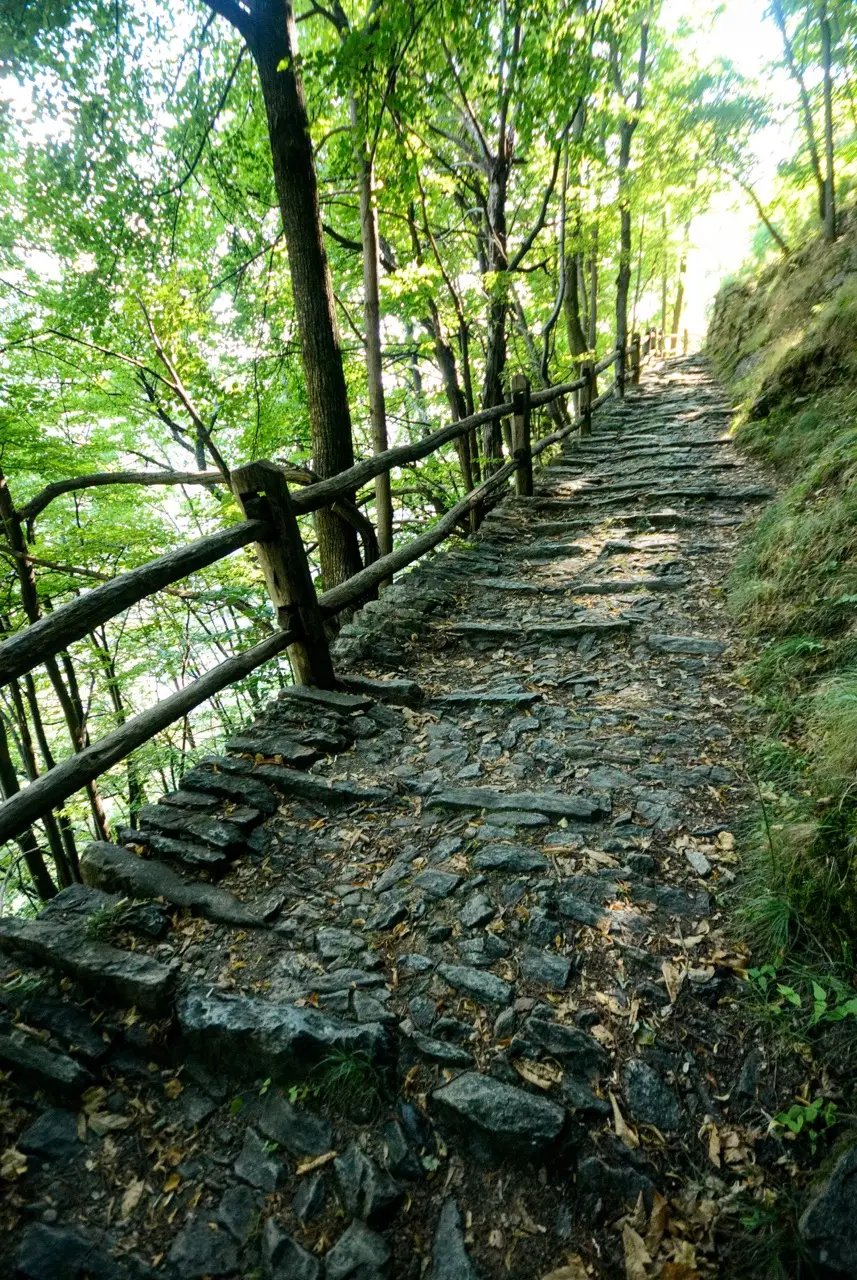
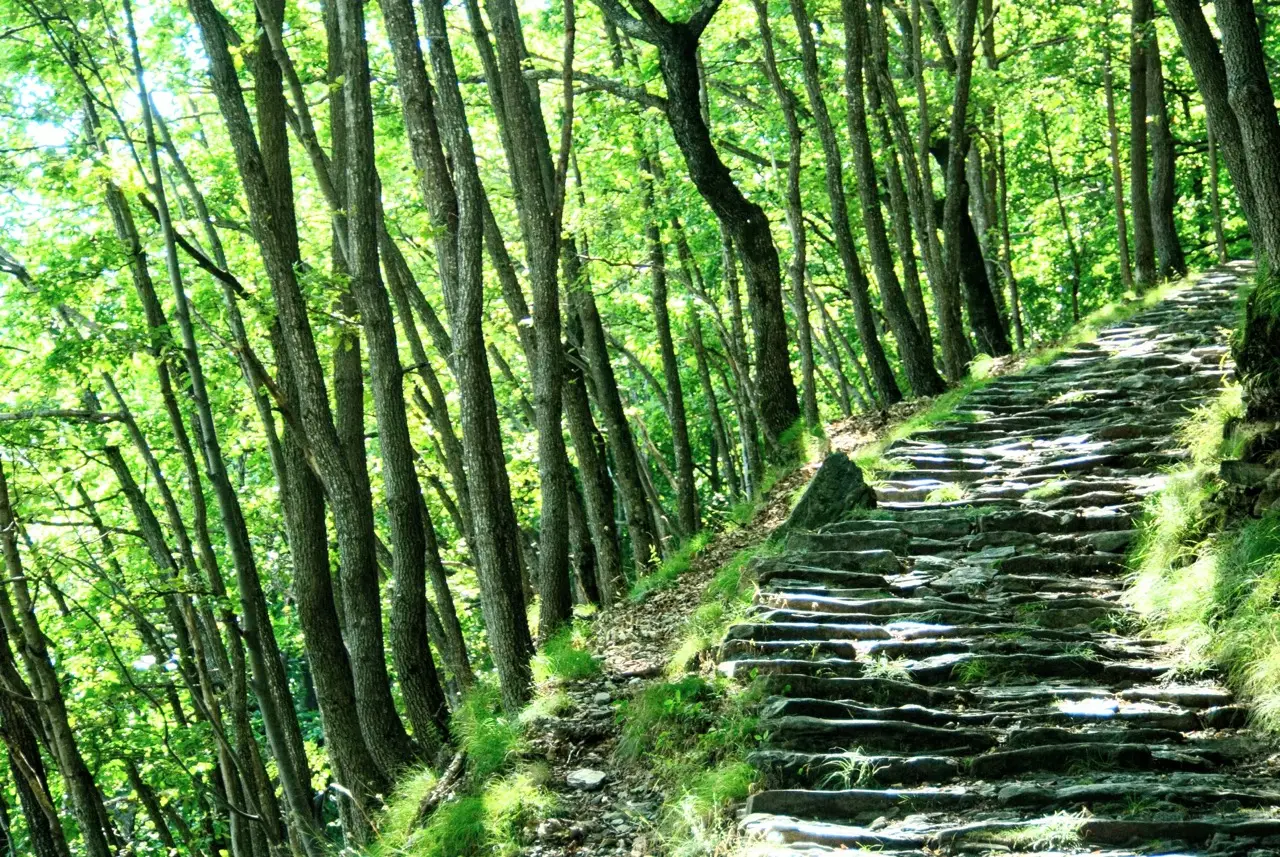
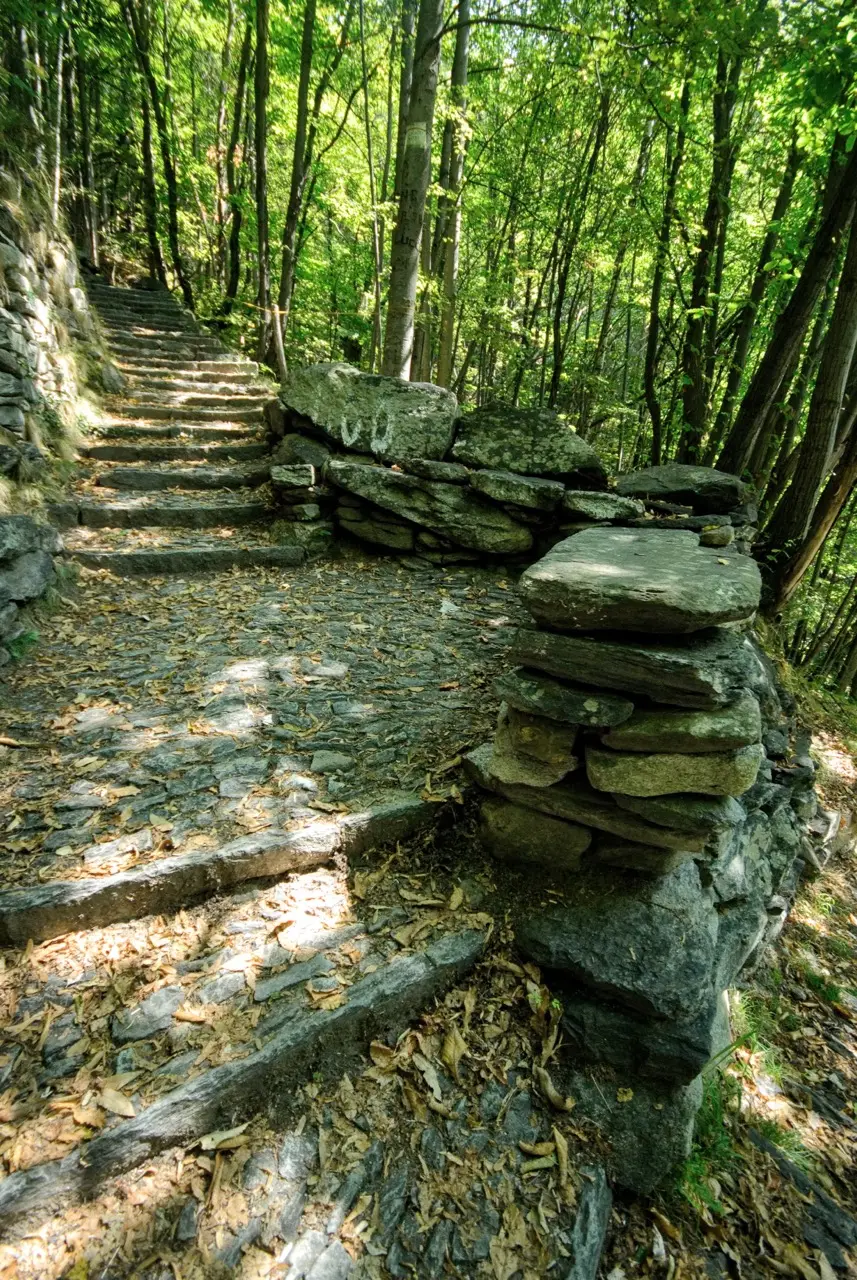
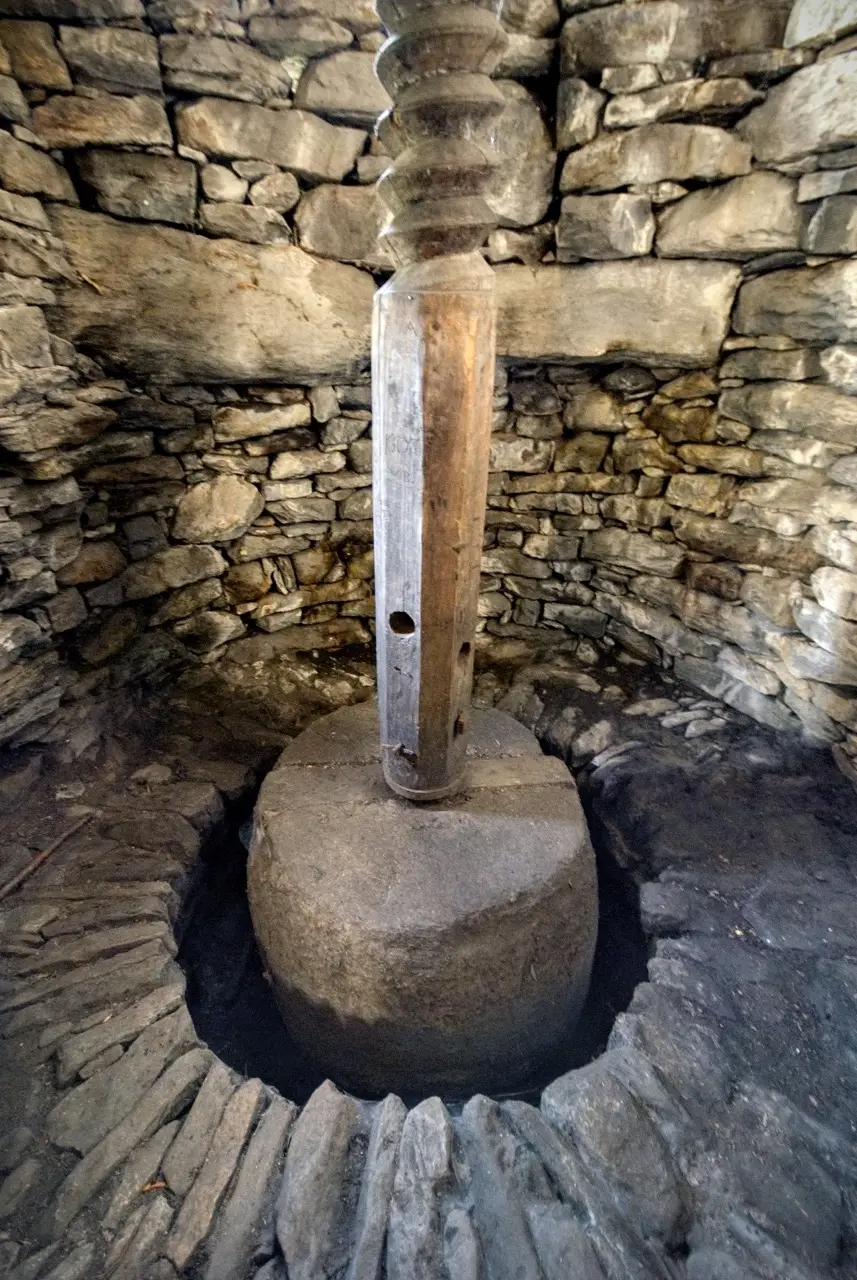
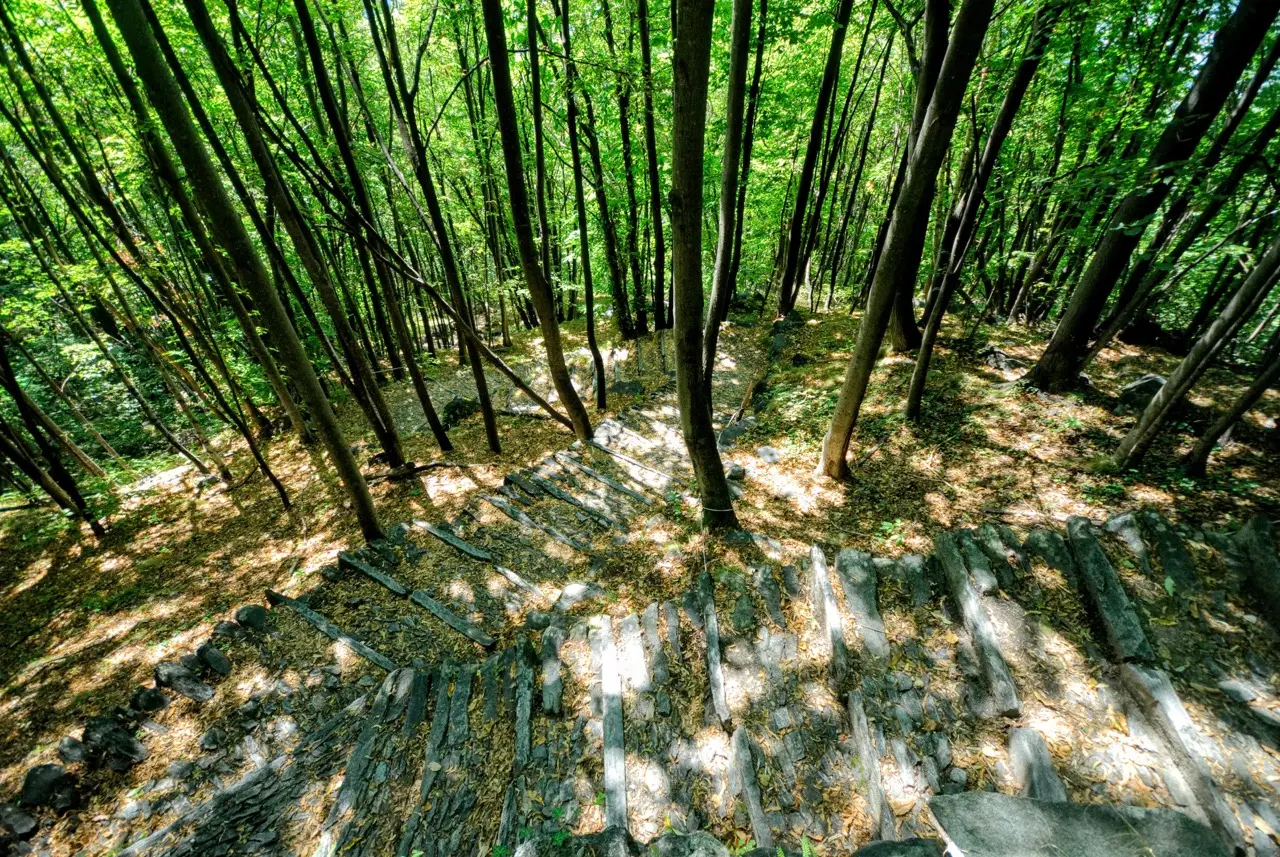
For the descent we can take the historic Savogno mule track, made up of 3000 paved steps cut in zigzags through the woods. Almost at the bottom of the valley, we first find a lovely fountain with 3 basins, and then an area of old terraces for growing vines, now half hidden in the chestnut woods. As further proof that good wine was once made here, there is a wine press from the 1700s in one of the ruined farmhouses.
From here, in a few minutes we are back at the car (45 minutes).
The Piuro landslide of 1618
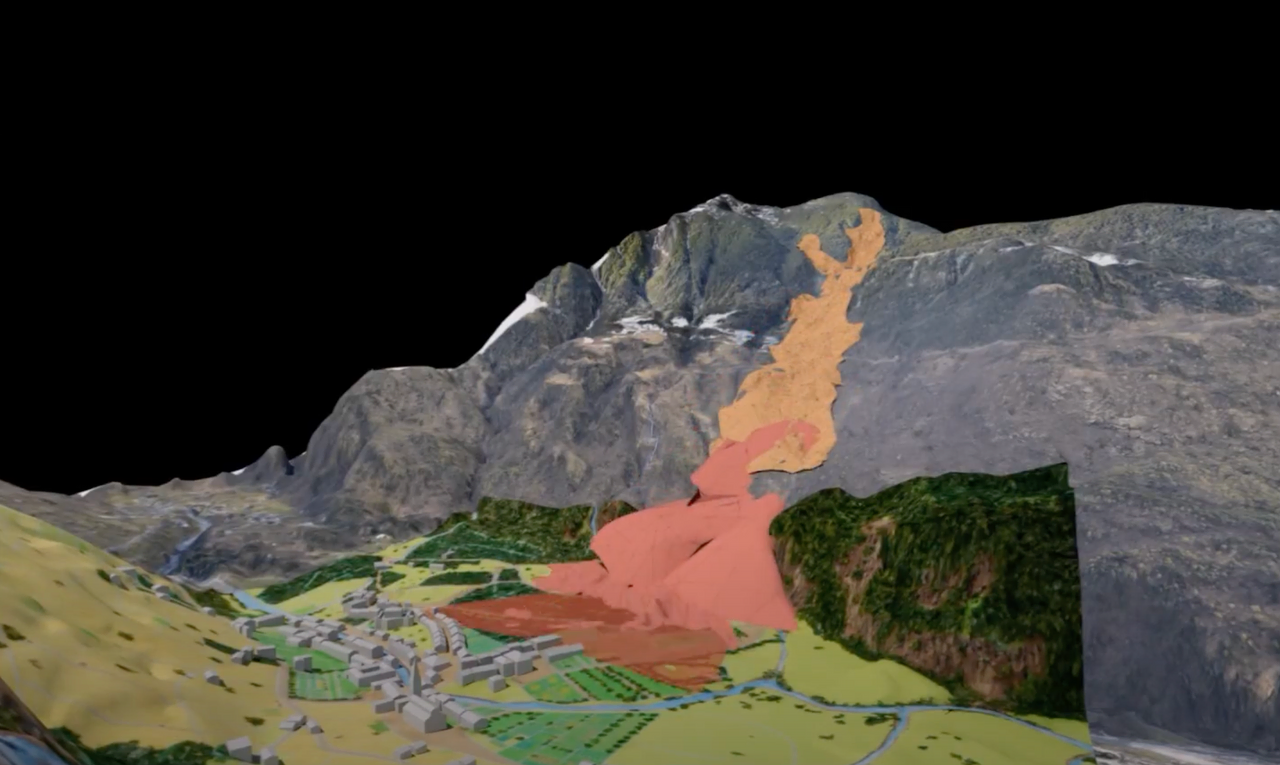
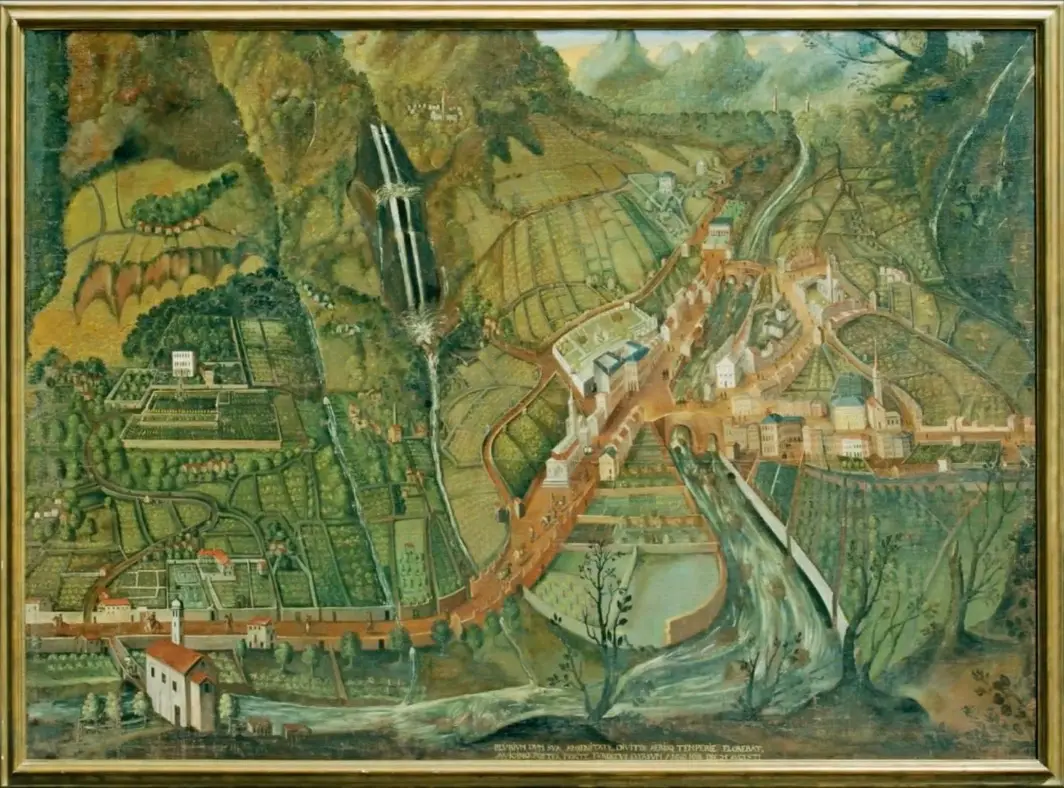
If you are wondering why Borgonovo di Piuro is called that, there is a reason and it is not a happy story. The present village is "new". The original settlement of Piuro was in fact razed to the ground by an enormous landslide on 4 September 1618, 3 million cubic metres of earth that broke away from the northern slopes of Monte Conto (here is a computer simulation of the disaster). All the inhabitants of the village, about 1000, lost their lives, and the news spread across Europe.