The ascent of the Zugspitze through the Hollertal is one of the most complete itineraries a hiker could wish for. A deep gorge, a mountain hut, a long and entertaining via ferrata, a piece of glacier, a summit and, to finish, a descent on one of the most spectacular cable cars in the Alps.
The route is long and demanding (about 10 hours of walking, not counting breaks). The via ferrata (“Höllental Klettersteig Zugspitze”) is of intermediate grade (B/C) and in good condition (2021). The glacier section is straightforward but requires crampons or mountaineering boots. One important constraint: the Zugspitze cable car (which we will use to get back down to the valley from the summit) closes at 17.45 in July and August and at 16.45 the rest of the year, so you need to start walking between 4 and 7 in the morning, depending on your pace. What is more, there is only one place to stop along the entire route, the Höllentalangerhütte, which sits at a mere 1387m; from there up to the 2962m of the summit there is nowhere to get food or drink.
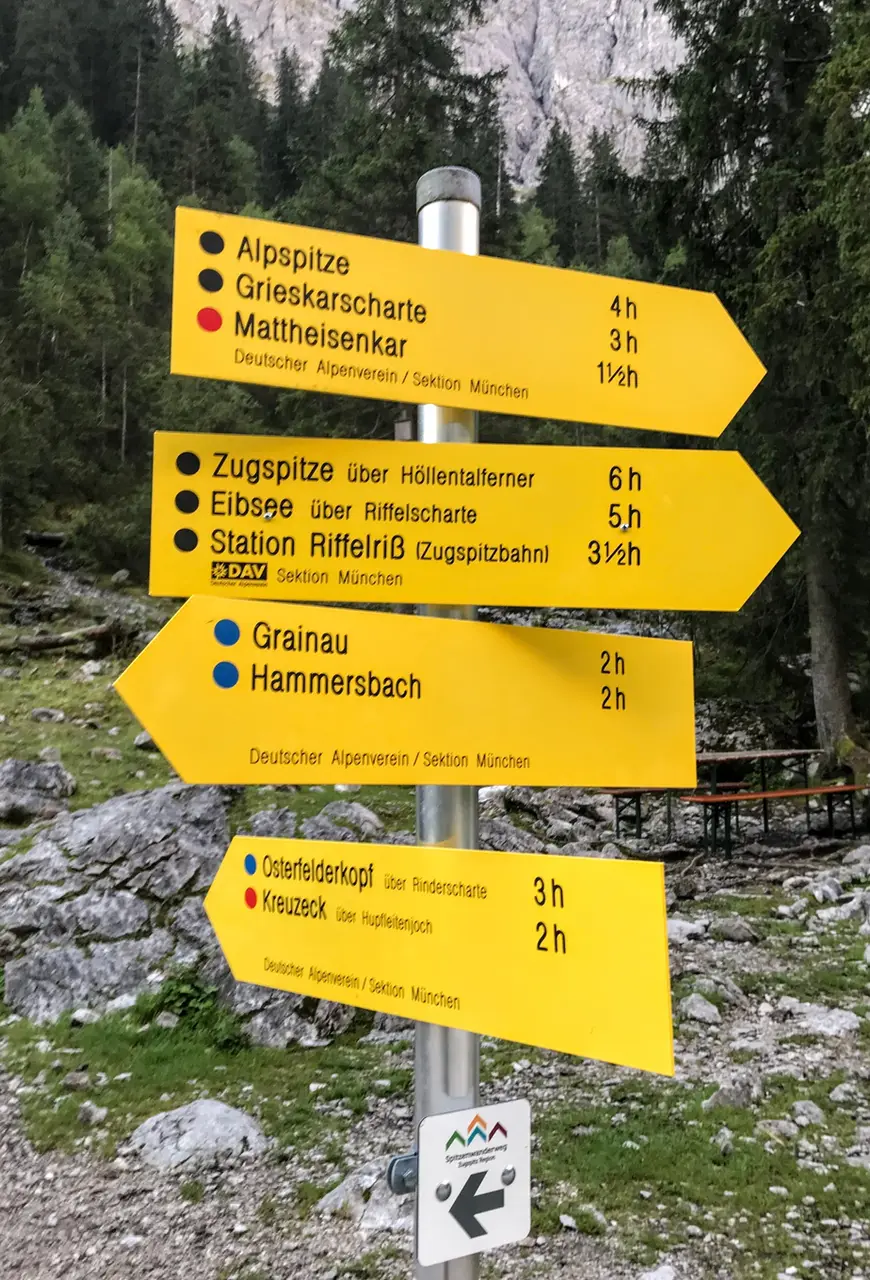
We park the car at Wanderparkplatz P2 (10€ for 12 hours, 15€ for 24 hours) in Hammersbach in Grainau, a few km from Garmisch-Partenkirchen. From there, by head torch, we follow the dirt road along the valley floor that brings us towards the mouth of the Höllentalklamm. With the first light of dawn the gorge appears before us. We reach its entrance on a pleasant path of hairpin bends.
Entry to the gorge should be free until 6 in the morning, and costs 5€ per person from 6 onwards. Alternatively, you can “bypass” the gorge on a higher path, which adds about half an hour of walking.
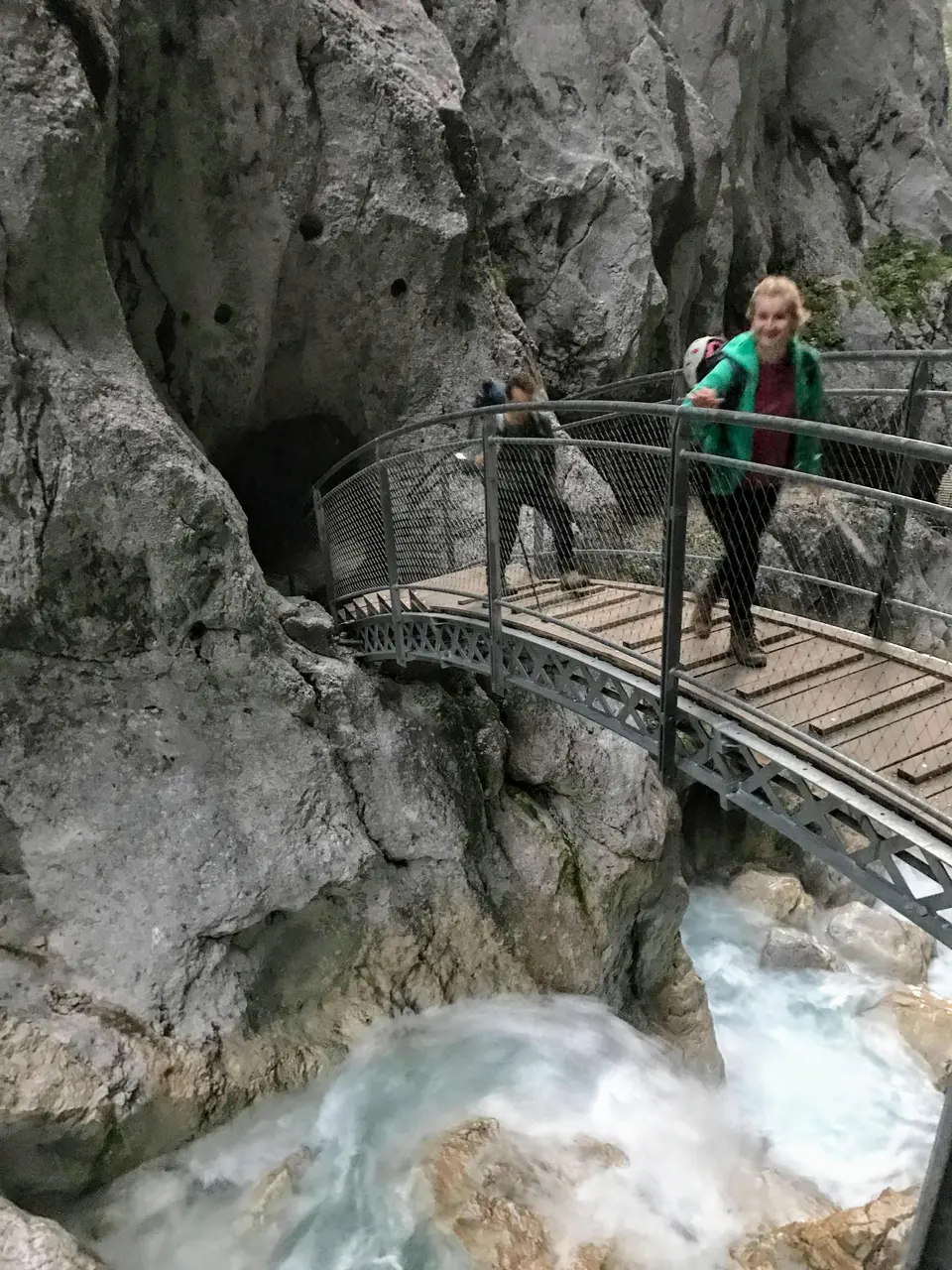
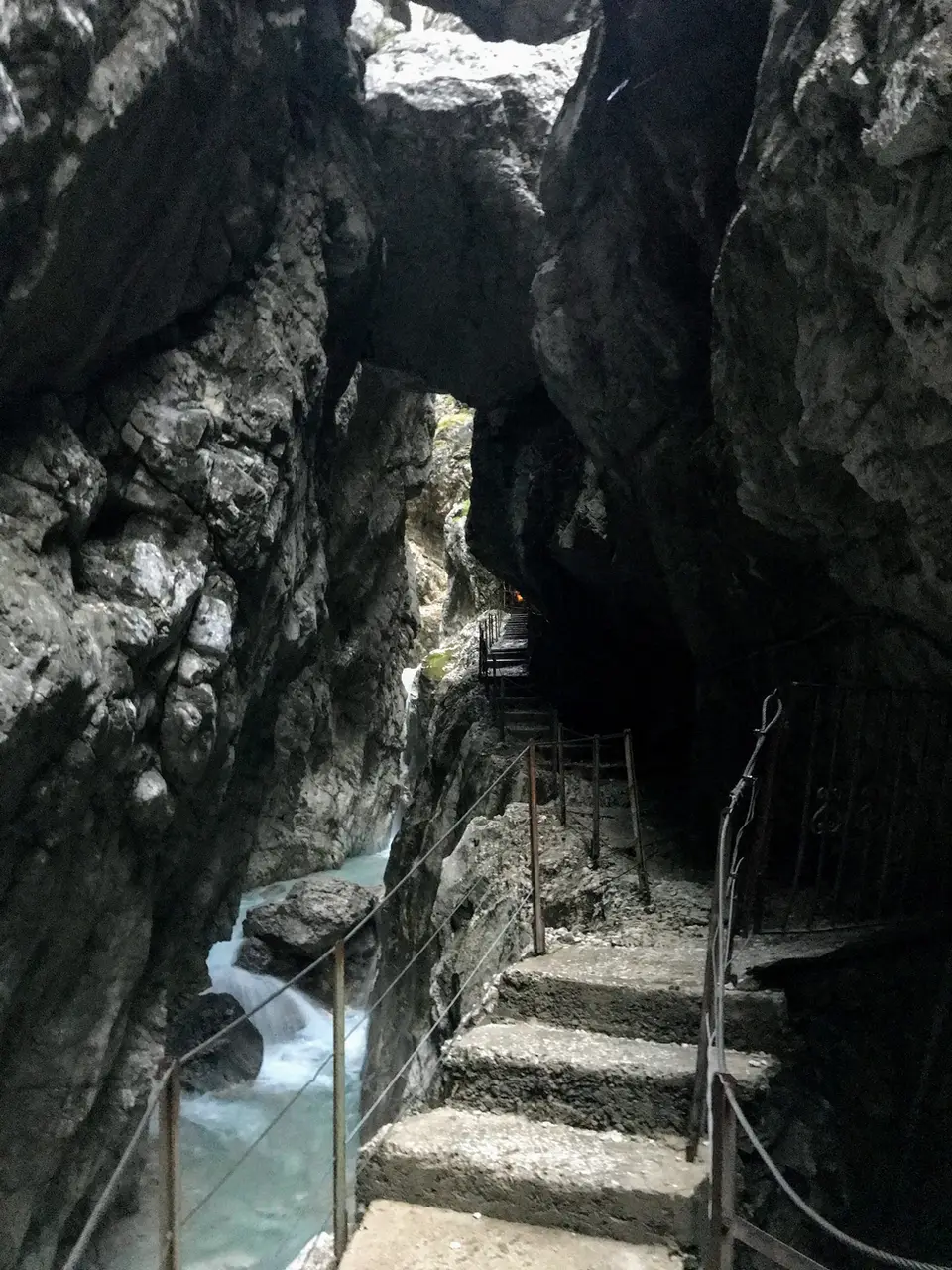
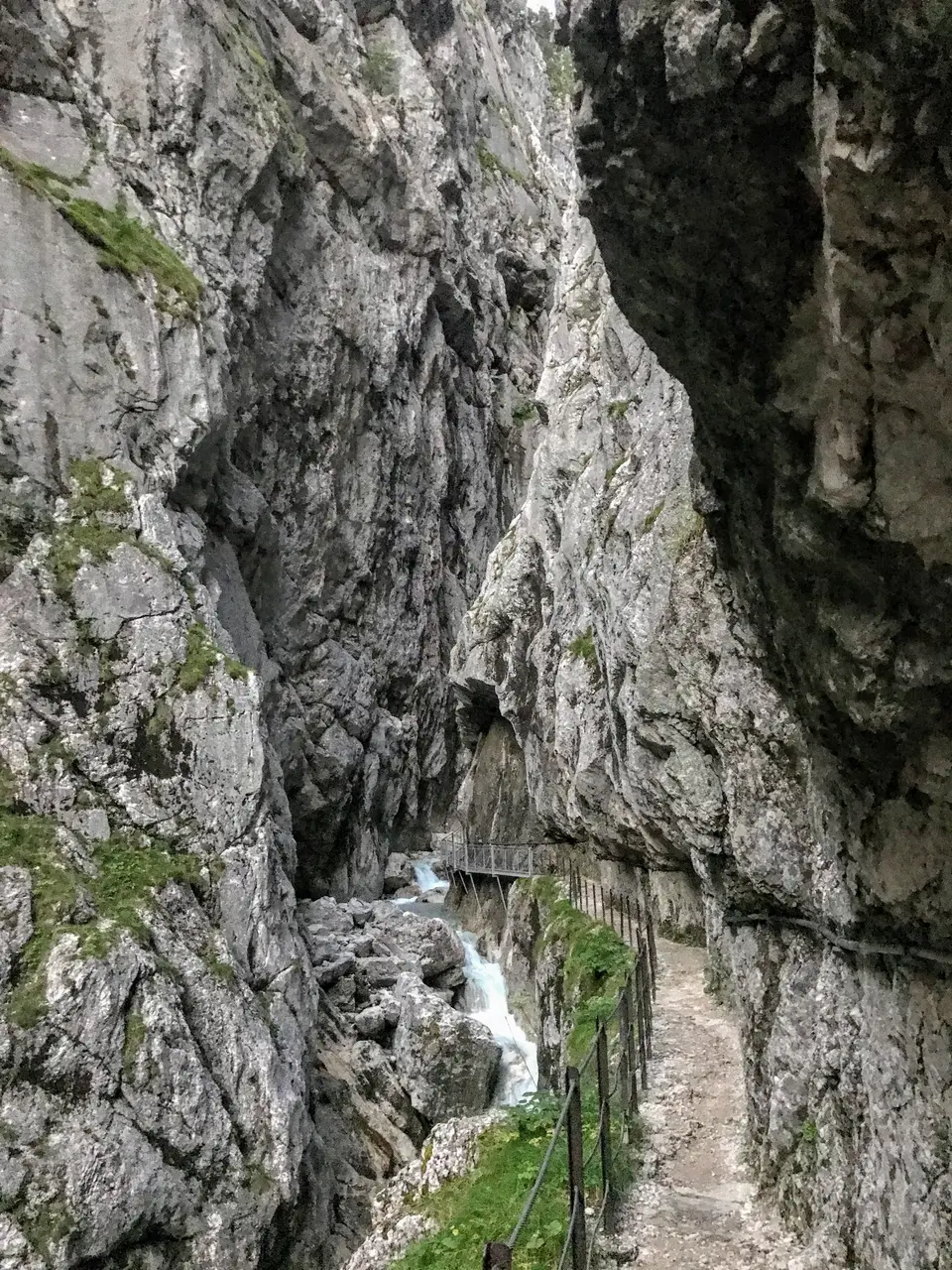
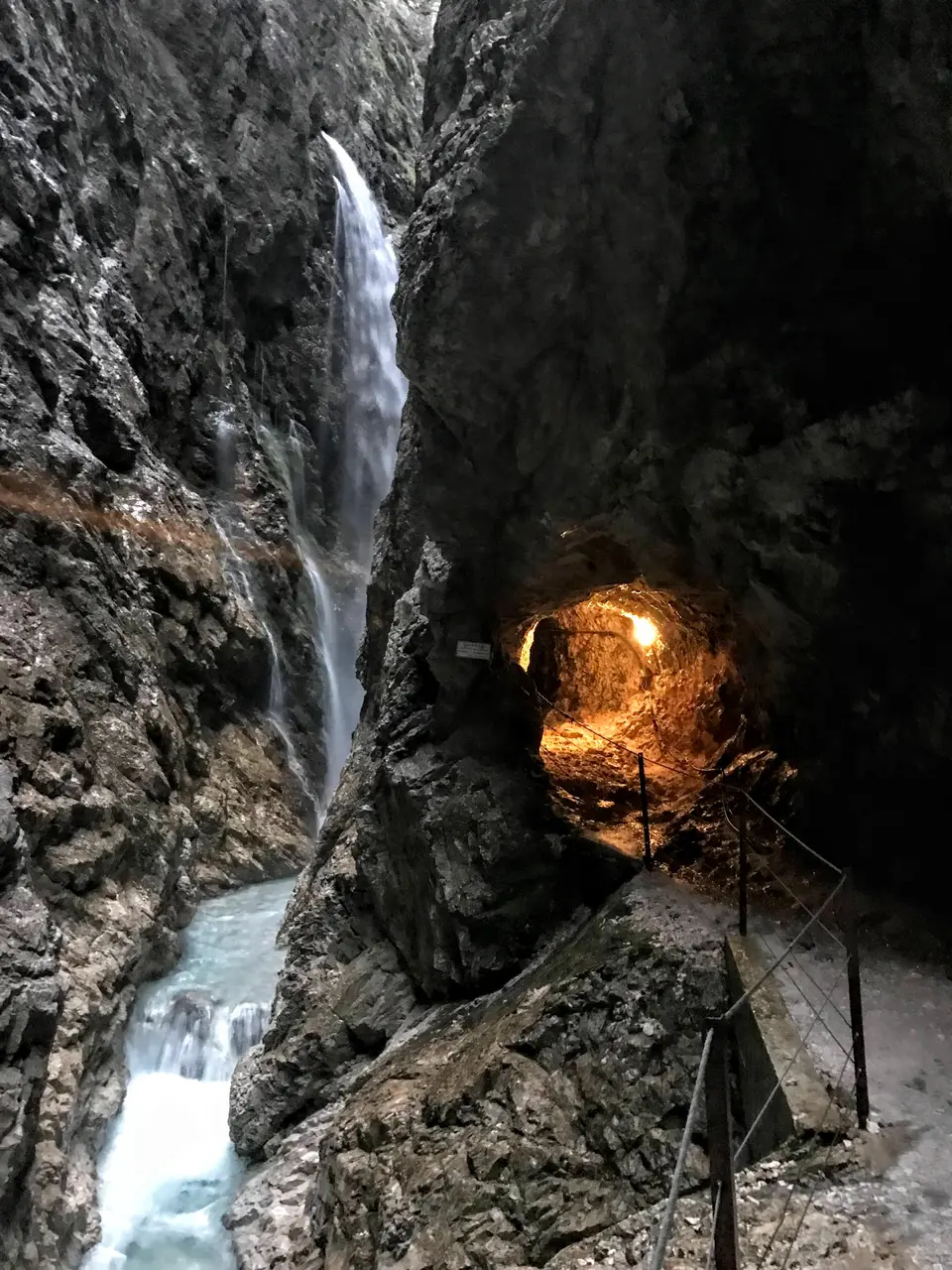
The Höllentalklamm is quite spectacular, more captivating and “natural” than its “sister” gorge, the Partnachklamm (which is better known simply because it is far more accessible). It is a long gorge, more than 1km in length, a succession of lit tunnels, passages cut into the rock, little wrought-iron bridges, spiral staircases to climb the steepest points, waterfalls, and enormous boulders wedged into the narrowest parts of the gorge.
At the end of the gorge we find ourselves in the broad Hollental. In just under an hour we reach the Höllentalangerhütte, where we can have an (expensive) breakfast. Once again: from here on there are no more places to stop until the summit of the Zugspitze, so it is best to count on 1.5L of water per person, plus plenty of food and clothing.
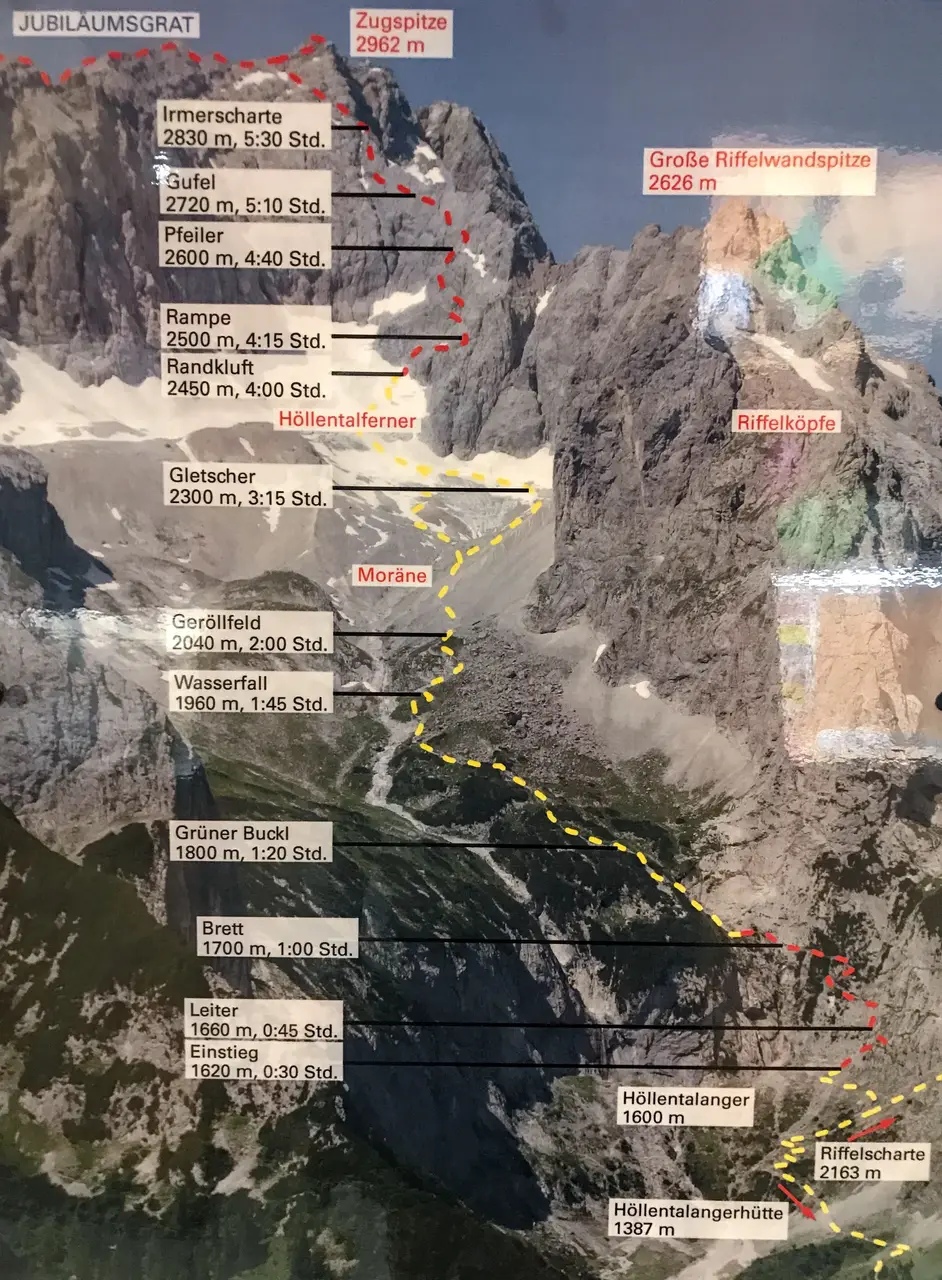
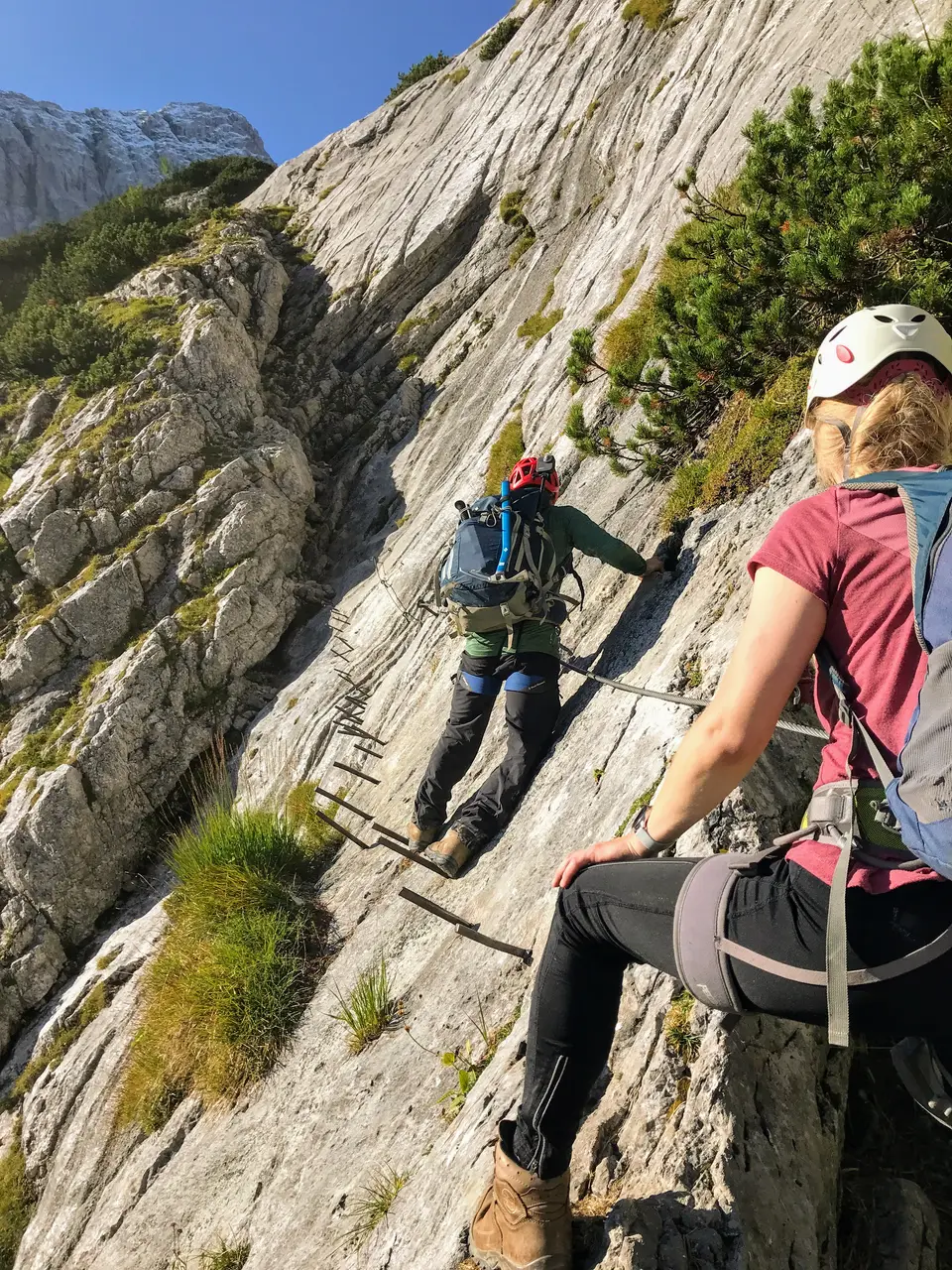
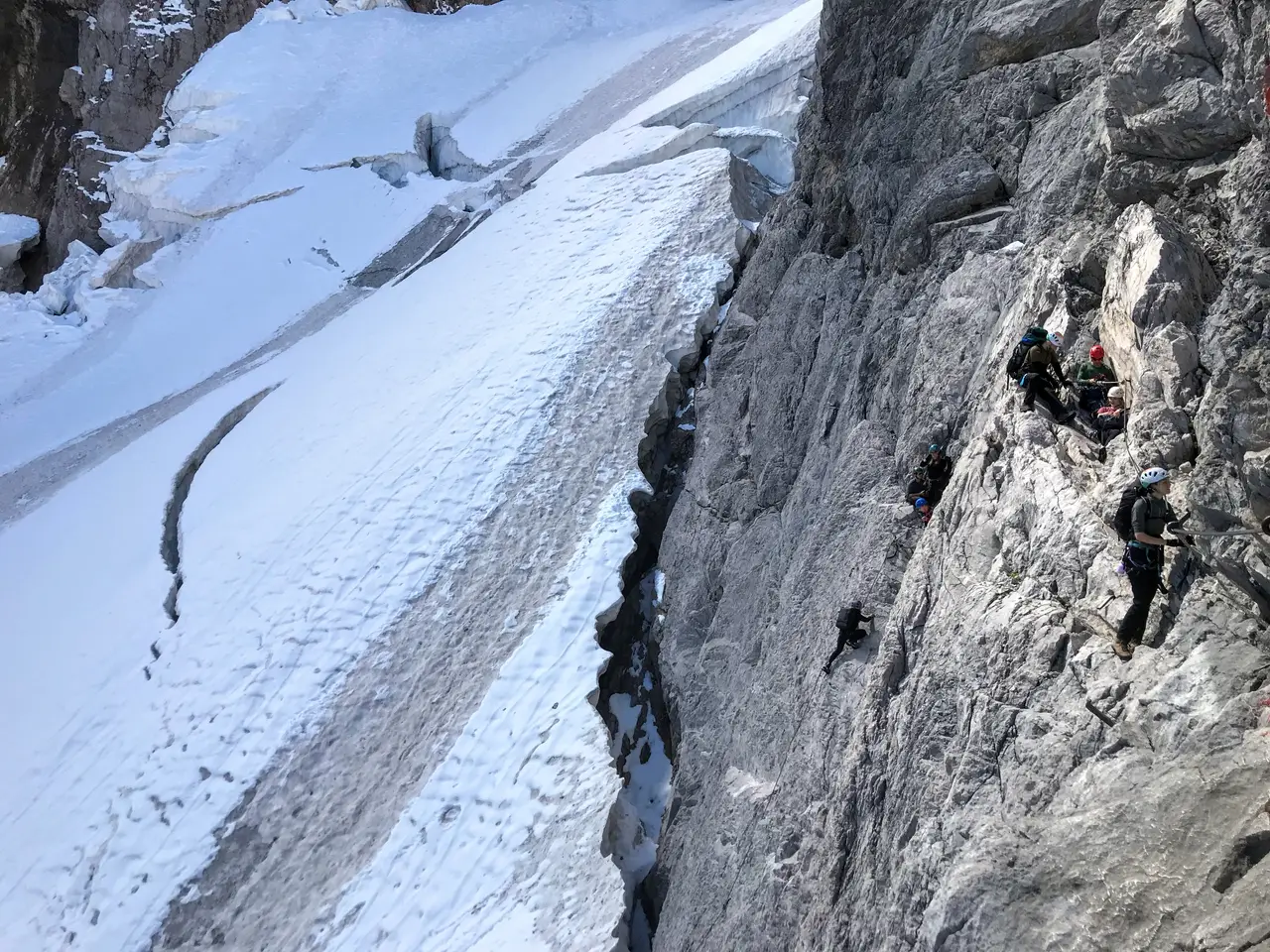
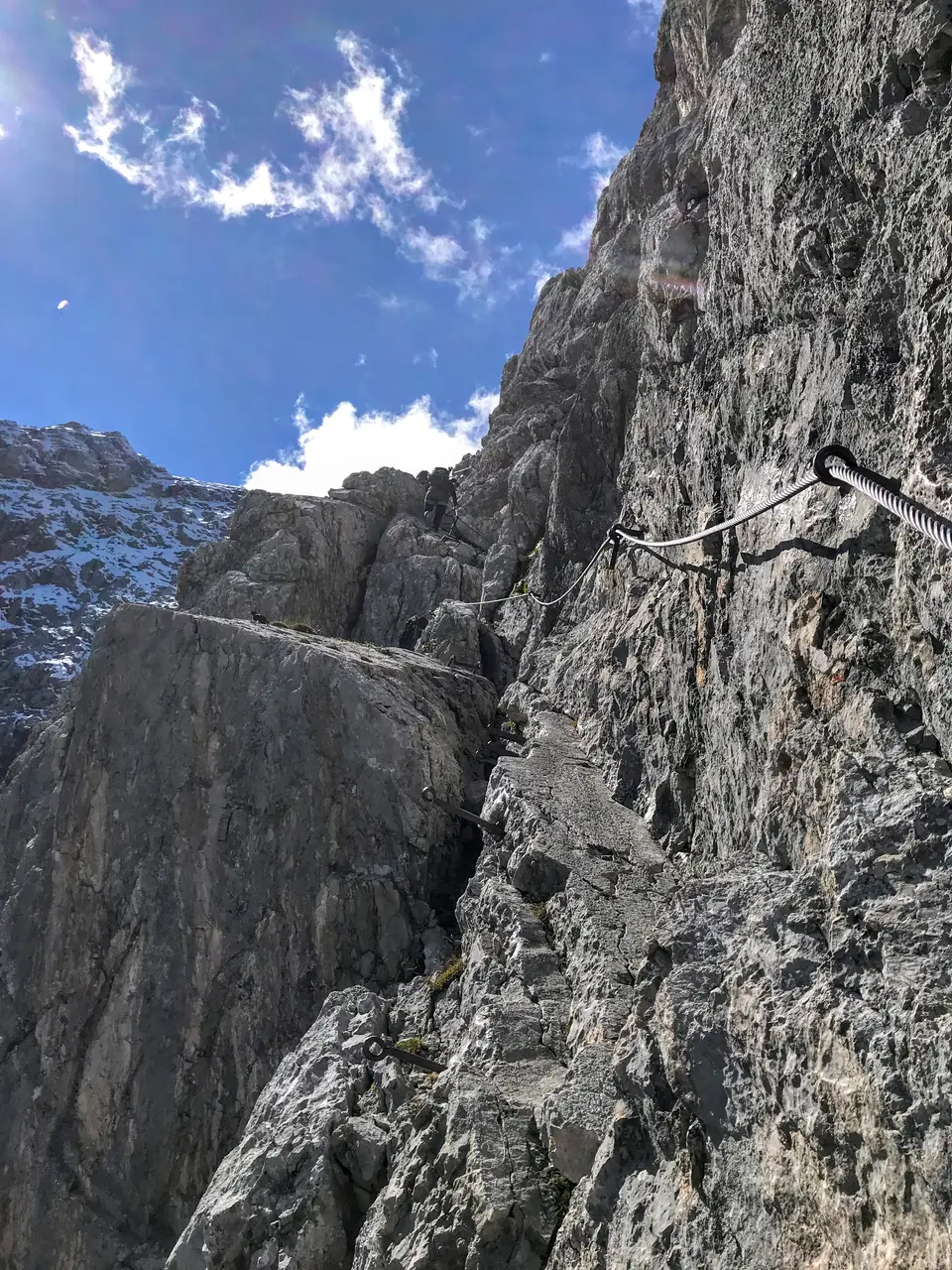
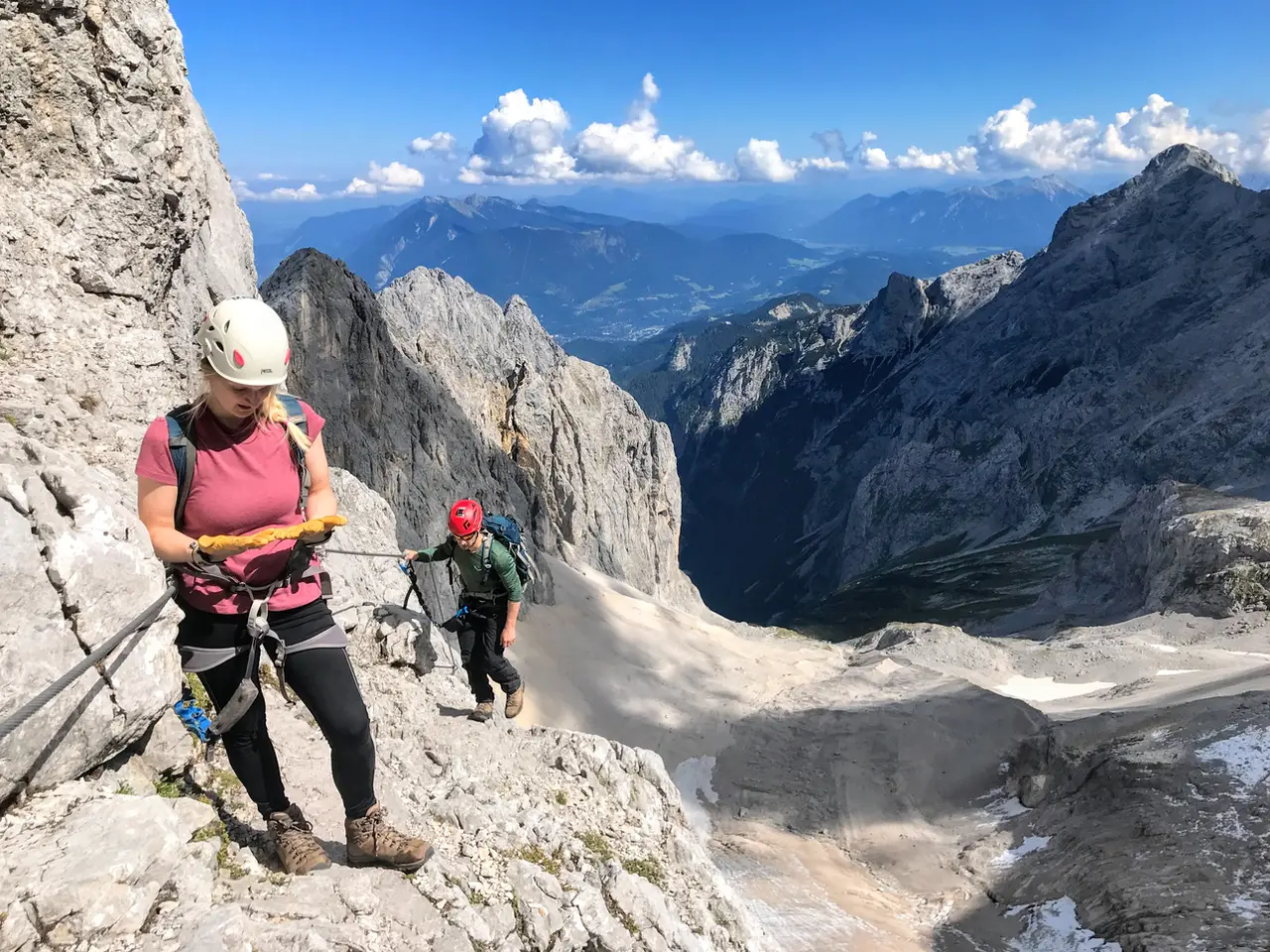
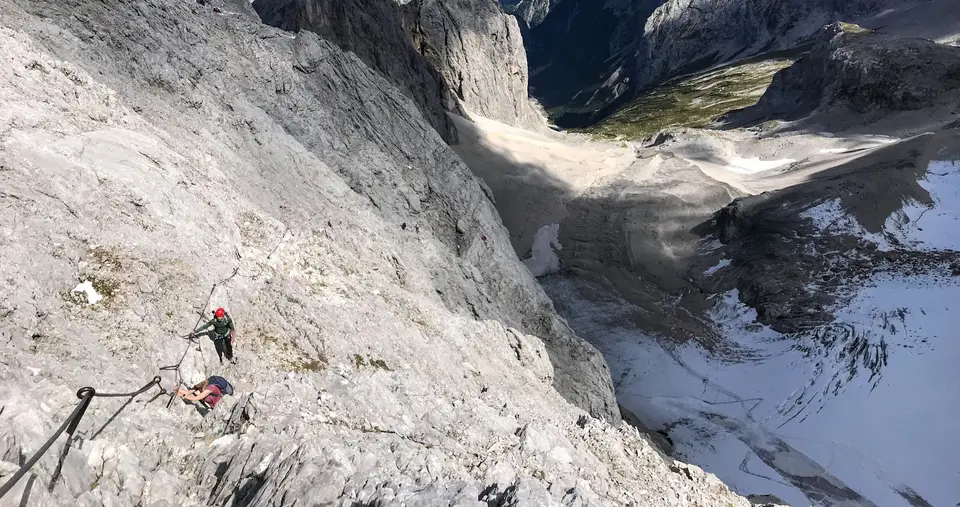
In less than an hour from the Höllentalangerhütte we reach the first section of the via ferrata (“Höllental Klettersteig Zugspitze”). There is an entertaining ladder and a very airy level traverse. A stretch of easy scrambling follows (1-).
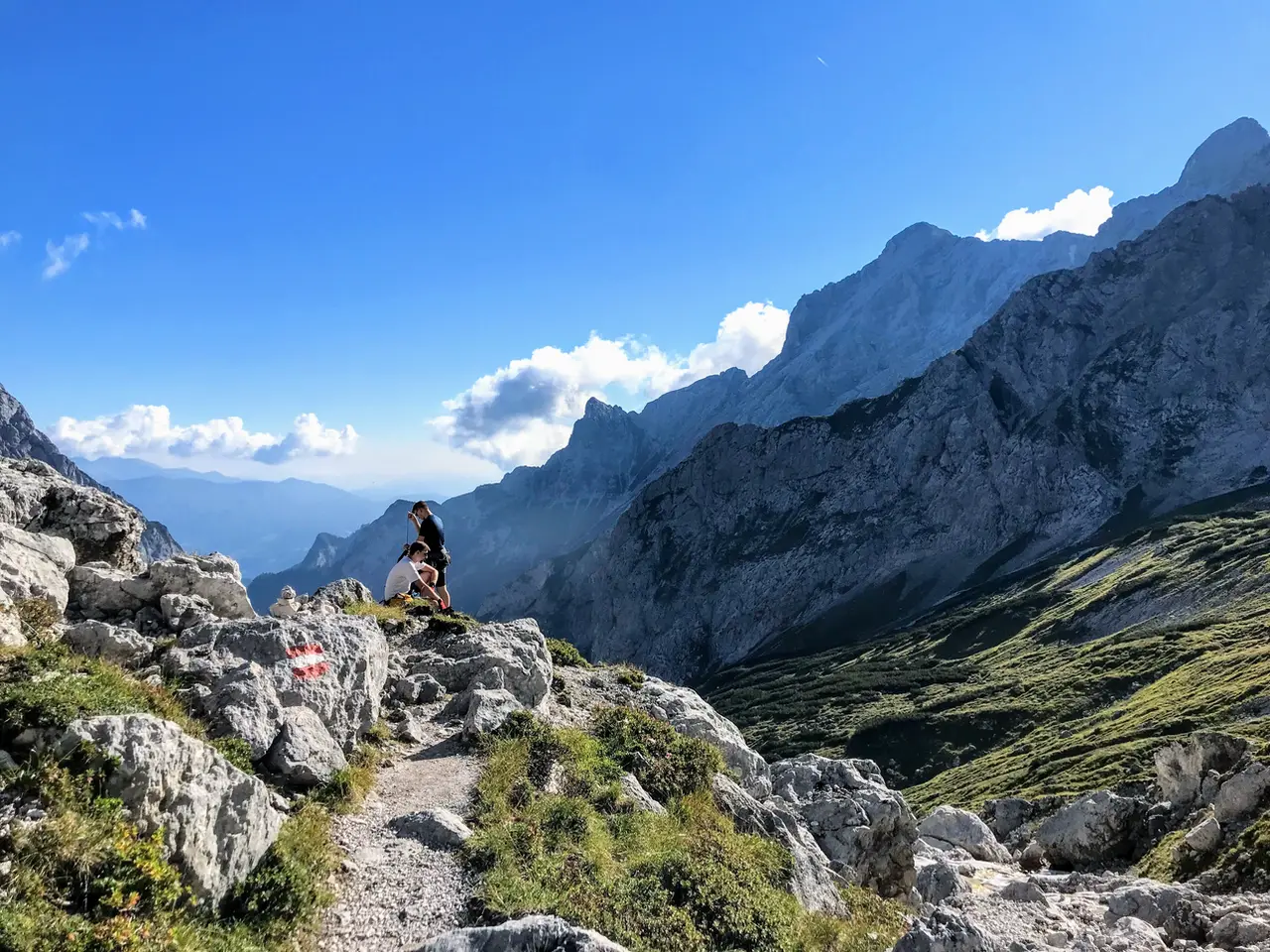
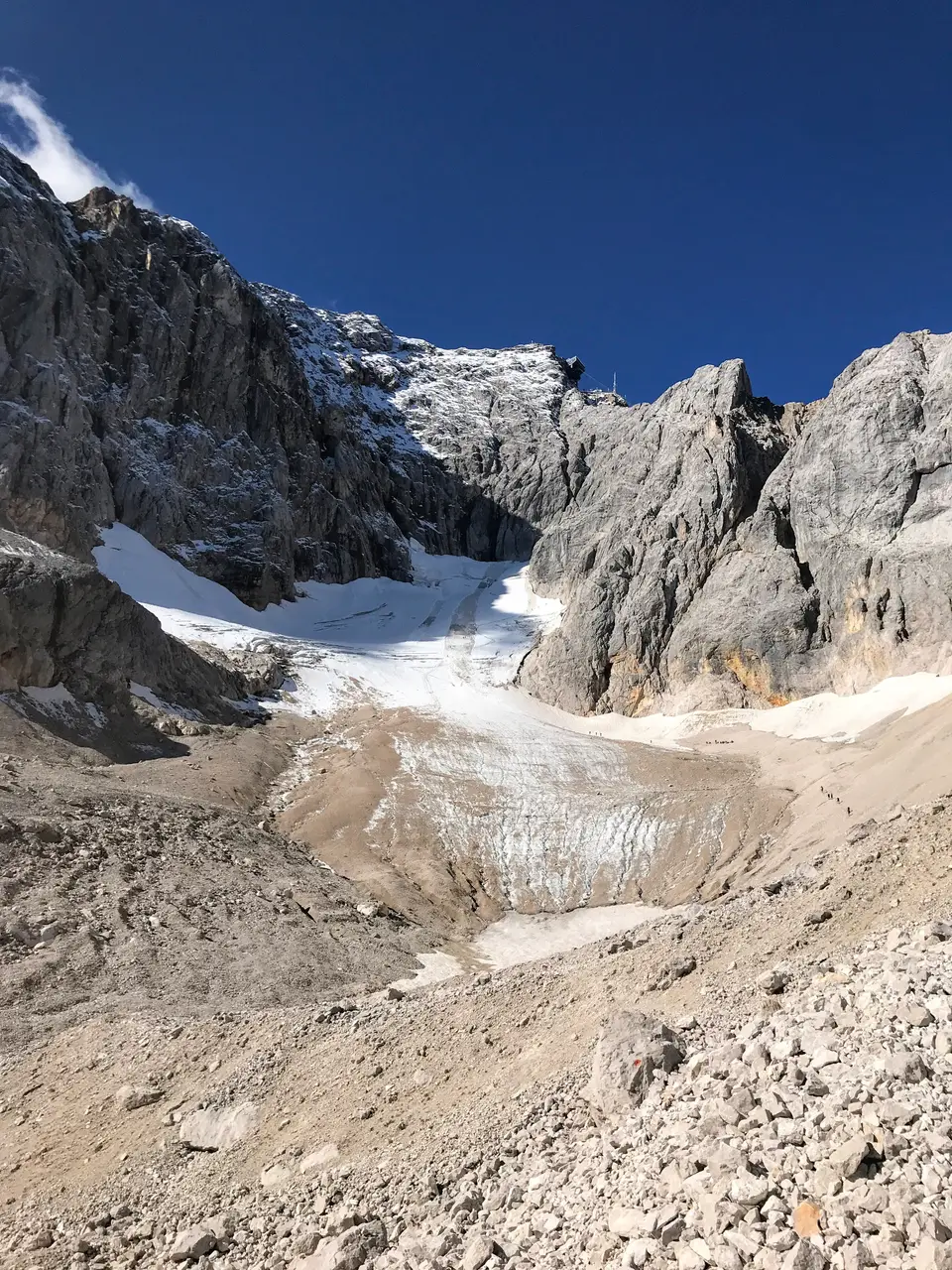
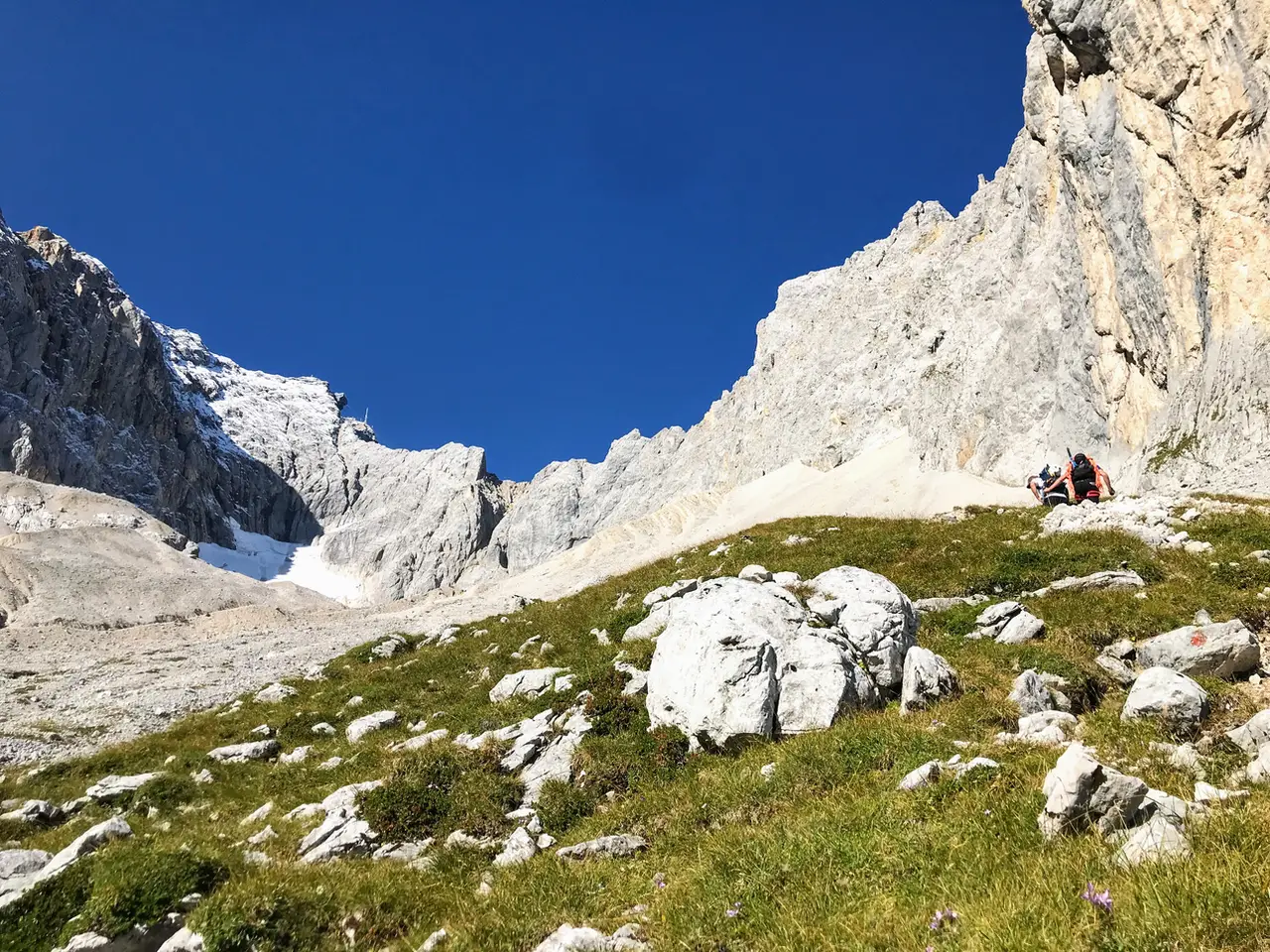
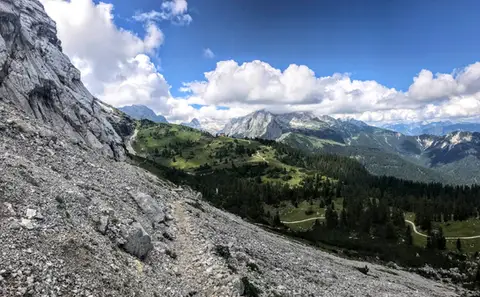
Out of the first section of the via ferrata, we walk the most striking stretch of the Hollertal. The summit of the Zugspitze is already in view, the highest point of an enormous rock rampart that surrounds us on 3 sides. We climb many rocky steps until the grass gives way to scree, and a small glacier appears ahead of us.
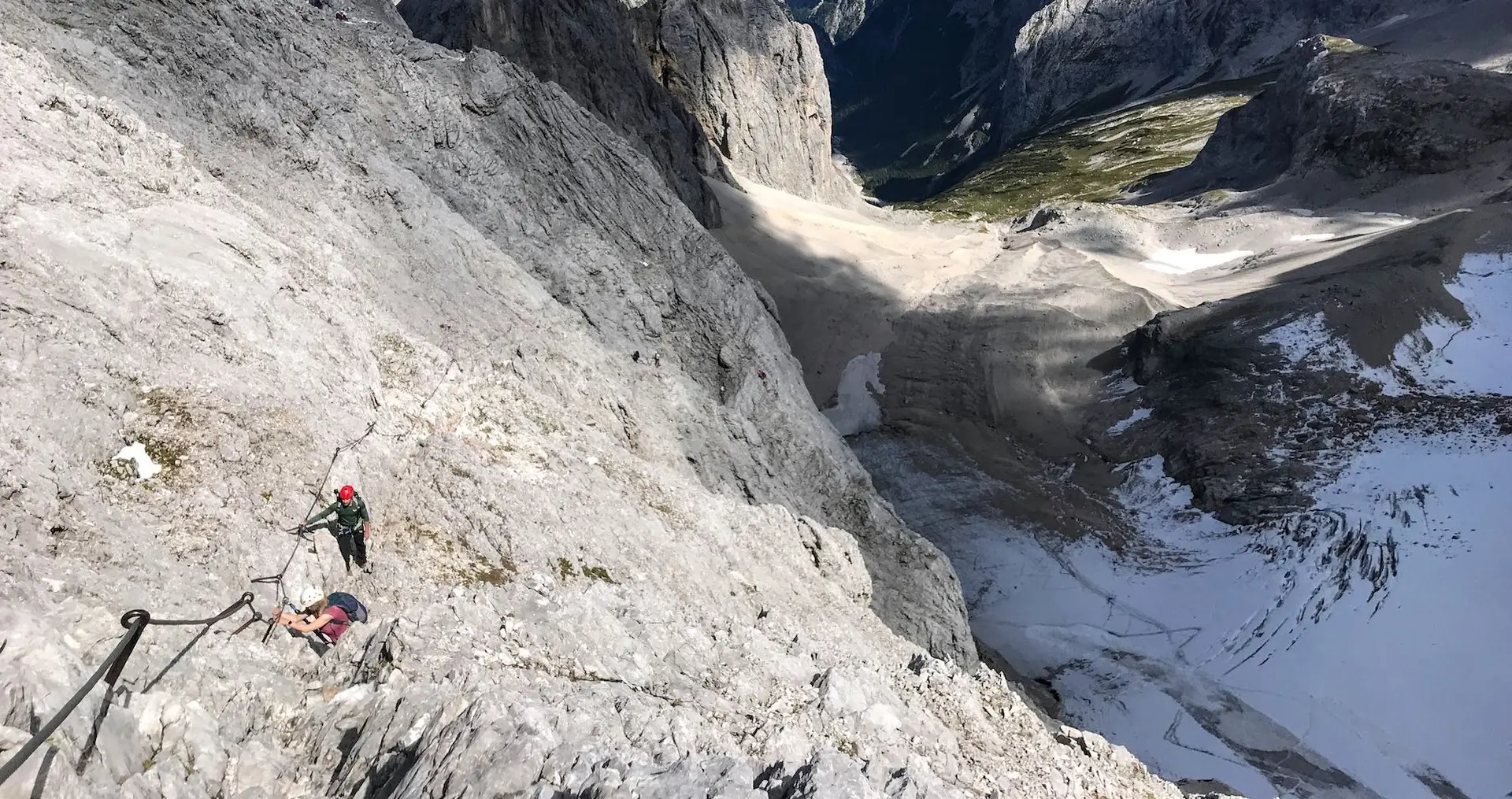
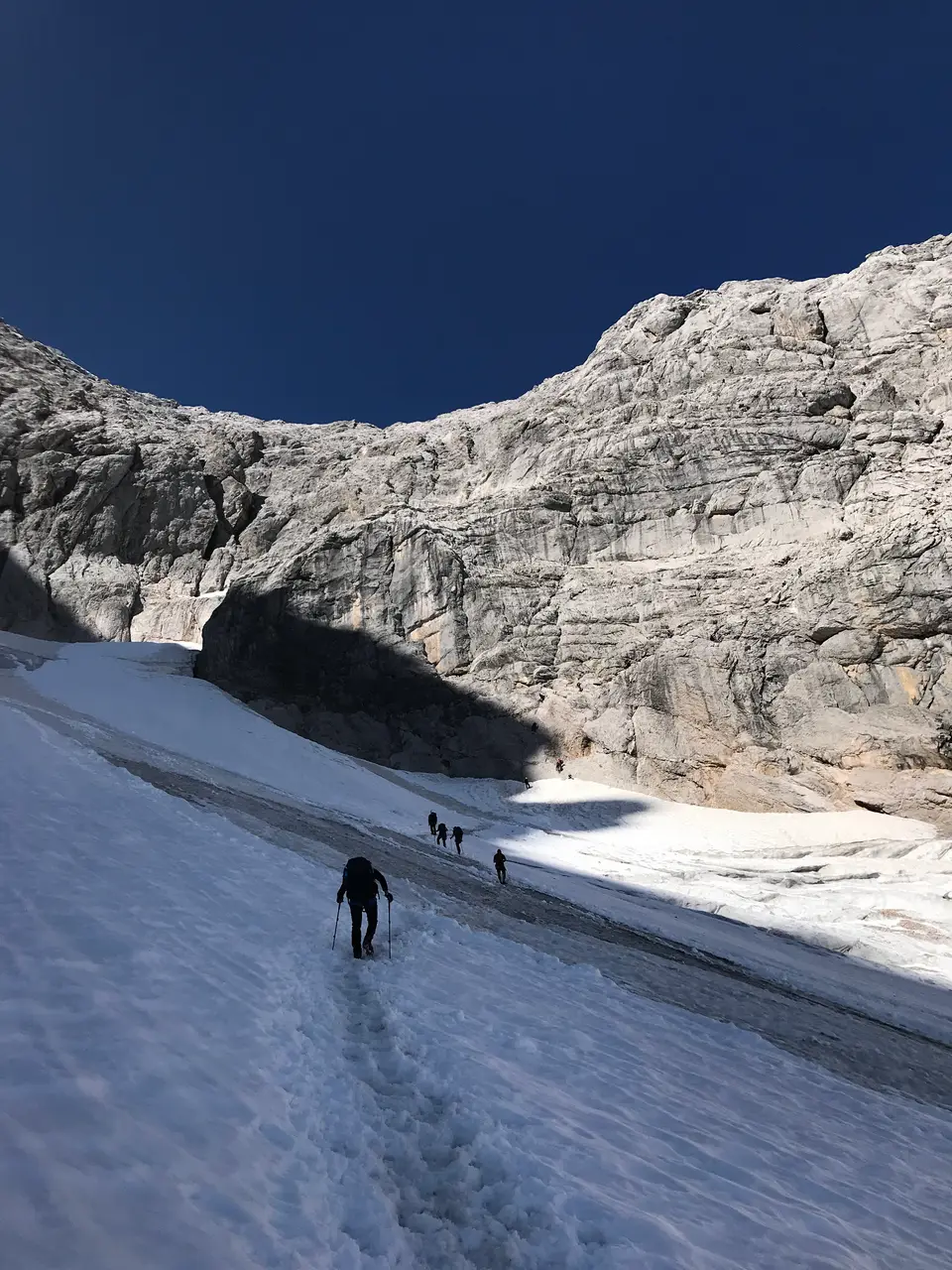
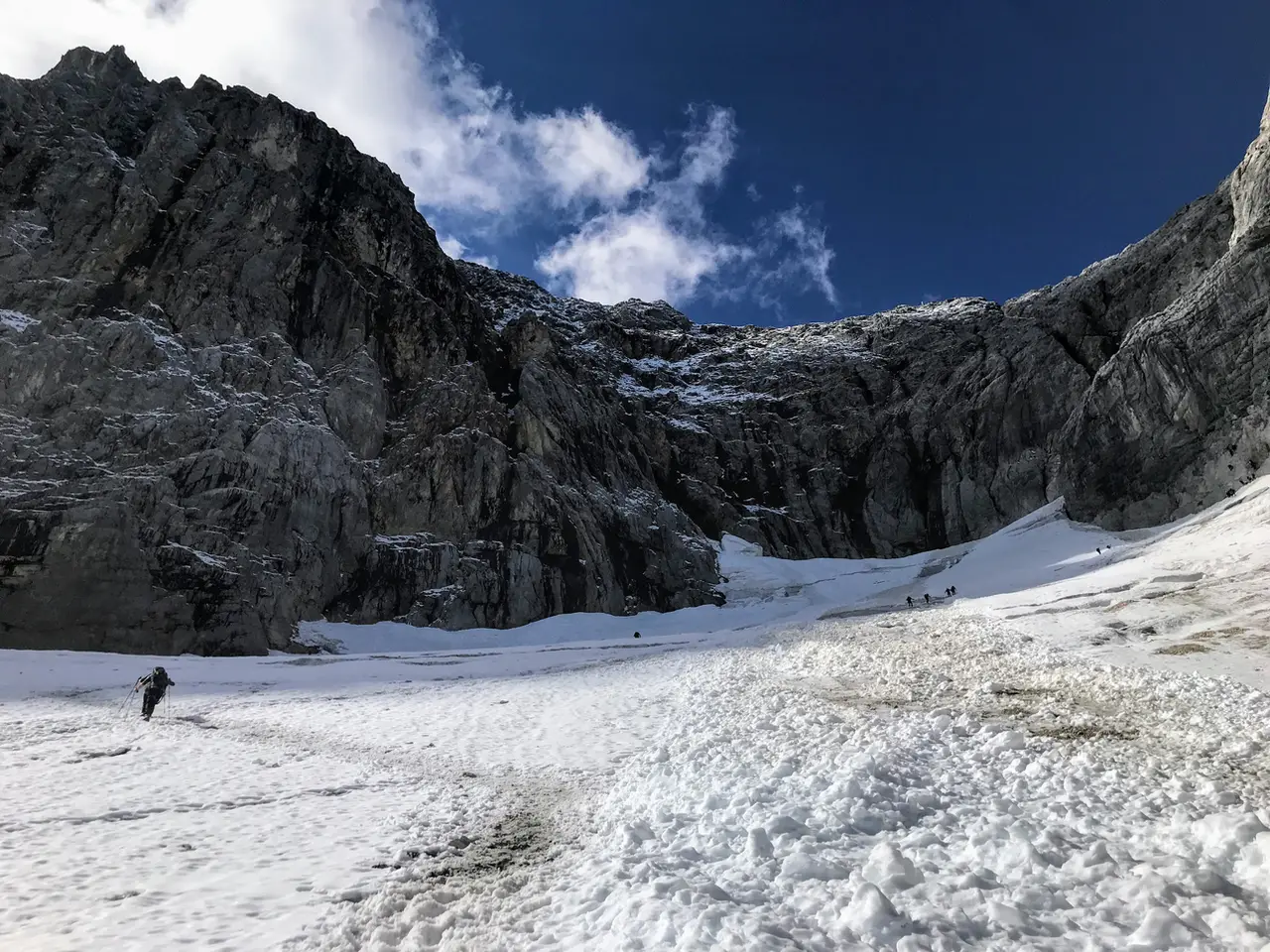
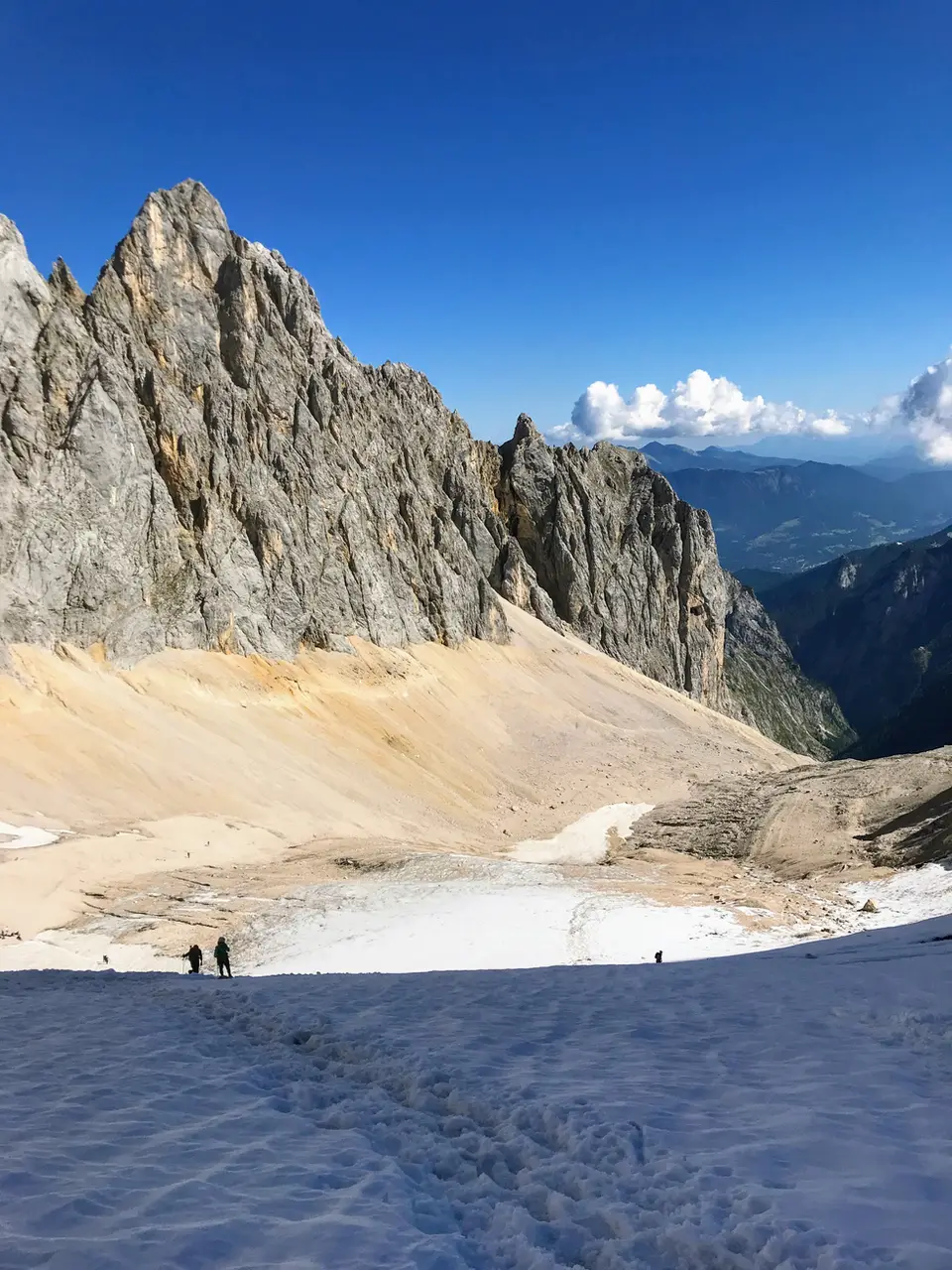
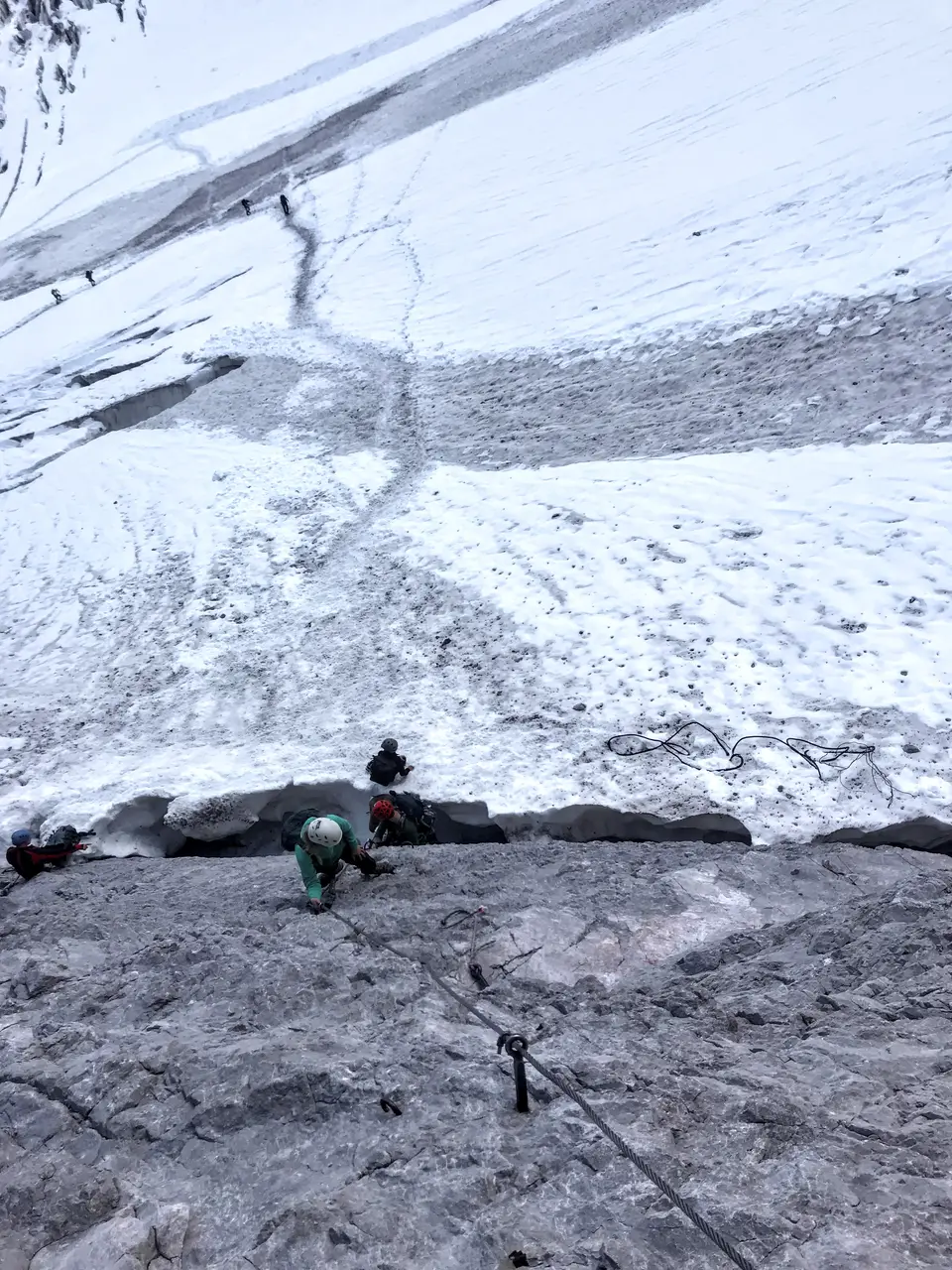
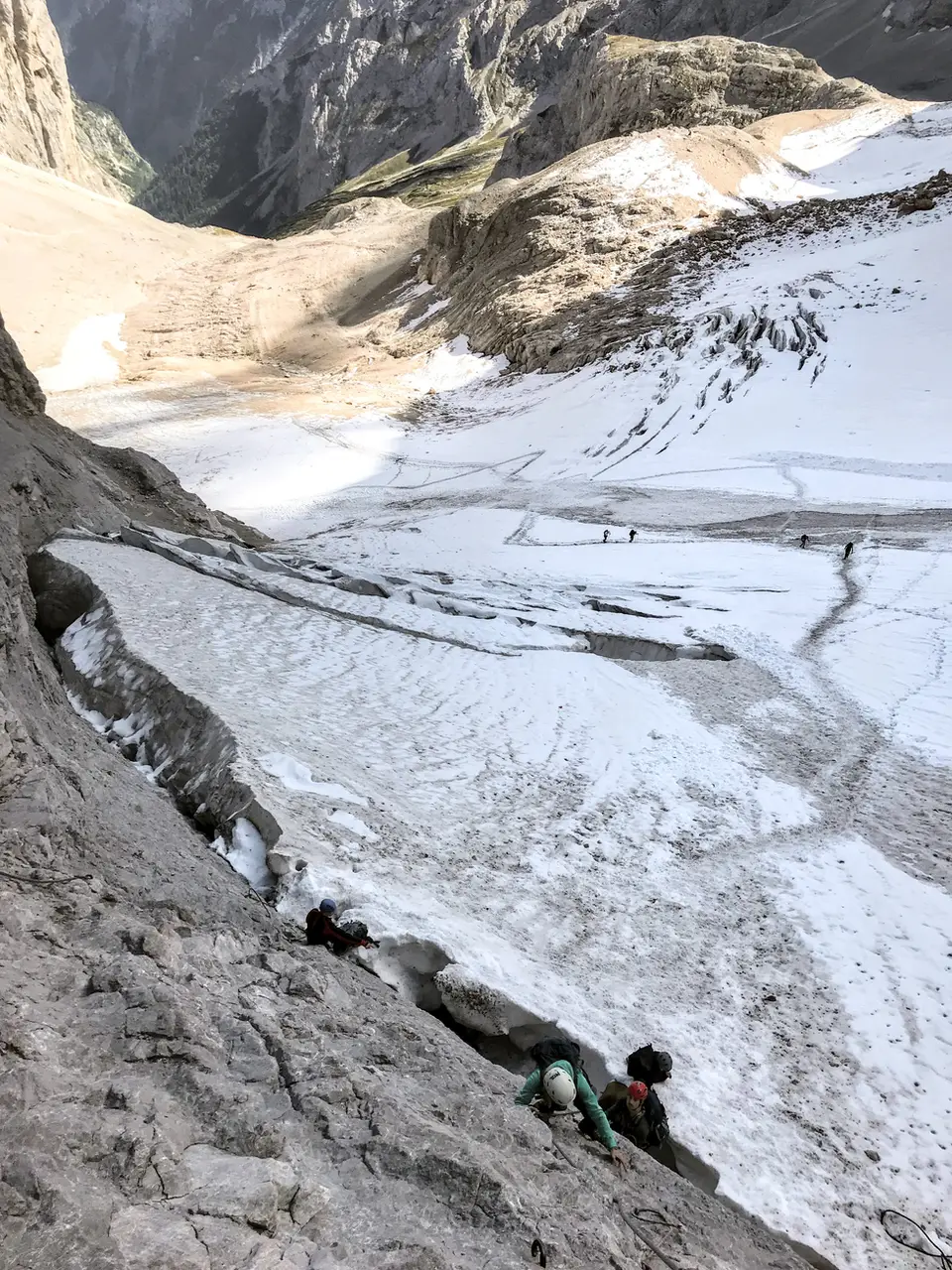
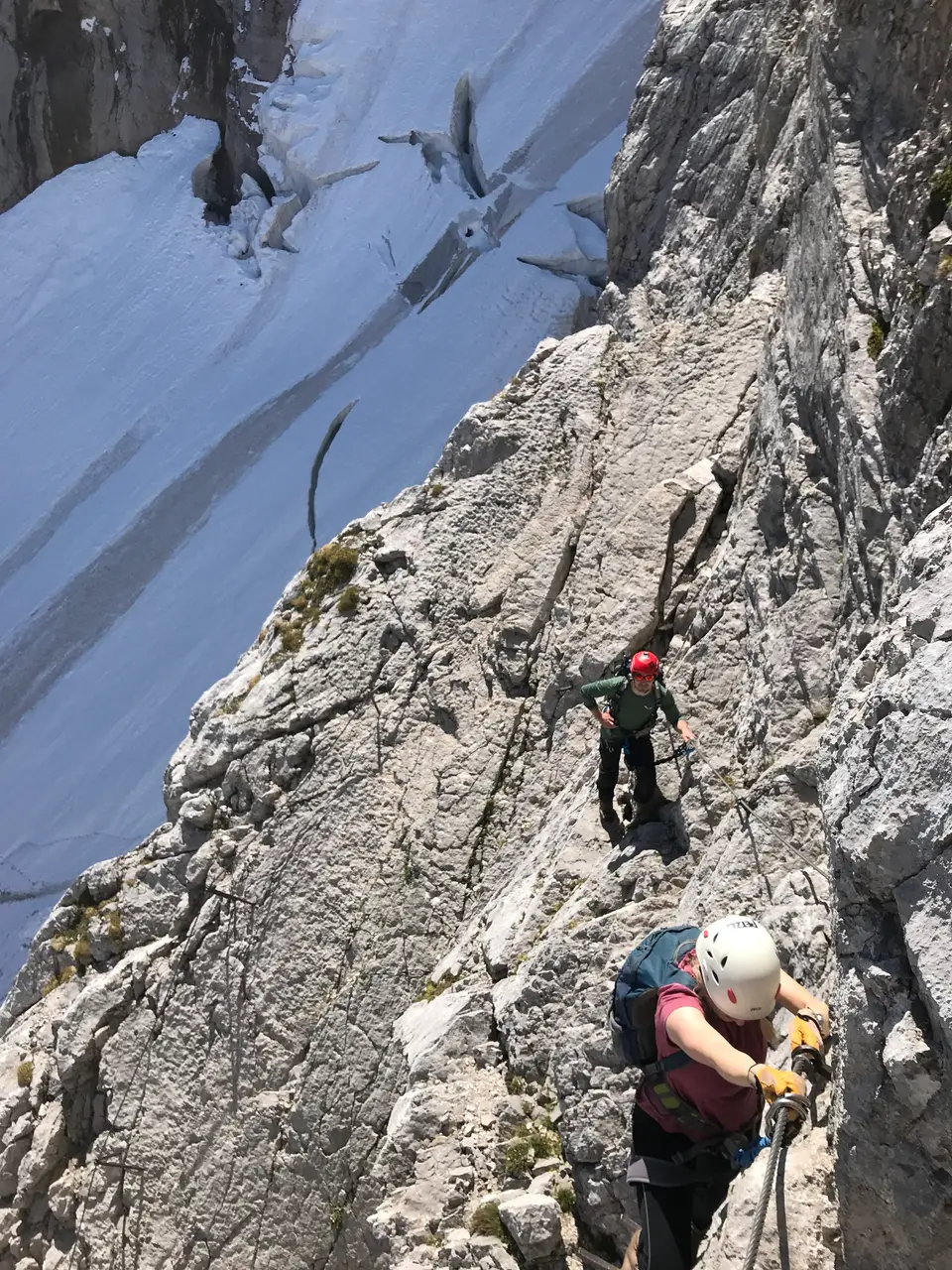
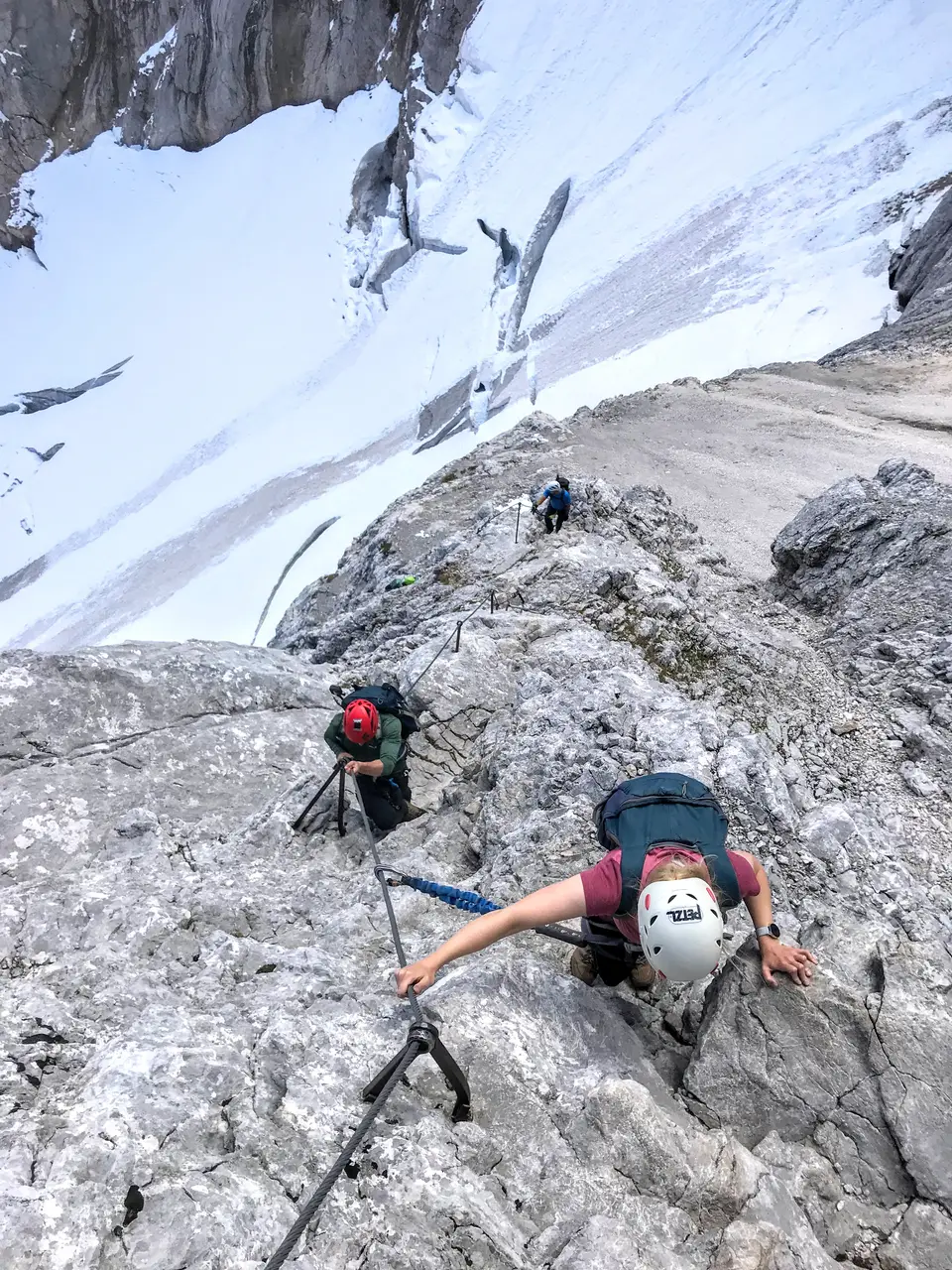
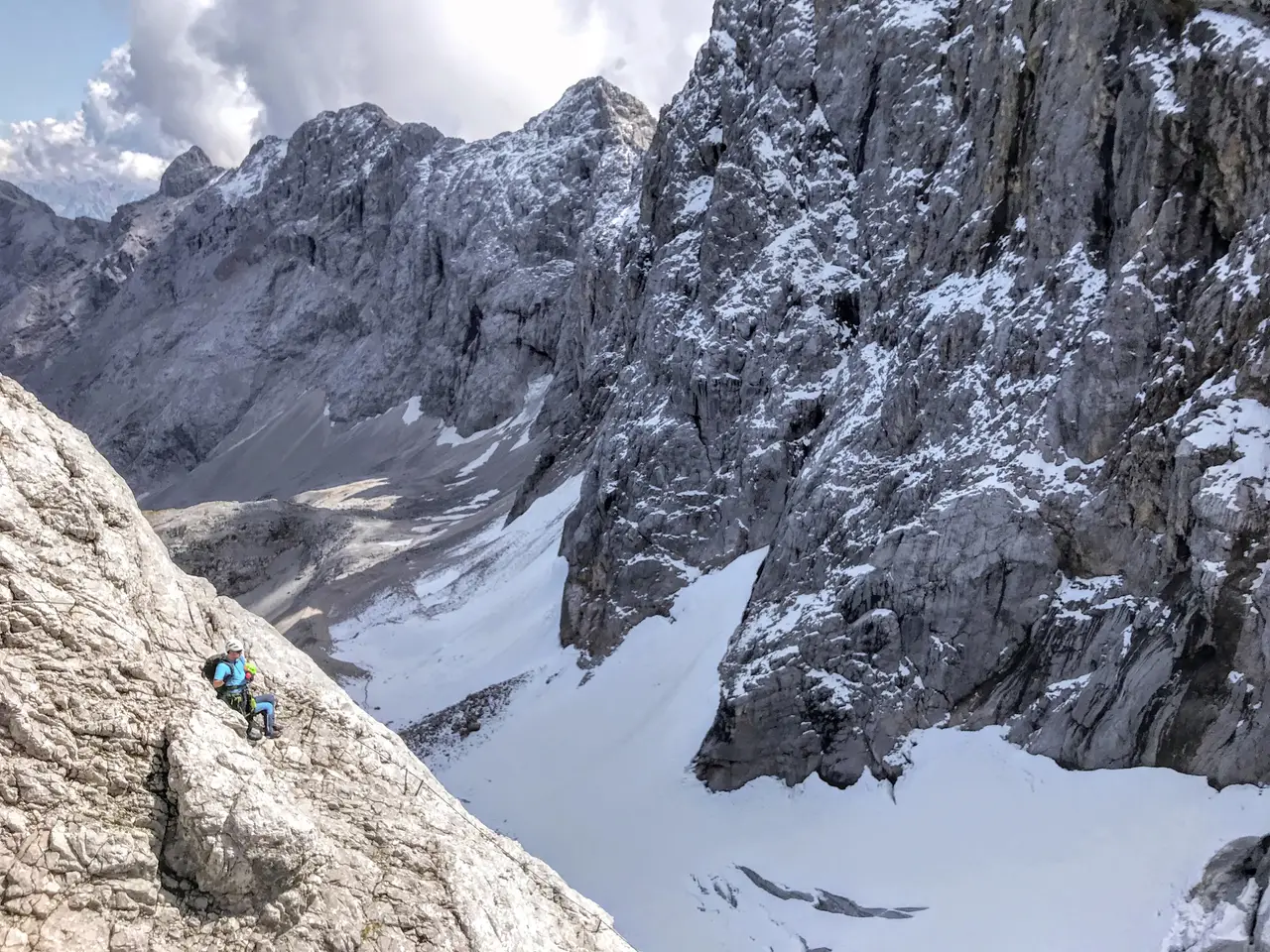
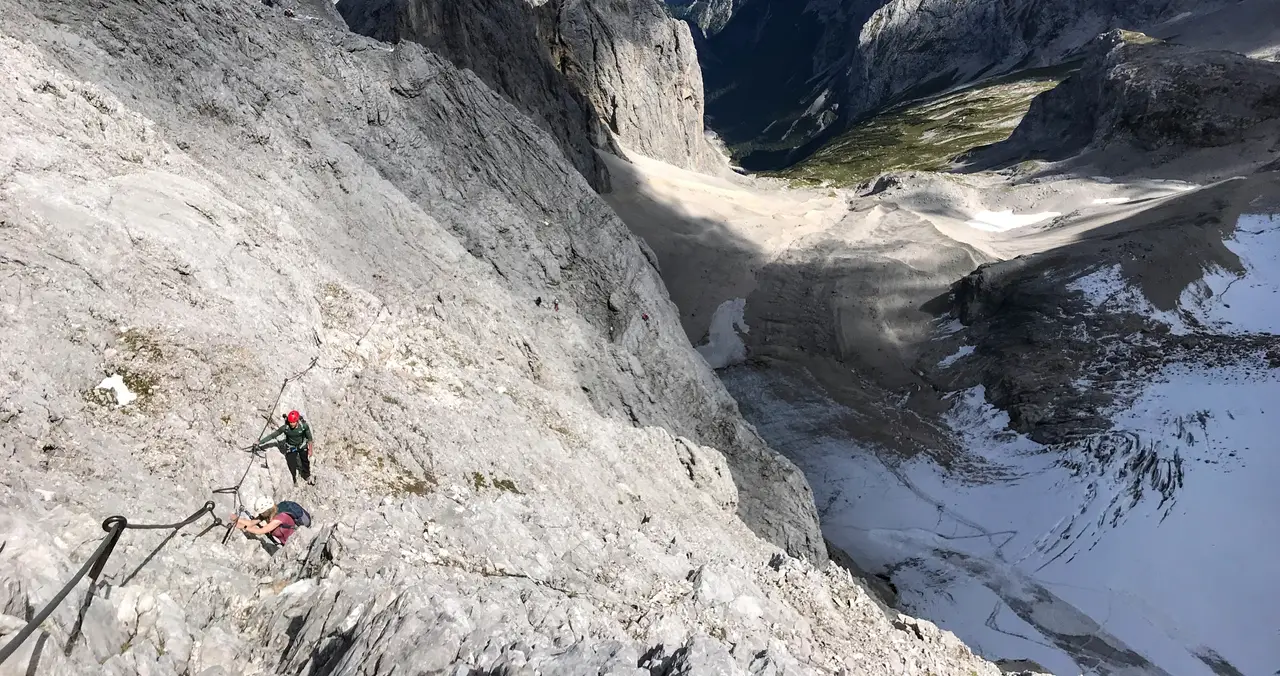
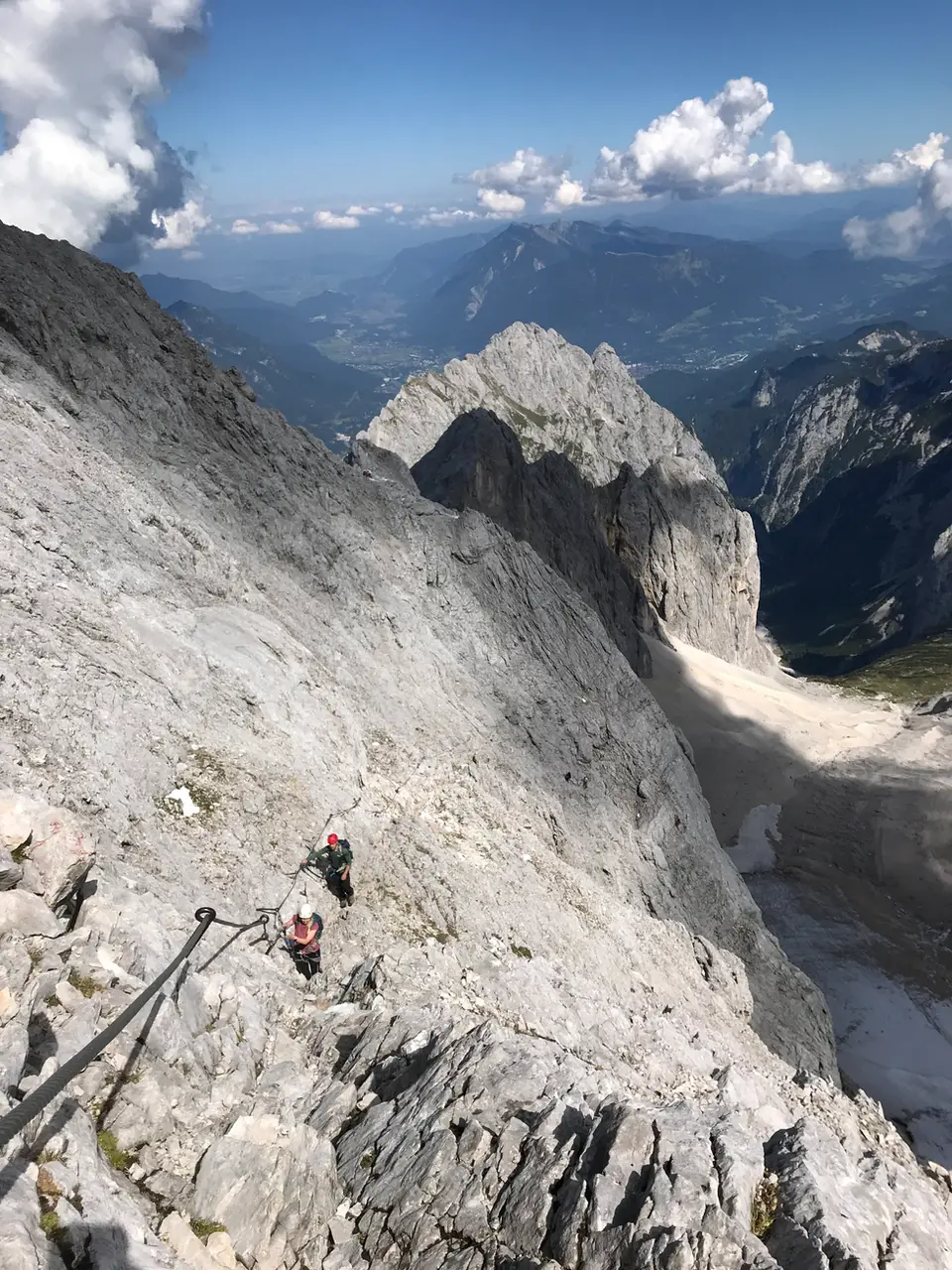
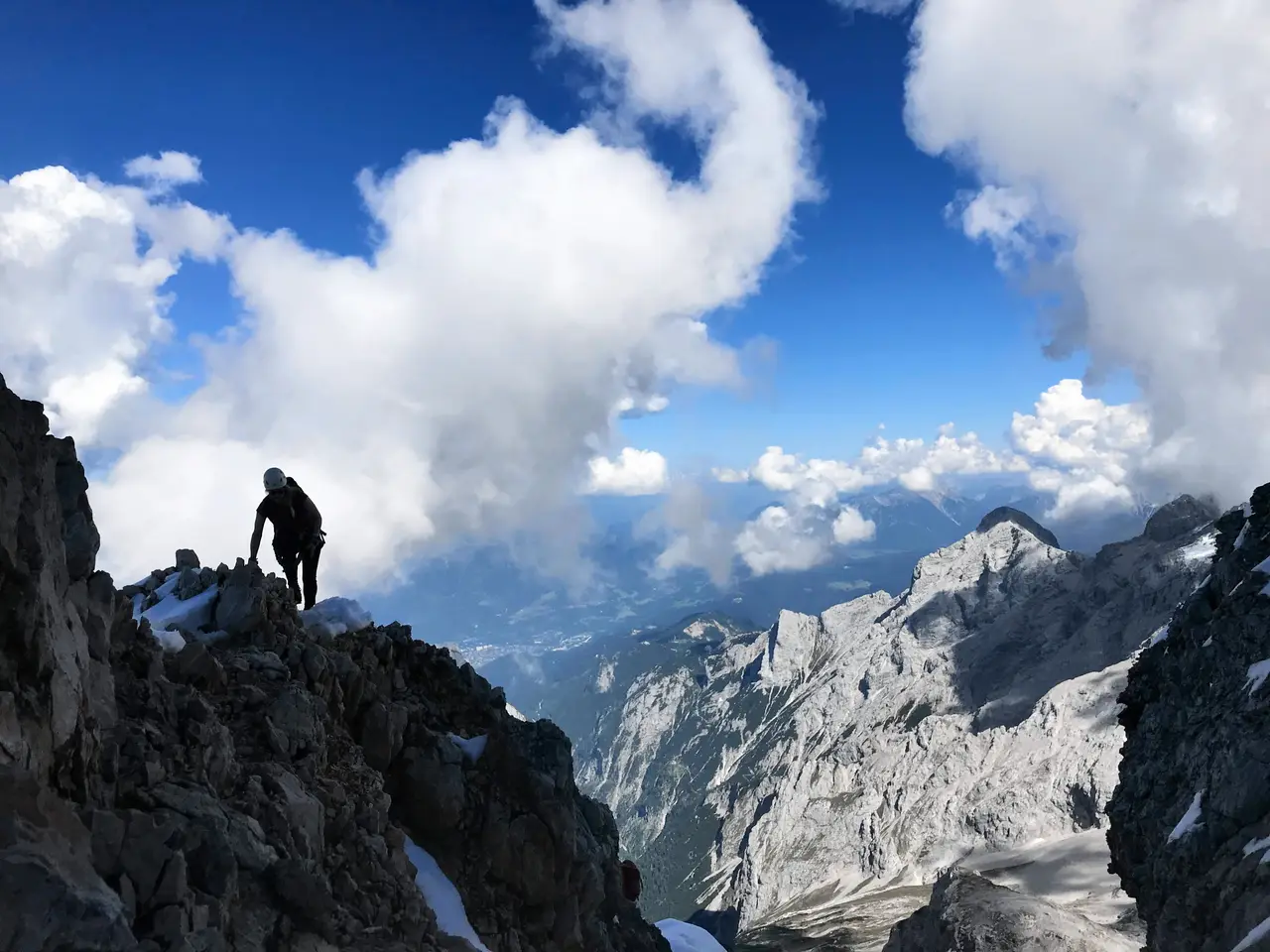
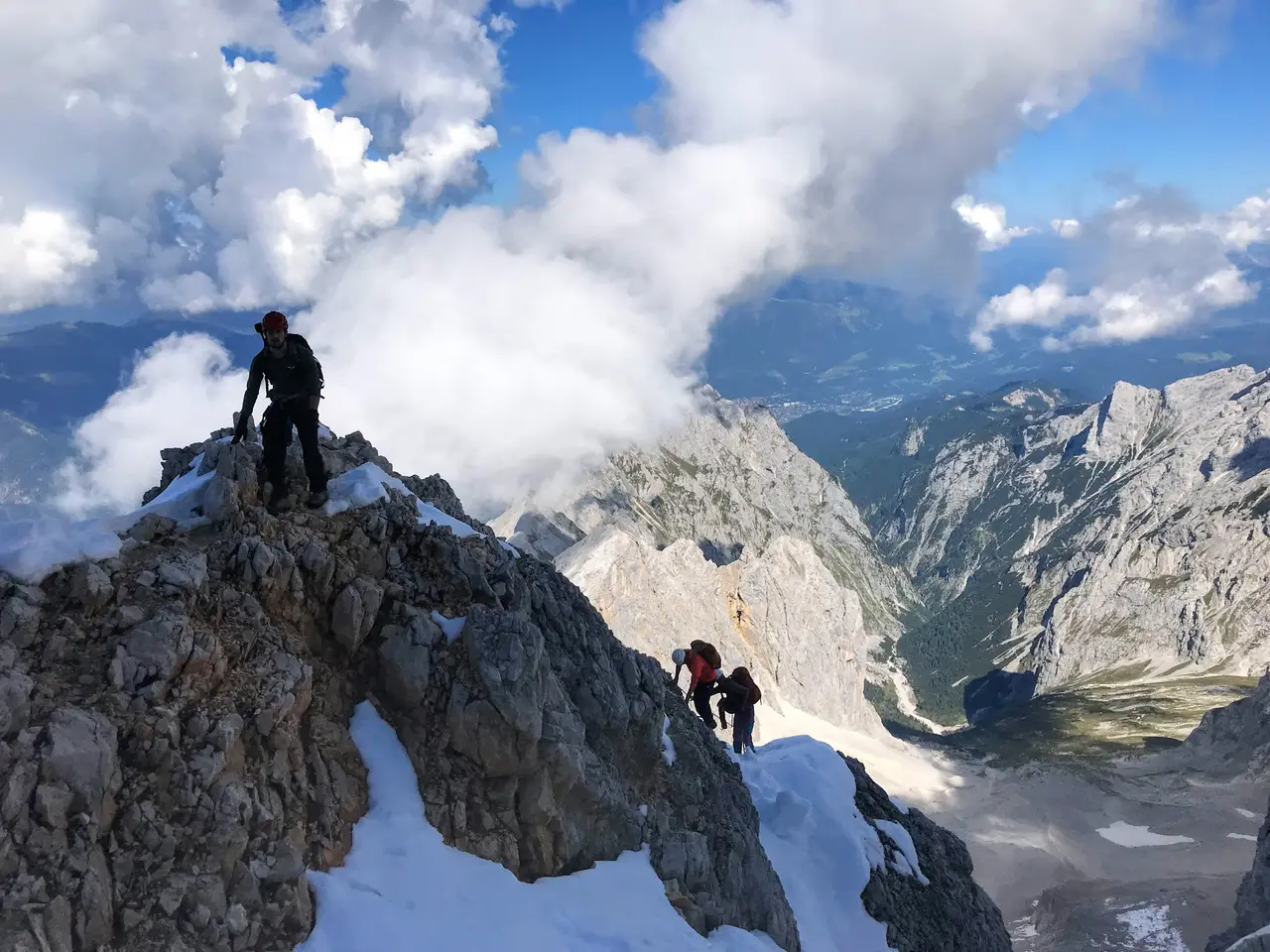
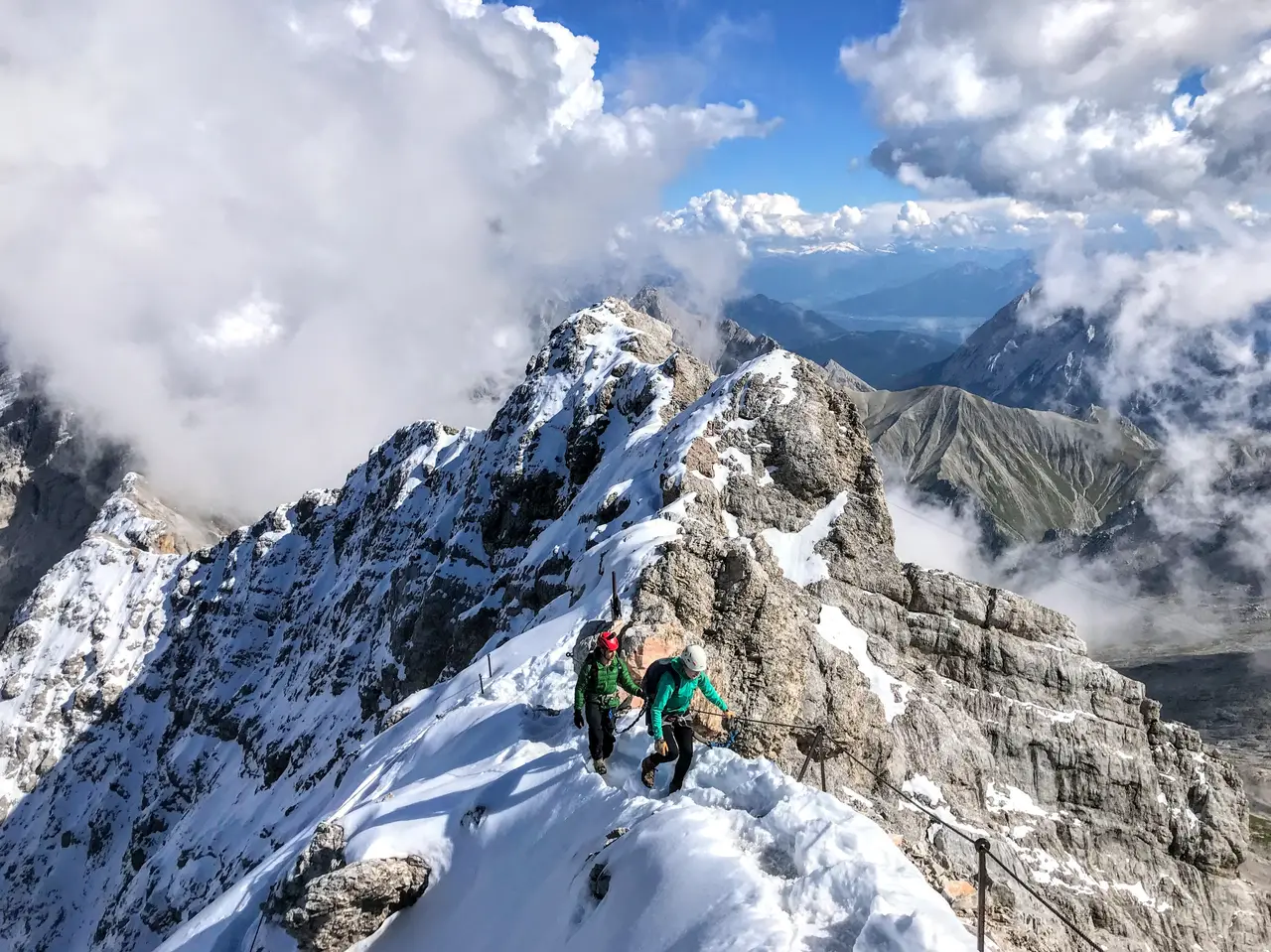
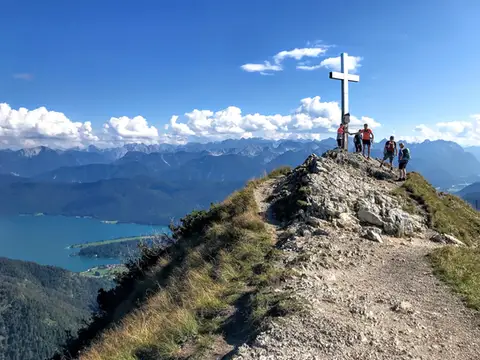
With crampons on, we climb the glacier (Höllentalferner), avoiding a crevassed area on the right, then bear right towards the rock face, where the second section of the via ferrata begins with the most entertaining stretch of the whole route (the only B/C section). From here on, time seems to fly: 2 or 3 hours of easy via ferrata await us on vertical rock faces, with the view opening ever wider and the glacier beneath us. Once we reach a small saddle from which the Eibsee comes into view for the first time, the summit and its golden cross are a stone's throw away.
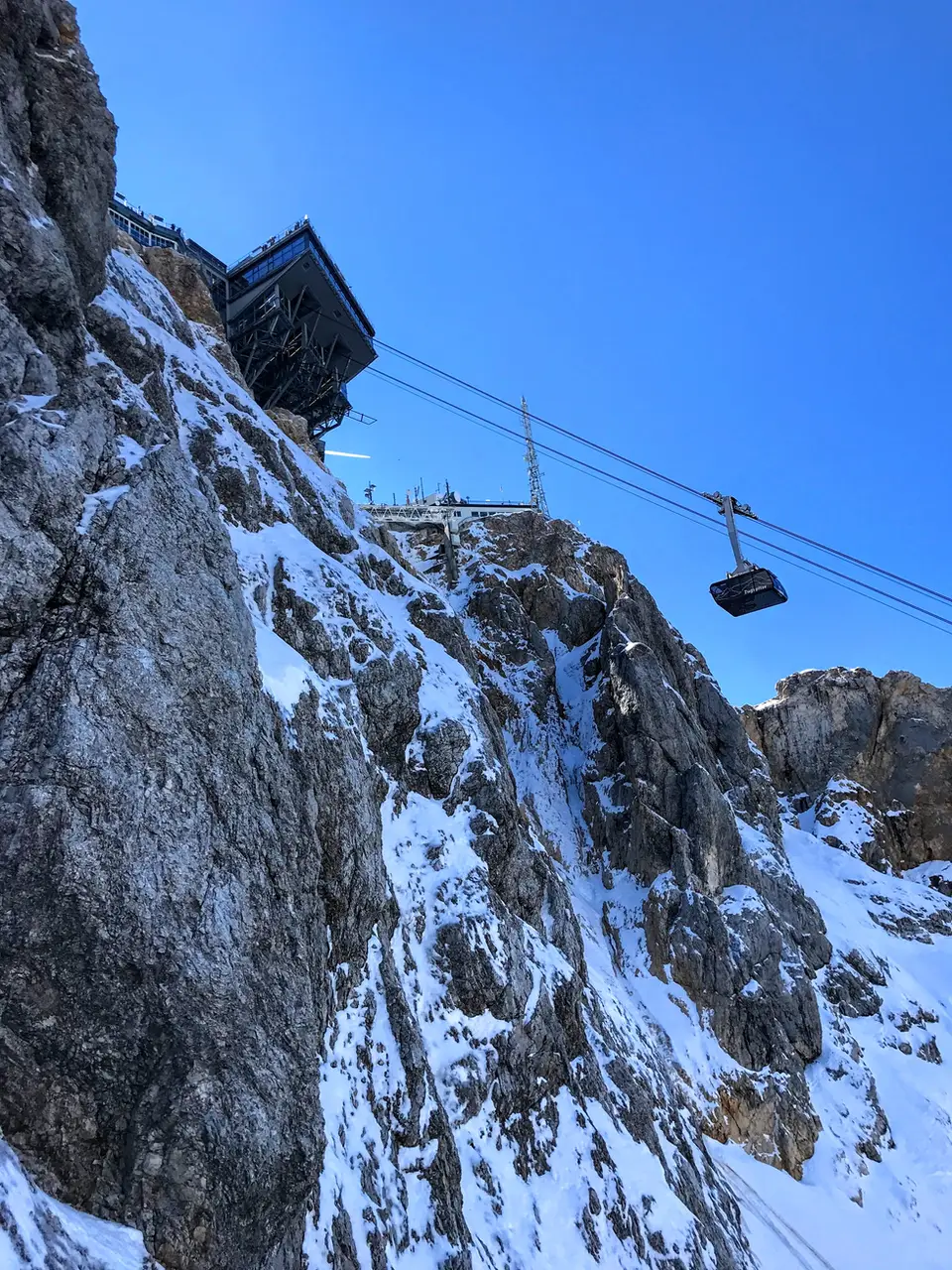
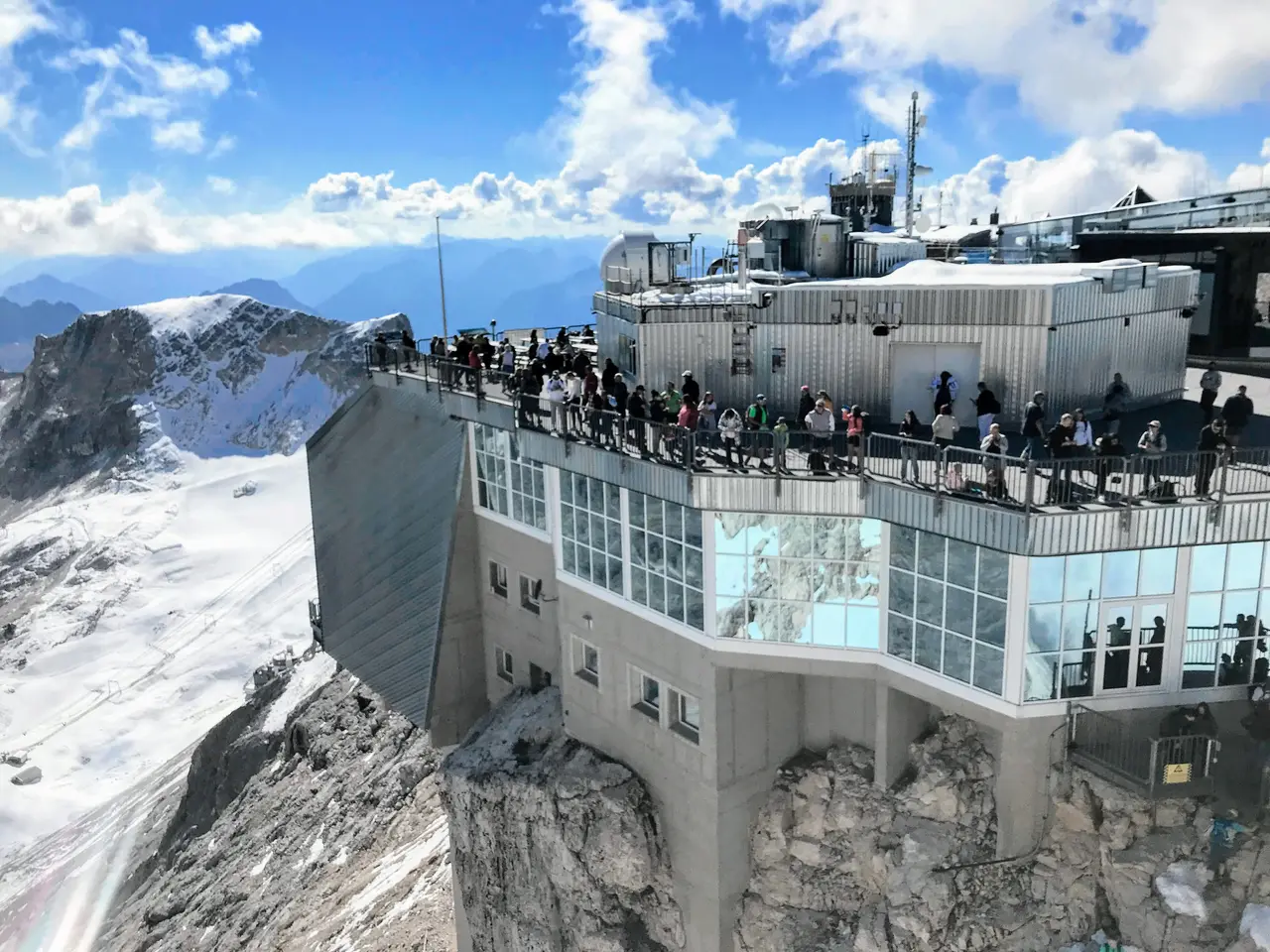
The summit is a small town, a tangle of buildings, terraces and underground passages, with the arrival infrastructure of 2 cable cars and a rack railway.
We return to the valley on the Eibsee cable car (36€ for the descent only) amid throngs of tourists. To get back to the car you can take a train to Hammersbach, or walk about 6km through the woods of the valley floor (another 1.30 hours).